
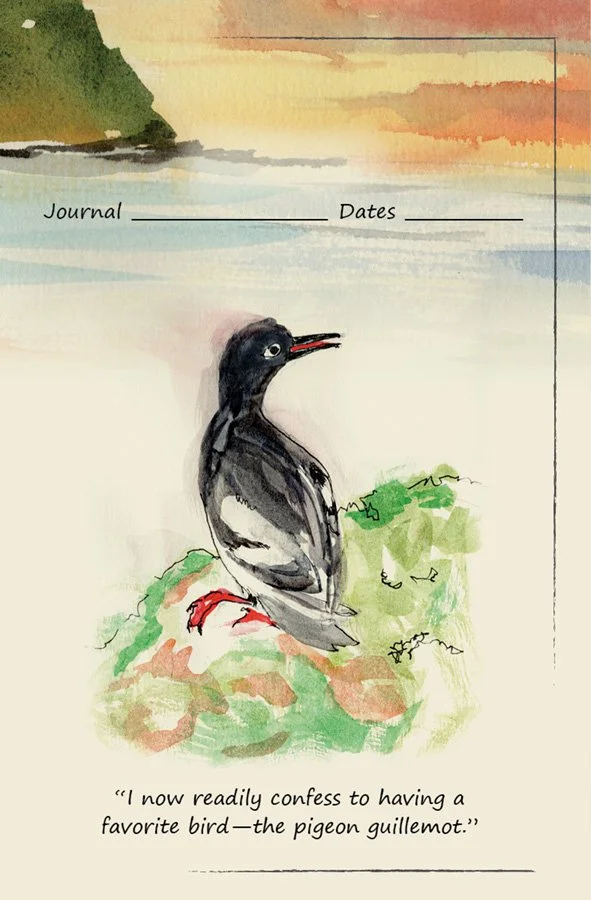
Is is something in the air? Possibly, but more likely something in the water—salty water. The family of seabirds known as auks, or alcids, are having a bit of a heyday in the publishing world. For those of you unfamiliar with this varied and fascinating family of birds, it includes twenty-four species including the most familiar puffins as well as auklets, dovekie, razorbill, murres, murrelets, and guillemots. They are the web-footed, surface-diving seabirds of the Northern Hemisphere.
Whidbey Island writer and artists Frances Wood has just published a blank, spiral-bound journal with her watercolor portraits of the guillemots on the covers (above). Frances is a co-founded of the Salish Sea Guillemot Network, which is how I found my way to these wonderful seabirds. France’s art is as lively and charming as the guillemots themselves. And just think—fifty blank pages for you to weave a tale of your favorite seabird or begin your Spring journal or field sketches of your feathered friends. Order your copy of this blank journal here. See Frances's watercolor aviary of other birds here.
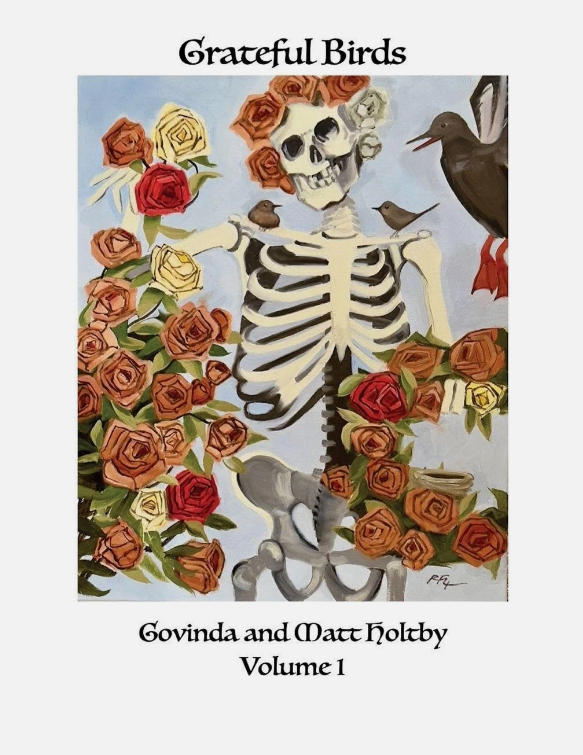
Yes, a bird with flaming red feet can improve a Grateful Dead album cover.
Also from Whidbey Island, Govinda and Matt Holtby have published a delightfully quirky and authoritative book that takes a look at 40 Grateful Dead songs, and pairs them with 40 Washington State birds, plus encores. They have managed to carve the connection between birders and deadheads. The book is filled with fun facts, unusual facts, and interesting facts about the bird and or the song that it is paired up with. Our grateful guillemot (prominently featured on the book’s cover, below) is cleverly paired with the song “Cassidy,” “Ah—child of the boundless seas.”
This book is a fundraiser for two non-profits: LittleBIGFest, and Whidbey Audubon Society. LittleBIGFest is a nonprofit organization based on Whidbey Island. They are dedicated to supporting regional musicians and artists and creating scholarship opportunities for local students. They produce annual festivals and events featuring local, national and international musicians and artists. Whidbey Audubon Society founded the Salish Sea Guillemot Network, a community science program for surveying our beloved Pigeon Guillemots. Govinda is a long-time Pigeon Guillemot surveyor on Whidbey Island. This is a must read for Deadheads, birders, music lovers, admirers of creatives like Govinda and Matt. Order copies of Govinda and Matt’s book here.
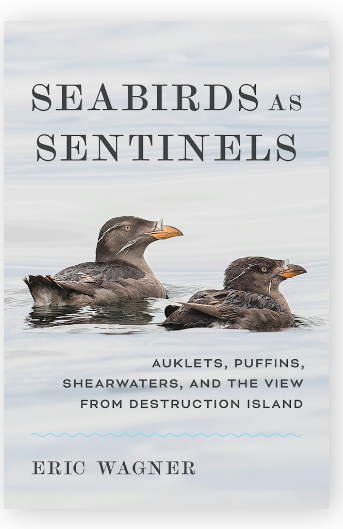
A new natural history of two more auks (auklets and puffins) due out in March from University of Washington Press.
Seattle-based biologist and writer Eric Wagner has a new book coming out in March 2026—Seabirds as Sentinels: Auklets, Puffins, Shearwaters and the View from Destruction Island (above). This small, rugged island off the Washington State outer coast is the site of a long-term research project to study the thousands of Rhinoceros Auklets—an alcid the comes to land to nest each summer. It’s deep earthen burrows and nocturnal nesting habits make it a formidable challenge, an exercise in stamina, and a source of wonder for Eric and his colleagues.
I had the pleasure of reading an advance copy of Eric’s book and endorsing it with these words: "With his trademark honesty and passion for his subject, Eric Wagner has left no stone unturned or question unasked in this timely and deeply informative natural history. With the seabirds front and center, this narrative also brings into intimate focus large-scale ecological processes, ocean dynamics, cultural and maritime history, and—most importantly—the vital work of the many scientists studying seabirds in the field and in a time of uncertainty."
You can order copies here. Eric and I will be speaking together about our featured seabirds at The University of Washington’s Burke Museum in Seattle on May 6, 2026. More details on my events page.
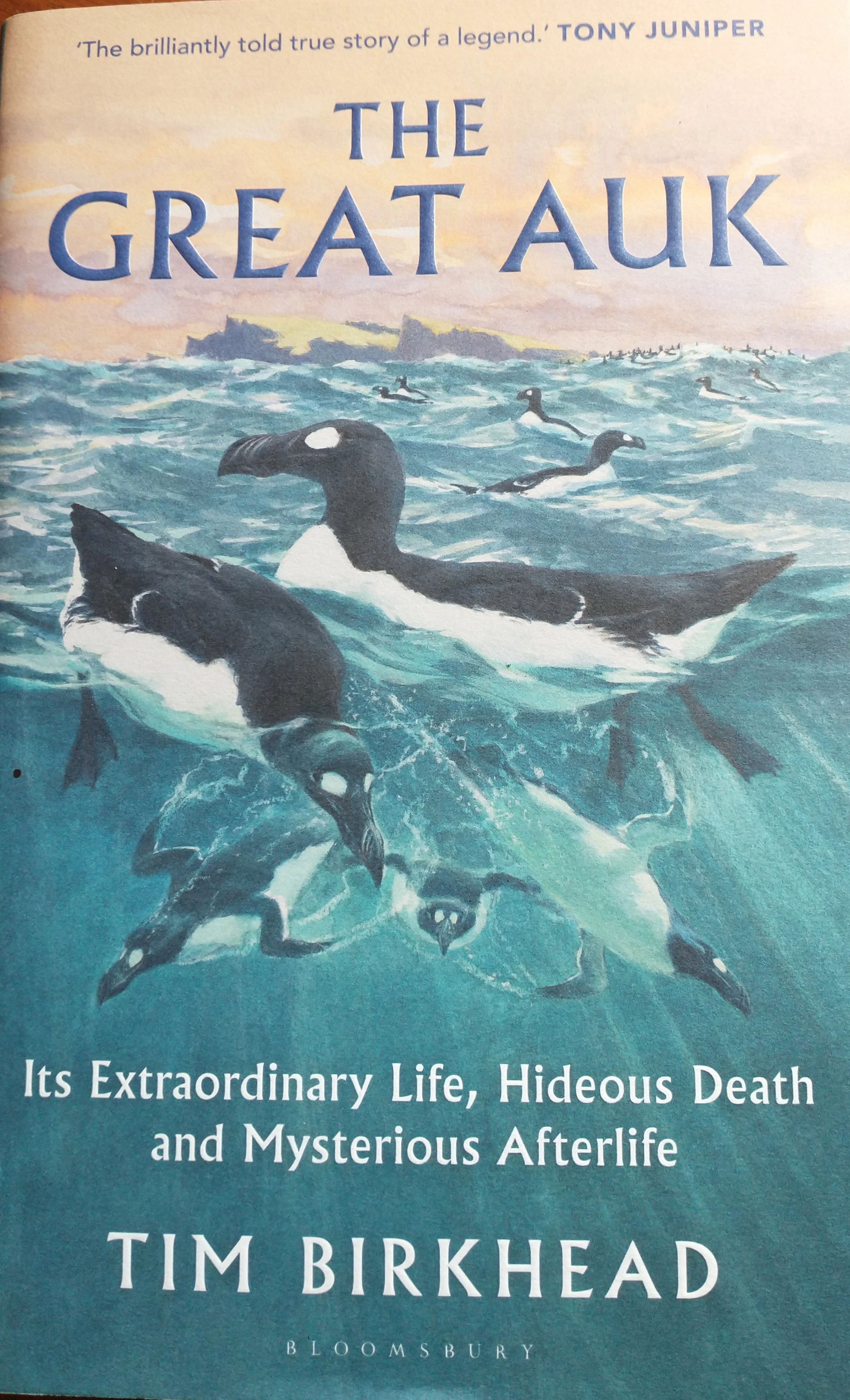
Gone but not forgotten, the Great Auk lives on in Tim Birkhead’s new book.
It wasn’t a suite of environmental pressures, but human greed—a “destructive obsession”- as one reviewer wrote—that drives the narrative of The Great Auk (Bloomsbury 2025). Written by biologist and prolific author, Tim Birkhead, this beautifully written and definite natural history account tells of the largest member of the auk family, the extinct Great Auk. This flightless bird, measuring some three feet in height, was once abundant across the North Atlantic Ocean and nested in colonies of hundreds of thousands of birds. By 1844, the last of its kind was killed on the coast of Iceland. Birkhead weaves a gripping tale, a tragic one, of the demise of this bird with his surprising and personal story of its afterlife. Purchase The Great Auk through your local indie bookstore via Bookshop here.