• Home
  • The Bird with the Flaming Red Feet
  • Rare Bird: Marbled Murrelet
  • A Sideways Look at Clouds
  • Author
  • Events
  • Blog
  • Contact
Menu

Maria Mudd Ruth

Street Address
City, State, Zip
Phone Number
author and naturalist
Homepage-Banner.jpg

Maria Mudd Ruth

  • Home
  • Books
    • The Bird with the Flaming Red Feet
    • Rare Bird: Marbled Murrelet
    • A Sideways Look at Clouds
  • Author
  • Events
  • Blog
  • Contact

Why You Can Name These Clouds

March 13, 2016 Maria Mudd Ruth
IMAG1303_1.jpg
IMAG1298.jpg
IMAG1300.jpg
IMAG1301.jpg
IMAG1315_1.jpg
IMAG1316_1.jpg
IMAG1317.jpg
IMAG1319.jpg

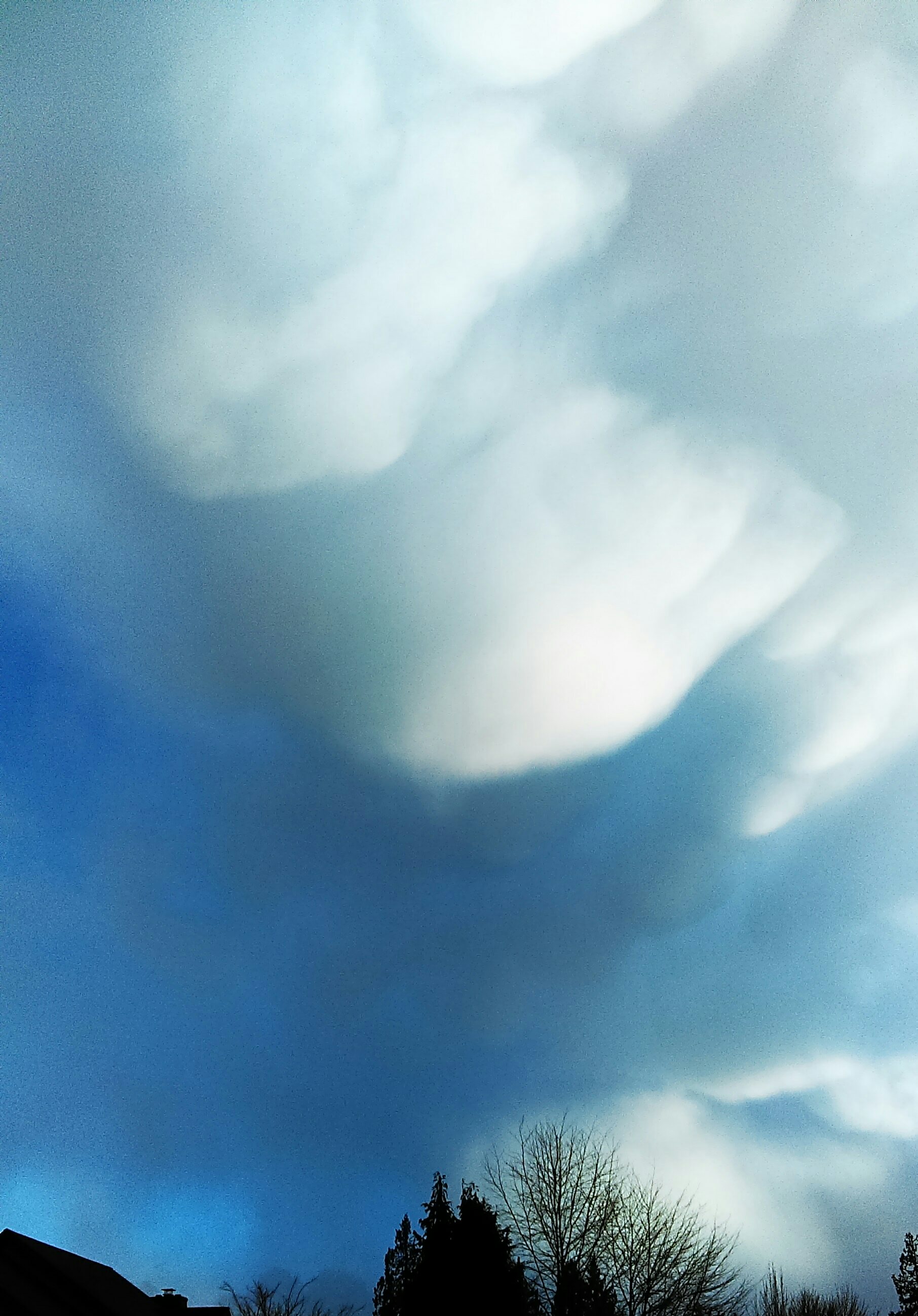
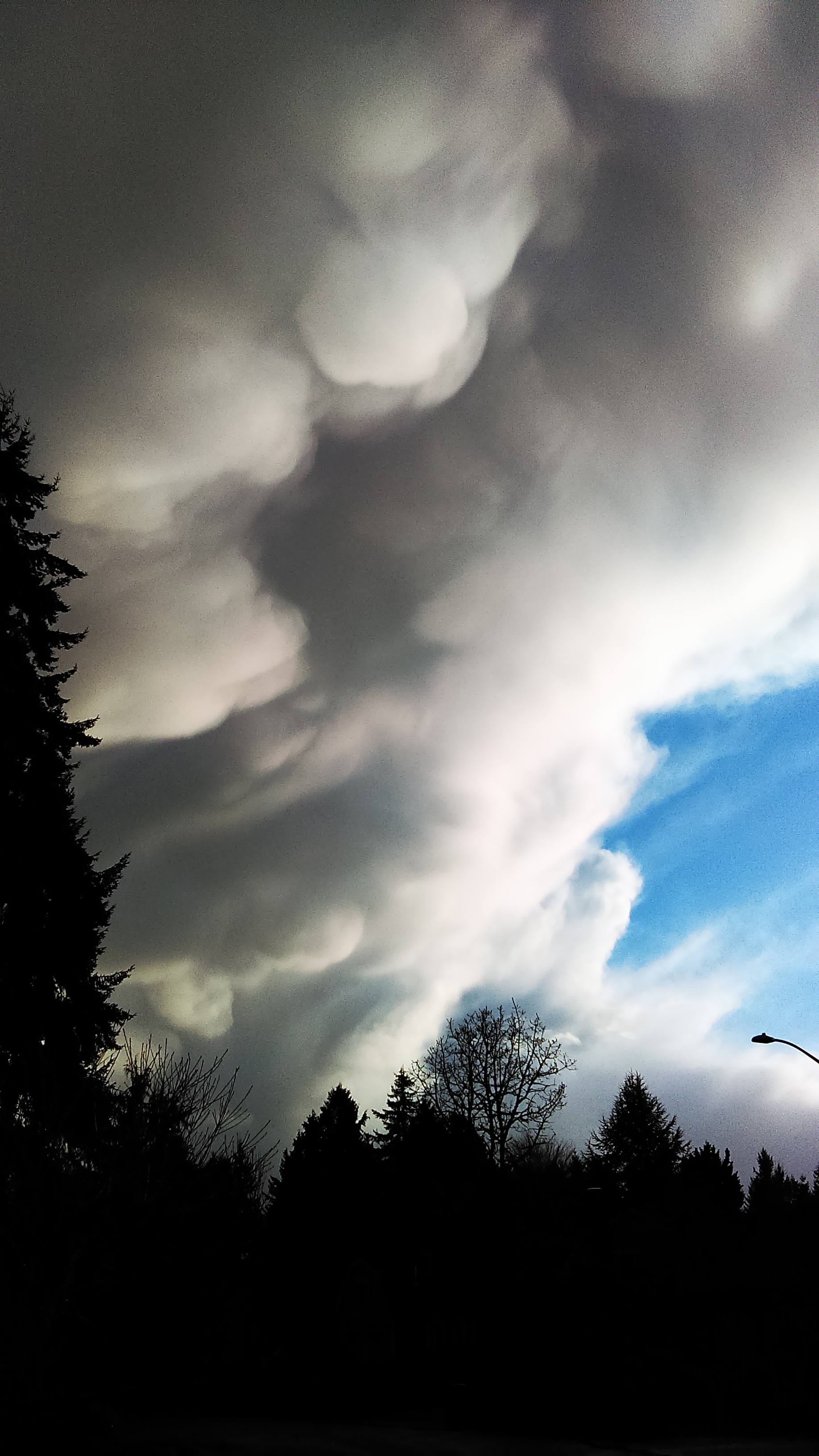
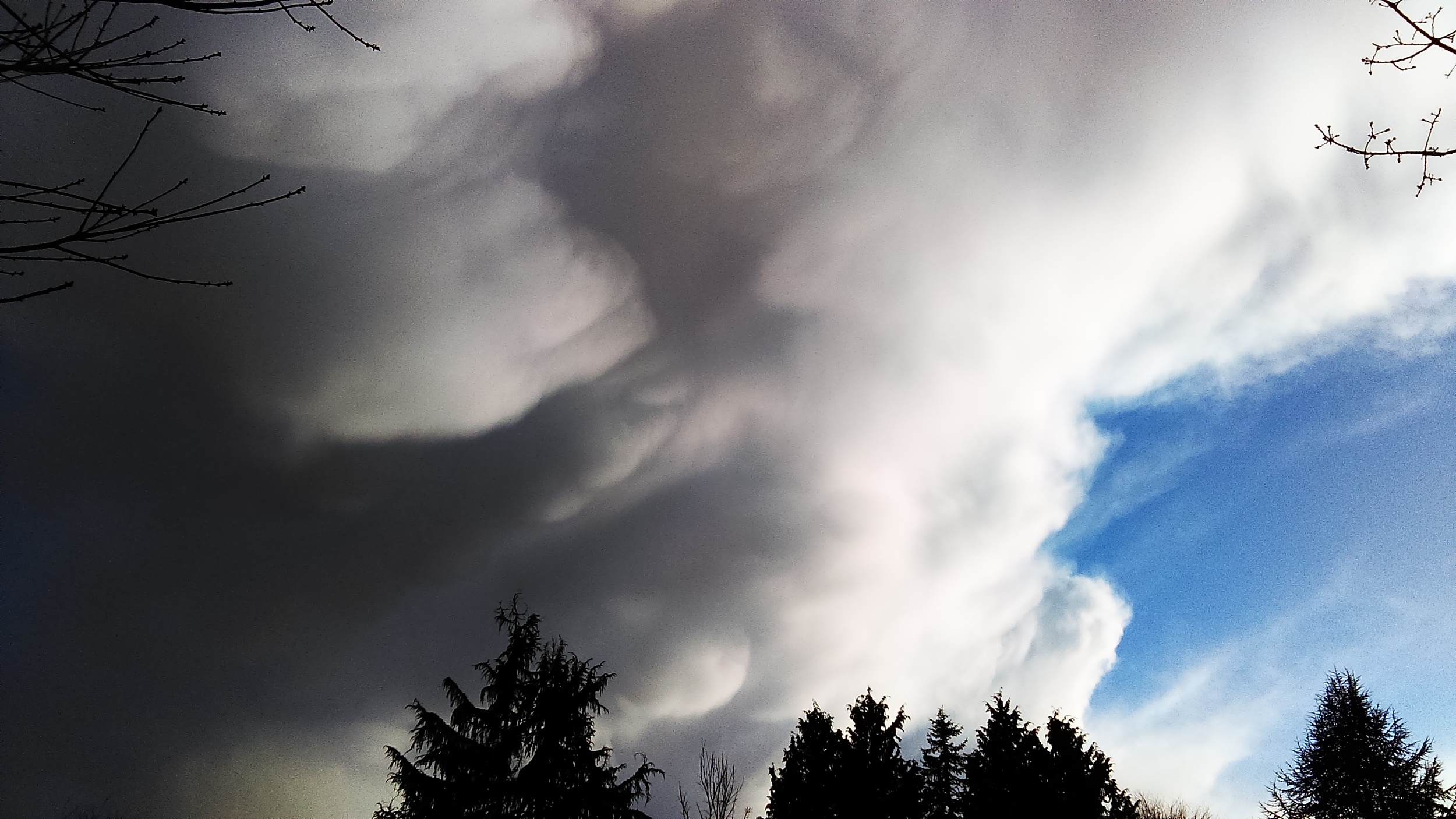
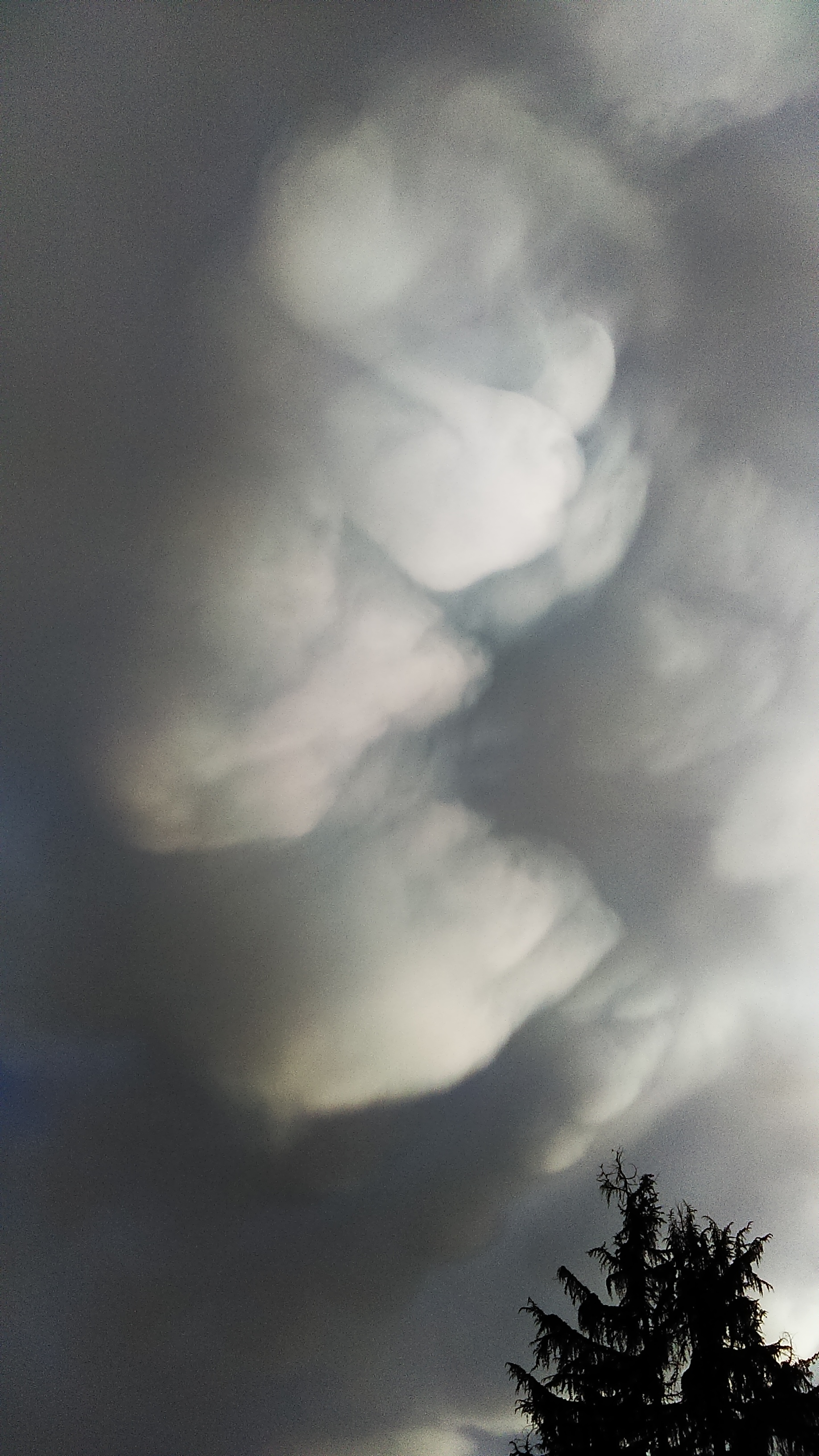
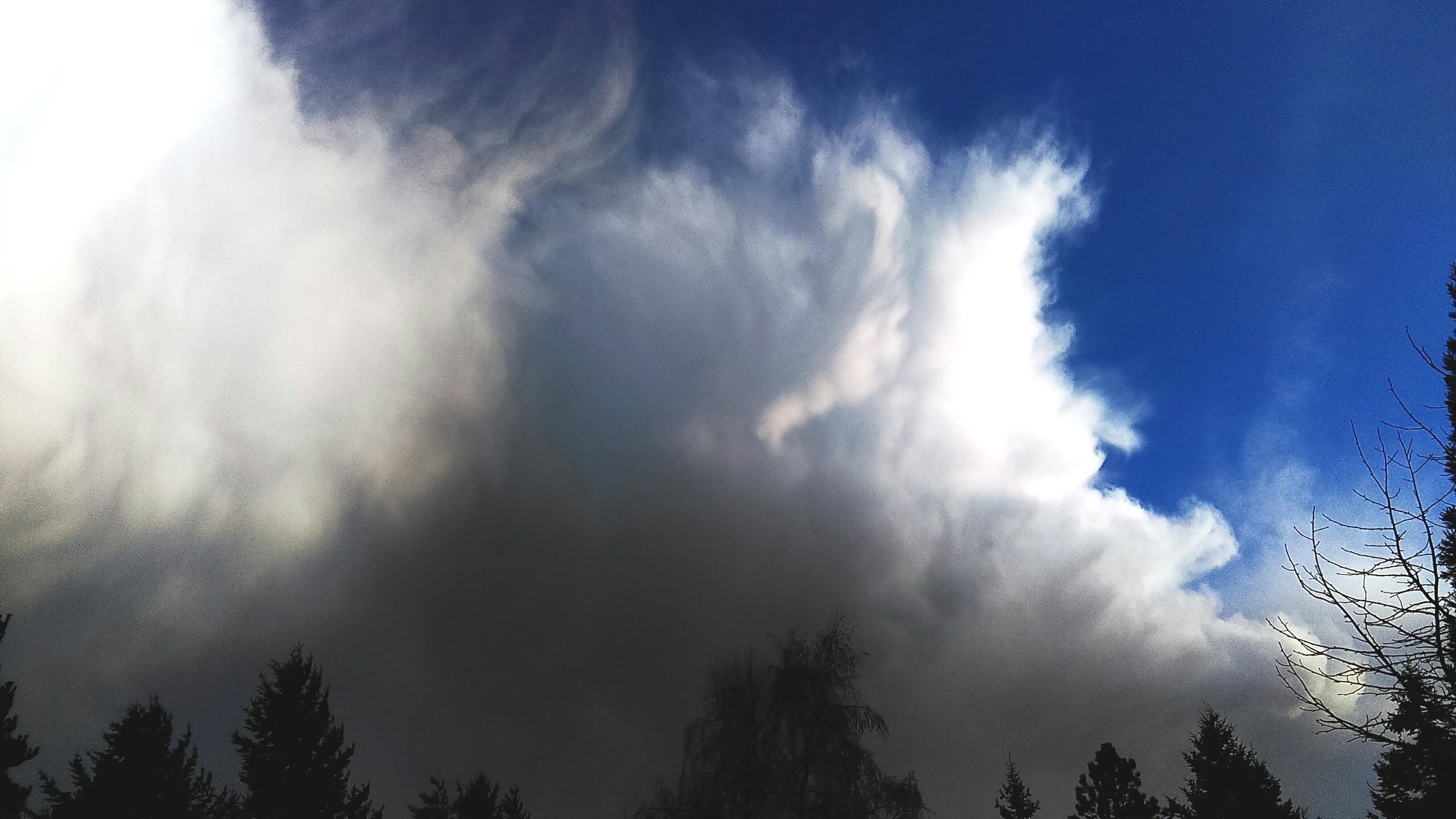
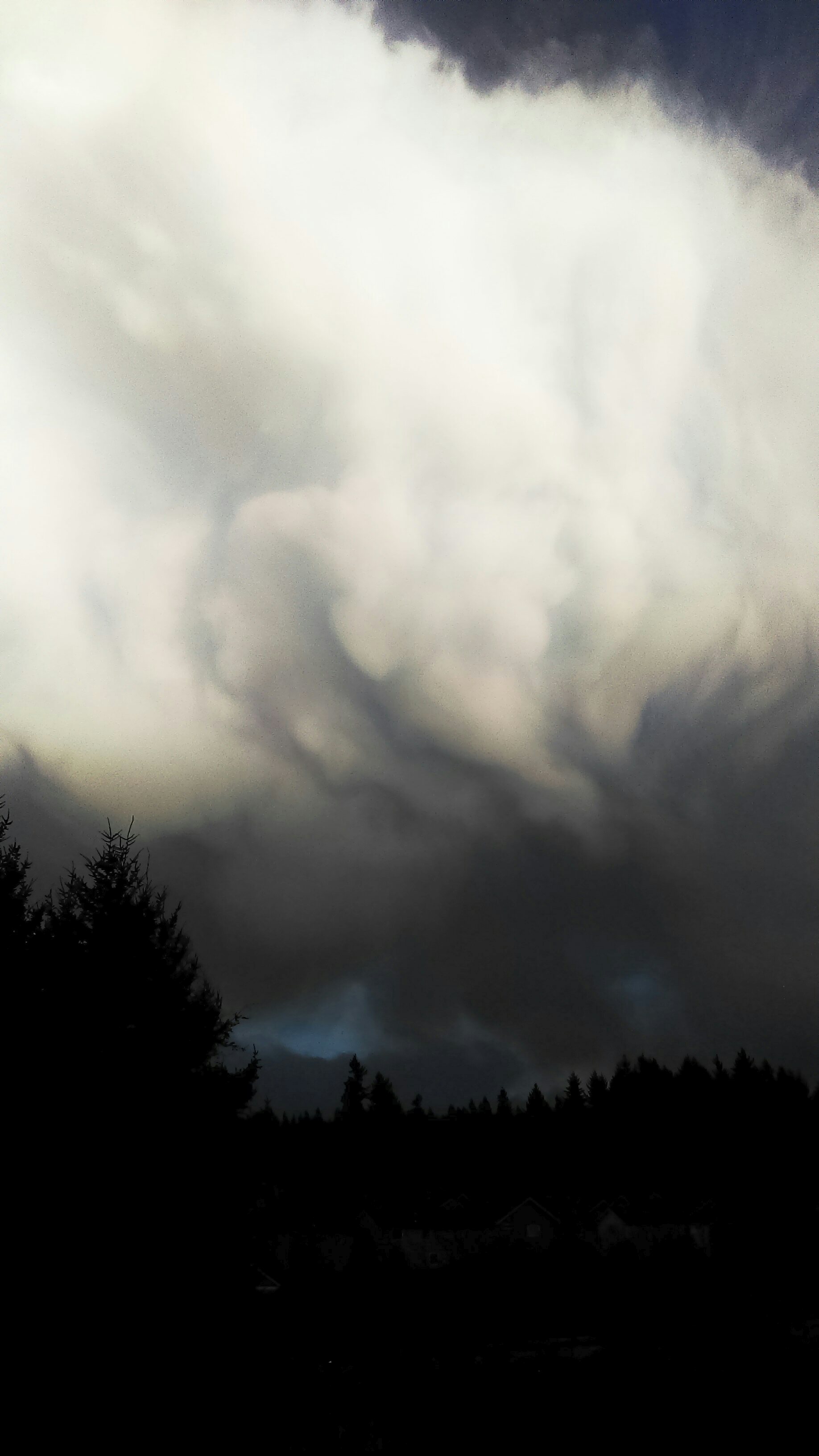
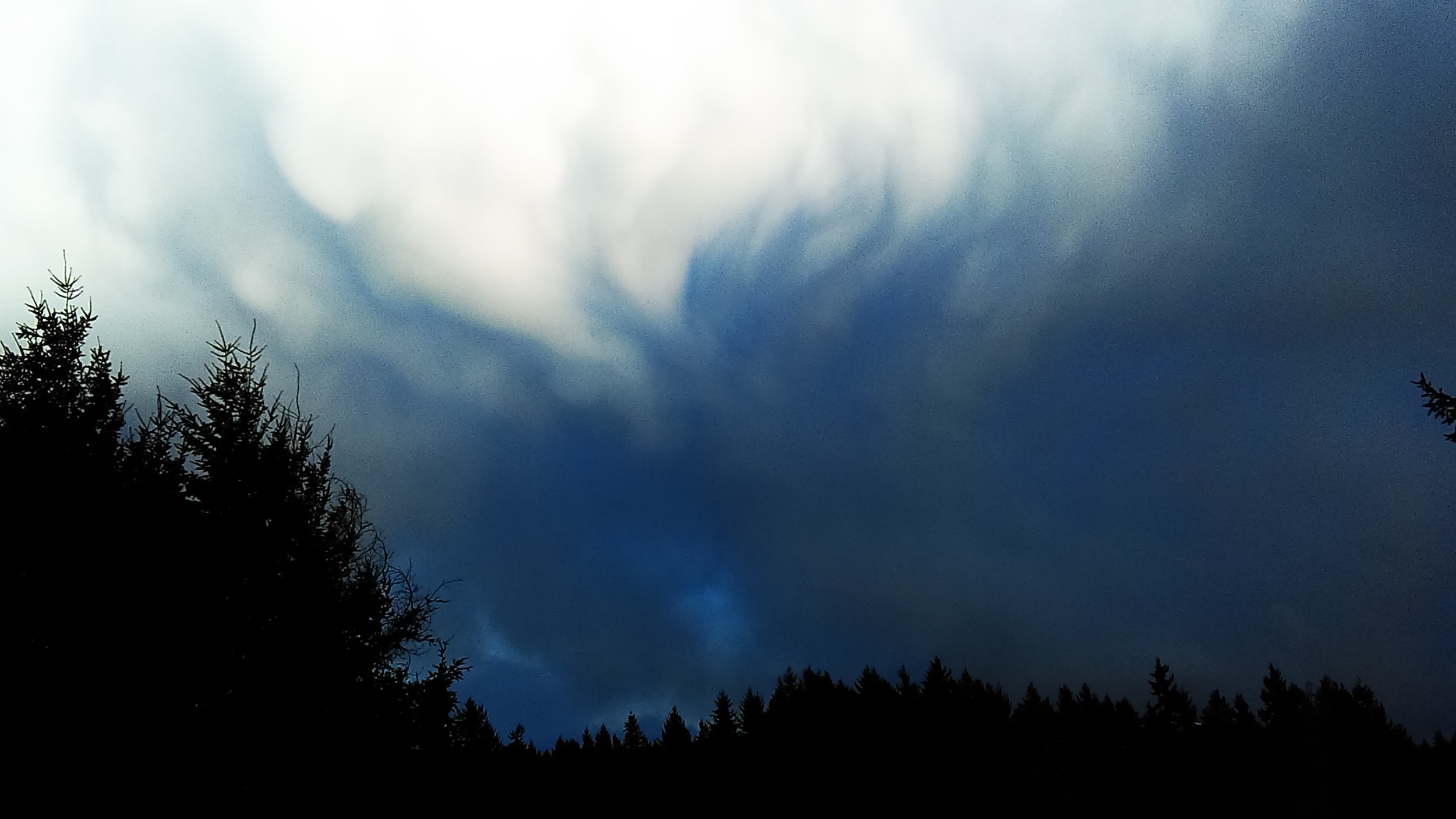
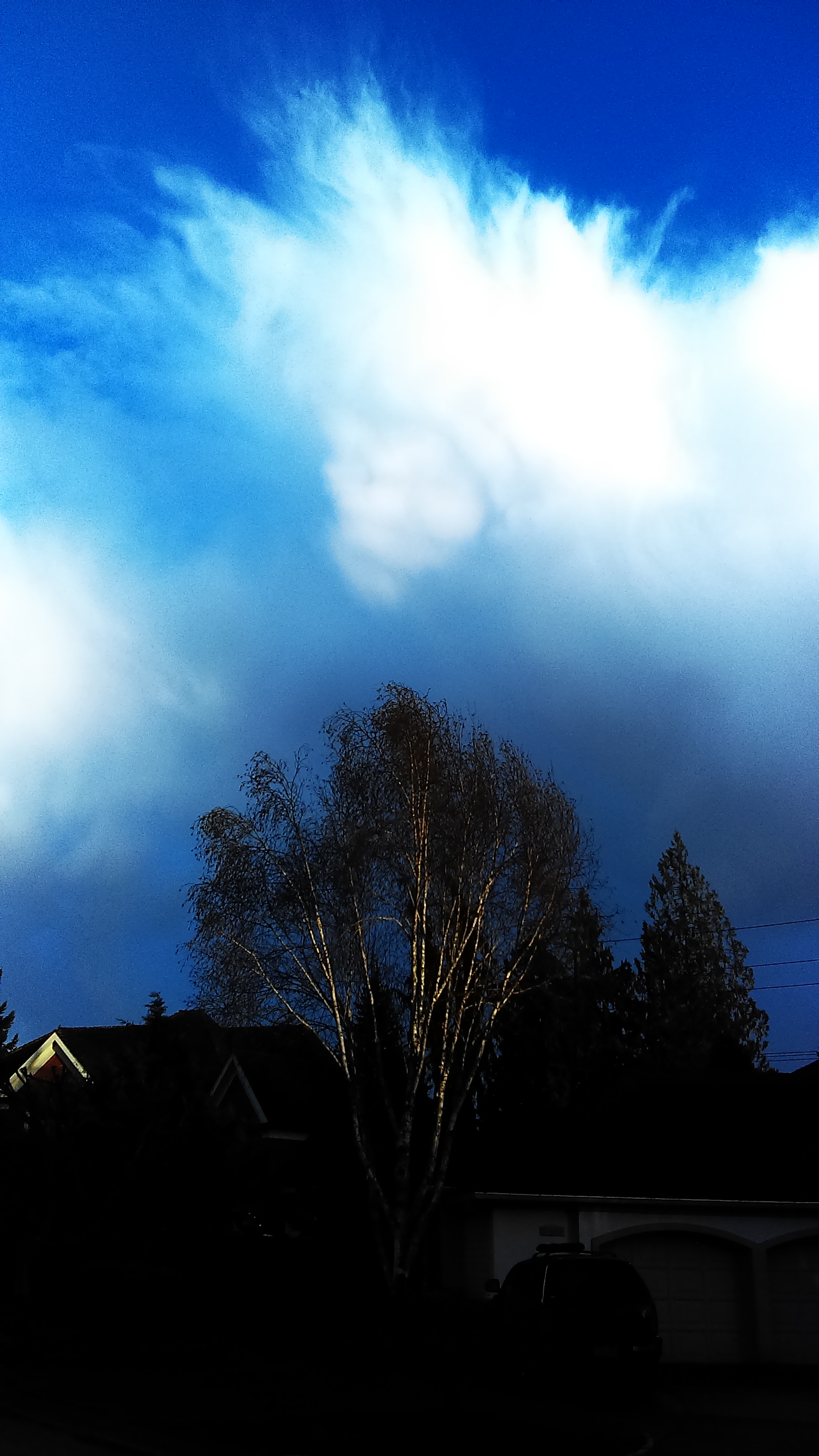
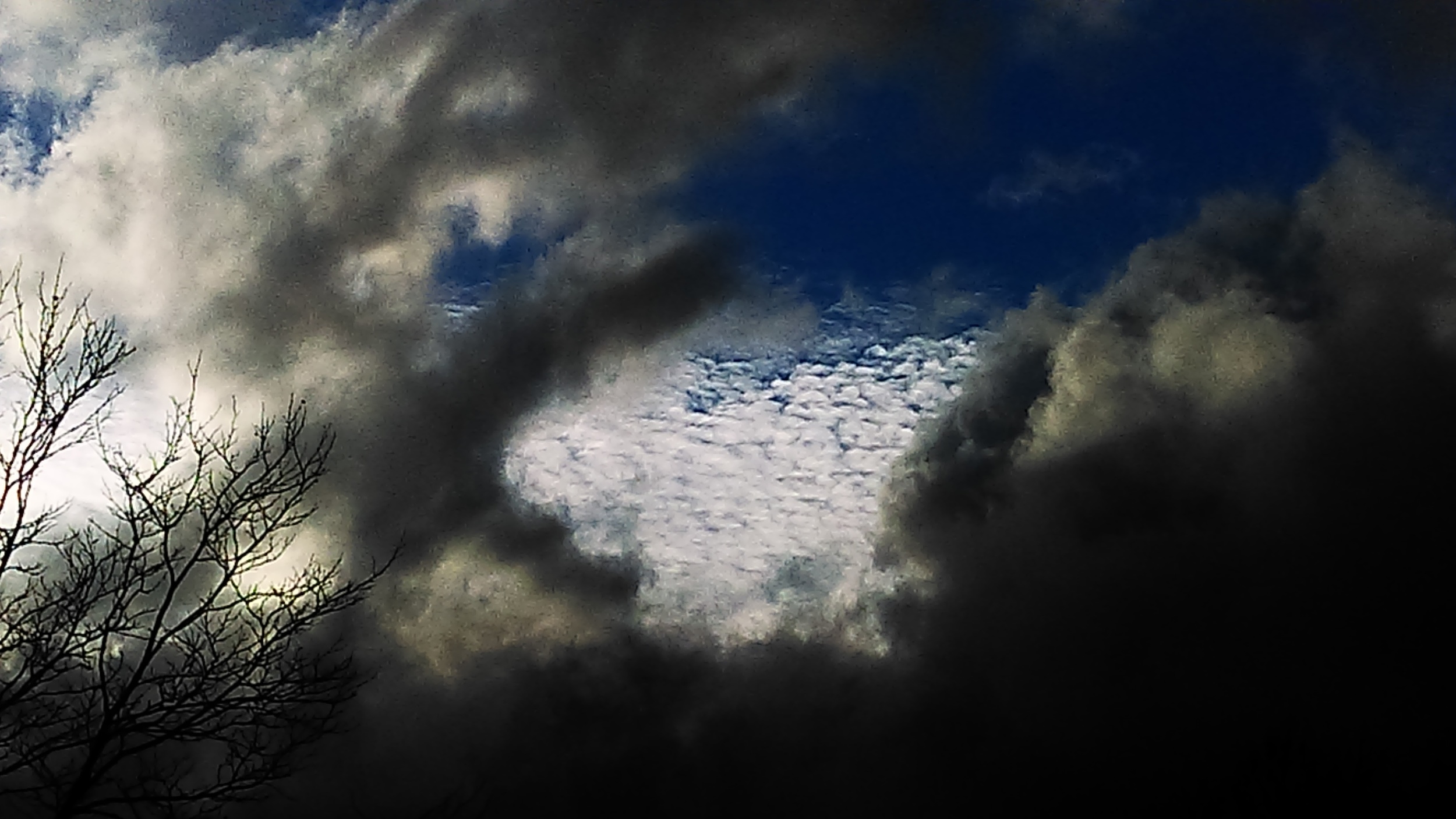
They are cumulonimbus mammatus--and they appeared Sunday evening around 6:30 over Olympia. What a spectacular show at the end of a tumultuous day of rain and wind and sun. Cumulunimbus is their offifcial Latin name cumulus (heaped) + nimbus (rain) + mammatus to describe the  bulging pouches hanging down from the underside of the cloud. 

They are distinct and you are not going to confuse them with another cloud. 

Mammatus as in mammary gland. They are referred to as "cloud boobs," which makes them easier to remember, but doesn't sound very scientific. Mammatus is not a cloud type (or species or variety) but is a "supplemental feature" of  cirrocumulus, altostratus, altocumulus and stratocumulus but is most often seen in cumulonimubs. Mammatus form when pockets of cold air sink within the cloud. They linger if the content of the water droplets or ice crystals in the mamma (that's the noun) is high.

These clouds are not precursors of tornadoes. They usually appear at the end of a storm and gradually, gracefully evaporate...as you can see in this gallery of photos I took on my after-dinner walk.

Now that Daylight Savings Time has arrived, dont' forget to take an evening cloud-spotting stroll in your neighborhood. 
 

In Clouds Tags clouds, mammatus clouds
Comment

Why You Can't Name These Clouds

February 12, 2016 Maria Mudd Ruth
IMAG0951.jpg
IMAG0949.jpg
IMAG0946.jpg
IMAG0946_1.jpg

You might recognize these clouds, but can you name them? For years I have struggled with pinning one of the ten Latin cloud names to the clouds I see. There are two problems that has made my goal insurmountable: 1) the clouds rarely look the same from day to day and this makes it difficult for me to remember what a stratocumulus, altocumulus, or any other cloud looks like. There are no type specimens and field guides are all but useless. 2) the names of the clouds are confusingly similar and hard to remember. Just look at them:

Cirrus, Cirrocumulus, Cirrostratus, Altostratus, Altocumulus, Cumulus, Stratocumulus, Cumulobinumbus, Nimbostratus, Stratus.

Yes, I am sure you recognize some of them. But now close your eyes and try to recite them from memory.

See what I mean?

Why exactly are the names so difficult to remember? I have figured it out.

All ten names contain the same eleven letters: a i o u c l m n r s t.

All them names end in "us."

Only one cloud (nimbostratus) has a unique first name (nimbo).

The ten names are based on just five Latin terms (cirrus, cumulus, stratus, alto, nimbus), which appear alone or in combination with nearly identical modifiers (cirro, cumulo, strato, nimbo). The logic behind their coupling is not intuitive nor is it explained in any book. Why, for instance, is it cumulonimbus and not nimbocumulus? Why cirrostratus and not stratocirrus?

And why is "alto" used for the so-called "mid-level" clouds--altostratus and altocumulus? Alto means "high" does it not? How many high-mountain towns and ski resorts use "alto" or "alta" in their name? Plenty! 

The Latin names of clouds were introduced in 1802 by a chemist and cloud lover named Luke Howard. His names were refined and expanded by other scientists at various International Meteorological Conferences over the years, and while they seem scientific, the names should be guidelines. They should not deter you from looking up and admiring the clouds. 

That's all the clouds want from you.


Comment

Invitation to Look Up

December 9, 2015 Maria Mudd Ruth

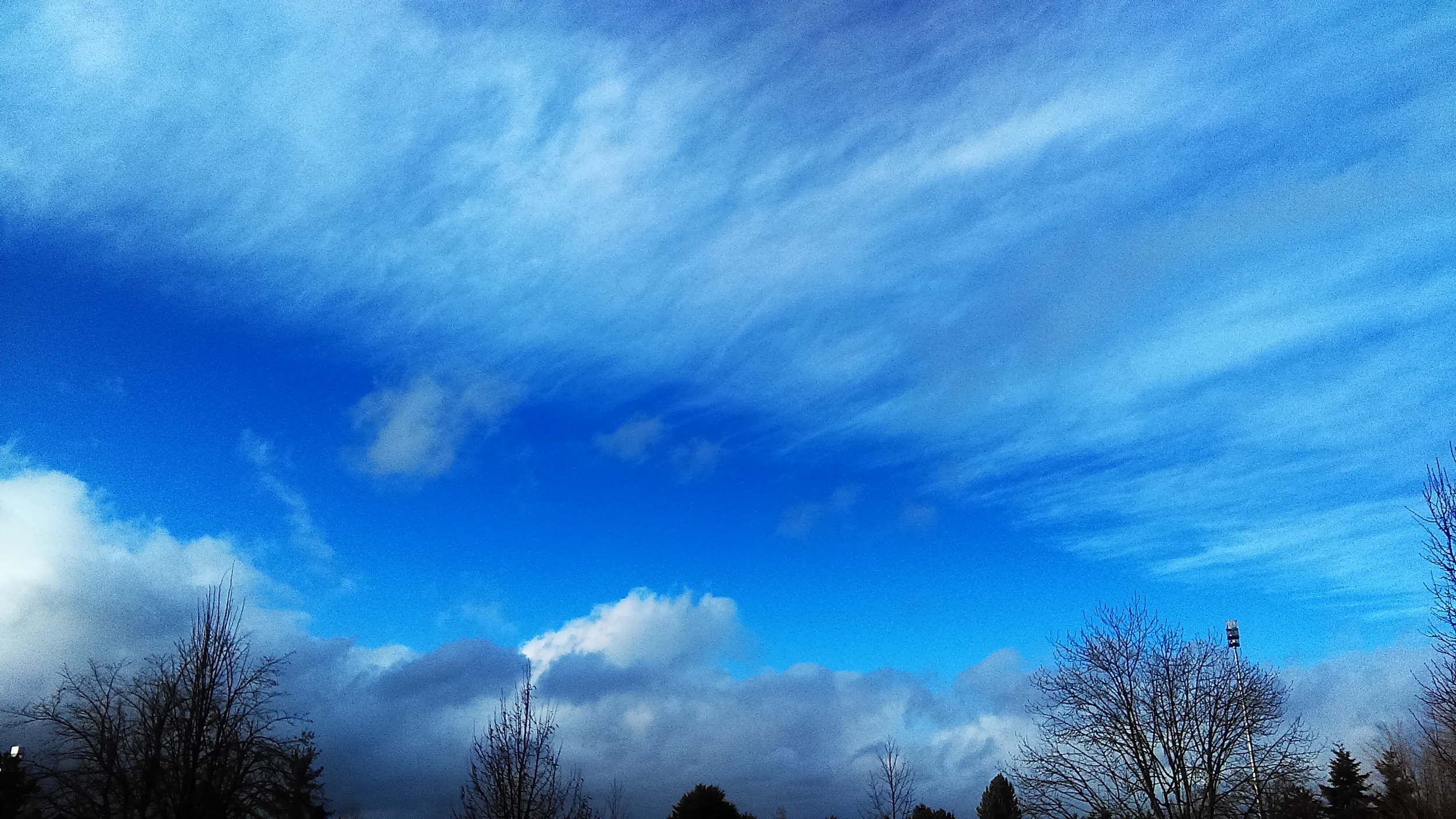
After watching the drama of this morning's storm, I settled in to work on my book on clouds. I hadn't looked out the window for a few hours and would have missed these beautiful altocumulus clouds had a very large bee not been knocking at the window front of my desk. 

When I heard the strange knocking, I raised my eyes from my keyboard and looked at the lowest window pane. There was the bee--perhaps disoriented from the thrashing rain, lightning, and thunder--knock, knock, knock. It was going to do itself in trying to fly through the clear glass. Then it flew a little higher, knocked one last time on the window again and then flew away...drawing my eyes up to follow it. And, perhaps, to see these clouds I would have missed otherwise.

I never imagined getting an invitation to watch the clouds from a bee.

Comment

The Myth of a Million Murrelets

November 17, 2015 Maria Mudd Ruth

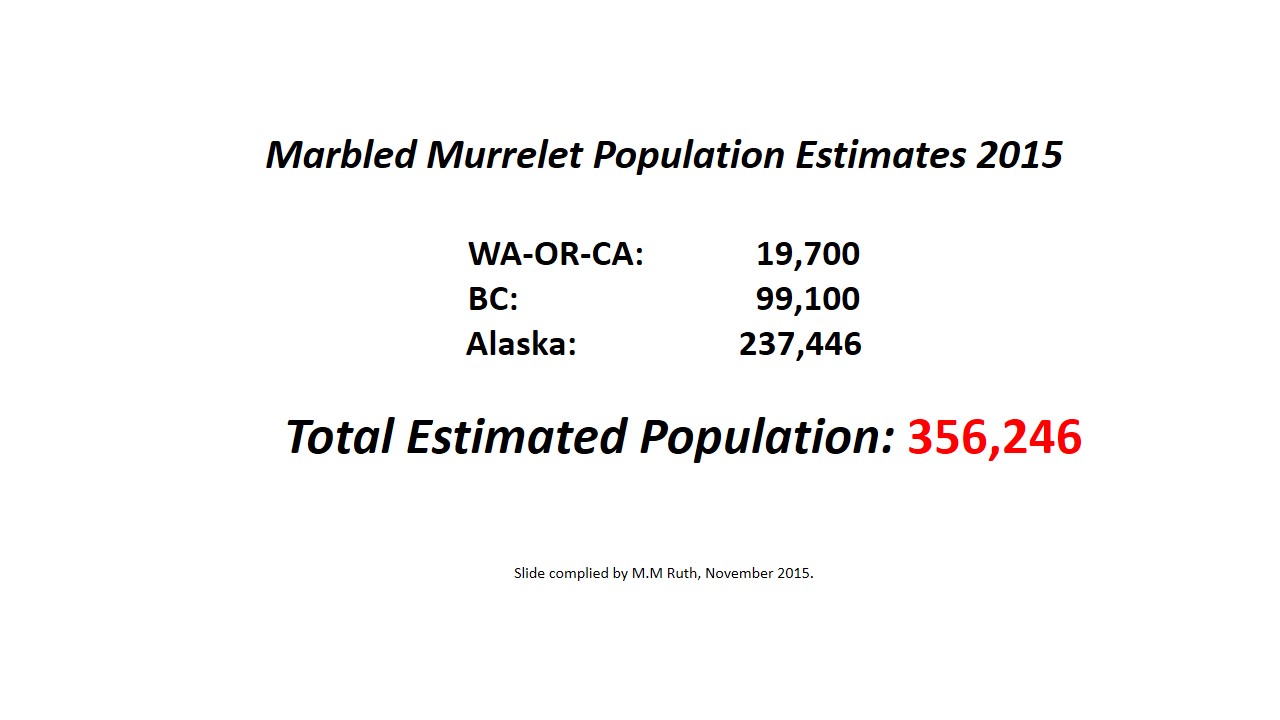
I did the math. Marbled Murrelet populations across their range have plummeted since 2004--from an estimated 947,500 to just over 365,000--yet this lower number isn't widely known. Why not?

I am not exactly sure, but I know this much: murrelets are notoriously difficult to survey, survey effort is not consistent across the bird's range (Alaska, British Columbia, Washington, Oregon, California), confidence intervals can be enormous and can make estimates look like guesswork. However, you cannot hide the downward trend here even if these estimates are a 100,000 birds off.

Sadly, it behooves some land-management agencies to use the higher estimate--close to a million murrelets--because it implies an abundant, healthy population of this imperiled seabird. It is much easier to let Alaska to log its Tongass National Forest or Washington its Olympic Peninsula rainforests, for instance, if we tell ourselves there are nearly a million murrelets on the Pacific Coast.

When the timber industry fought (again) to remove the Marbled Murrelet from the list of federally endangered species in 2008, they lost their case in the U.S. Court of Appeals in 2015 in part because because of the documented differences in how murrelets are managed between the U.S. and British Columbia. Underlying this decision, however,  was the knowledge of the precipitous decline of murrelets in Alaska where most of the murrelet population occurs (but where they do not receive protection under the U.S. Endangered Species Act). 

We can no longer depend on Alaska to serve as the great sanctuary for Marbled Murrelets. We cannot develop conservation strategies for this species if we believe (or want to believe) that there are "enough" murrelets in Alaska and British Columbia. Scientists have documented distinct populations of the Marbled Murrelet across its range. We need to protect all of these populations to preserve genetic diversity and resilience of this species.

In Washington state, where I live, Marbled Murrelet populations are carefully monitored under the Northwest Forest Plan. The latest report shows a strongly negative population trend from 2000-2013 of -4.6% at the state scale. Over this same period, a decline of -3.9% was observed in the Strait of Juan de Fuca and San Juan Islands (Conservation Zone 1) and a -6.7% decline on Washington's Outer Coast (Conservation Zone 2).

Clearly, we are not doing enough to save the Marbled Murrelet from extinction. We need to do more, better, sooner.

The first--and perhaps most difficult step is to remove the beautiful image of a million murrelets from your imagination.

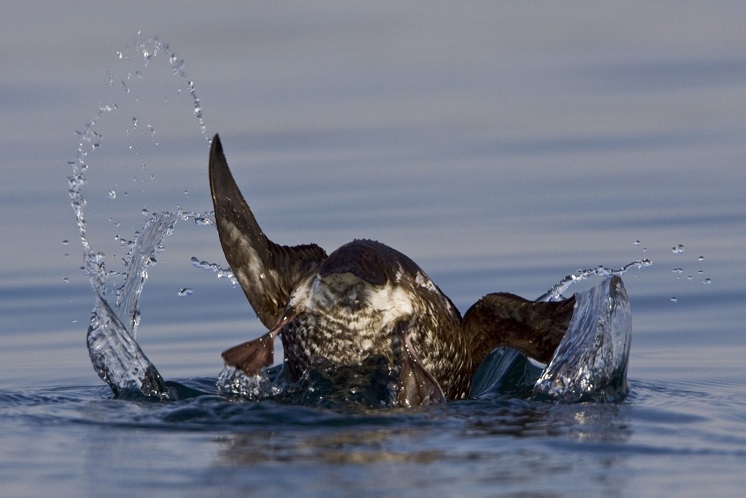
Photo of Marbled Murrelet used with permission.  Glenn Bartley Photography

Photo of Marbled Murrelet used with permission.  Glenn Bartley Photography

Sources for population data: 

WA-OR-CA: G. Falxa, M. Raphael. The Northwest Forest Plan—The First Twenty Years (1994-20013) Status and Trends of Marbled Murrelet Populations and Nesting Habitat. 

BC:.Environment Canada. 2014. Recovery Strategy for the Marbled Murrelet (Brachyramphus marmoratus) in Canada. Species at Risk Act Recovery Strategy Series. Environment Canada, Ottawa. v + 49 pp.

Alaska: Piatt, J.F., Kuletz, K.J., Burger, A.E., Hatch, S.A., Friesen, V.L., Birt, T.P. , Arimitsu, M.L., Drew, G.S., Harding, A.M.A., and K.S. Bixler, 2007, Status review of the Marbled Murrelet (Brachyramphus marmoratus) in Alaska and British Columbia: U.S. Geological Survey Open-File Report 2006-1387, 258 p. 

Tags marbled murrelets
Comment
← Newer Posts Older Posts →

Subscribe

Sign up with your email address to receive my blog in your inbox.

Thank you!
Blog RSS

Flying from Mountaineers Books this Spring—the story of the Pigeon Guillemot—the world’s most charismatic alcid. This non-fiction natural history will be on bookshelves and available from online retailers on April 7, 2026. Click a link below to pre-order a copy now from these purveyors:

Mountaineers Books (non-profit, indie publisher based in Seattle)

Browsers Books (Olympia’s indie bookstore)

Bookshop.org (support your local bookstore)

Barnes & Noble (in the book biz since 1971)

Amazon

Other Natural History Titles by Maria Mudd Ruth…

A Sideways Look at Clouds


“Compelling…engaging.” The Library Journal

“Rare insights into the trials and joys of scientific discovery.” Publishers Weekly

Read more reviews and details here: Rare Bird: Pursuing the Mystery of the Marbled Murrelet

Enjoy this song by Peter Horne, "Little Bird, Little Boat, Big Ocean.” Written about the Marbled Murrelet, but the lyrics work well for the Pigeon Guillemot, too.


  • Clouds
  • Natural History
  • Open-water Swimming
  • Lake Swimming
  • Washington Lakes
  • Wild Swimming Washington
  • Pacific Northwest Clouds
  • Books on Clouds
  • Meteorology
  • Wild Swimming
You must select a collection to display.

Subscribe

Sign up with your email address to receive my blog in your inbox.

Thank you!
Blog RSS

©2025 MARIA MUDD RUTH  |  ALL RIGHTS RESERVED