• Home
  • The Bird with the Flaming Red Feet
  • Rare Bird: Marbled Murrelet
  • A Sideways Look at Clouds
  • Author
  • Events
  • Blog
  • Contact
Menu

Maria Mudd Ruth

Street Address
City, State, Zip
Phone Number
author and naturalist
Homepage-Banner.jpg

Maria Mudd Ruth

  • Home
  • Books
    • The Bird with the Flaming Red Feet
    • Rare Bird: Marbled Murrelet
    • A Sideways Look at Clouds
  • Author
  • Events
  • Blog
  • Contact

The Original Wild Swimmers 

November 28, 2021 Maria Mudd Ruth

Johns Creek at Capitol Land Trust’s Bayshore Preserve (photo by M.M Ruth)

What happens when you join other writers and communicators at the Bayshore Preserve to experience the peak of the chum salmon run is that you find yourself, strangely, at a loss for words.

At least this is what happened to me while standing on the banks of Johns Creek staring down into the shallow water watching fish after fish after fish swim upstream to spawn. 

Being at a loss for words as such a time has its benefits. If you’re not chatting or asking questions, you can close your eyes and listen for the chum, which are sometimes hard to see unless their dorsal fins rise above the surface like a shark’s in the ocean. With your eyes closed, you can hear the difference in the sound of the splash of the creek flowing downstream and the thrash of the salmon heading upstream. The sound of a wild fish—its tail driving its whole body against the current—is distinctive. When you hear it, you open your eyes and look for the fish slicing through the water in an energetic burst that lasts mere seconds.

Listen carefully. (Video by M.M Ruth)

Being at a loss for words means you can stand, awestruck and amazed, taking in the sheer improbability and significant risk of such a long and difficult migration from the open water of the Pacific Ocean, through the Strait of Juan de Fuca, and through the labyrinth of inlets and passages to reach Johns Creek. 

It’s thanks to the Capitol Land Trust that the public can reach Johns Creek, too. The Capitol Land Trust (CLT) purchased the 74-acre property on the western shore of Oakland Bay just three miles northwest of Shelton in 2014. Most of the property was a golf course back then, but slowly the fairways and putting greens are returning to native habitat through painstaking restoration efforts that also includes creating new tidal channels.

The annual chum salmon run drew many visitors to the edges of Johns Creek this fall, but the Bayshore Preserve offers delights and discoveries year round. Now--as we slouch toward the winter solstice and deck our halls with twinkling lights and flickering candles--is the perfect time to walk the preserve’s trails. Now is the perfect time for a quiet ramble to observe the subtler spectacles of nature—the grand profiles of the bare Oregon oaks, evergreen Douglas-firs, and bright-barked madrones; the newly planted oaks; the shorebirds and harbor seals; the eagles, hawks, heron, and gulls. 

Gulls festing on salmon in Johns Creek (photo by M.M. Ruth)

The preserve includes 27 acres of salt marsh habitat described by CLT as “pristine.” Indeed, when you follow the trails through the preserve and look out over the Oakland Bay marshlands, you may feel as I did that you are in a real place, an original piece of Puget Sound, a living landscape untouched by anything but water, wildlife, trees, clouds, wind, and tides. 

The Bayshore Preserve is open dawn to dusk year round. For directions and for more information on the preserve, visit https://capitollandtrust.org/conserved-lands/conservation-areas/oakland-bay-goldsborough-creek-watershed/bayshore-preserve/
In Natural History, Wild Swimming Tags Wild Swimming, Chum Salmon Run, Capitol Land Trust, Bayshore Preserve, Oakland Bay

It's the Water. Just Water.

November 11, 2021 Maria Mudd Ruth
DCB49F18-7D75-42FC-B97E-83FCB1FECCF7.jpg AF7A17CA-2B16-4B8F-BA54-61036A73931C.jpeg A2742C31-0C7C-4B7F-9F1D-659C4B666E32.jpeg E973372A-F09E-450F-BFD3-326814D3A5FB_1_201_a.jpeg 066A3D91-958D-4383-BFFD-E12DE35F6D85.jpeg 4D3C22AF-447A-40FD-805A-238D9C884A50.jpeg 87A4D9D3-3B60-4714-B73F-90EF3F202C77.jpeg E38C6CE6-9D91-4FFC-940A-B52AA6615BAC.jpeg B75226C5-7EA7-424A-B60A-8AC7DB2CECF7.jpeg

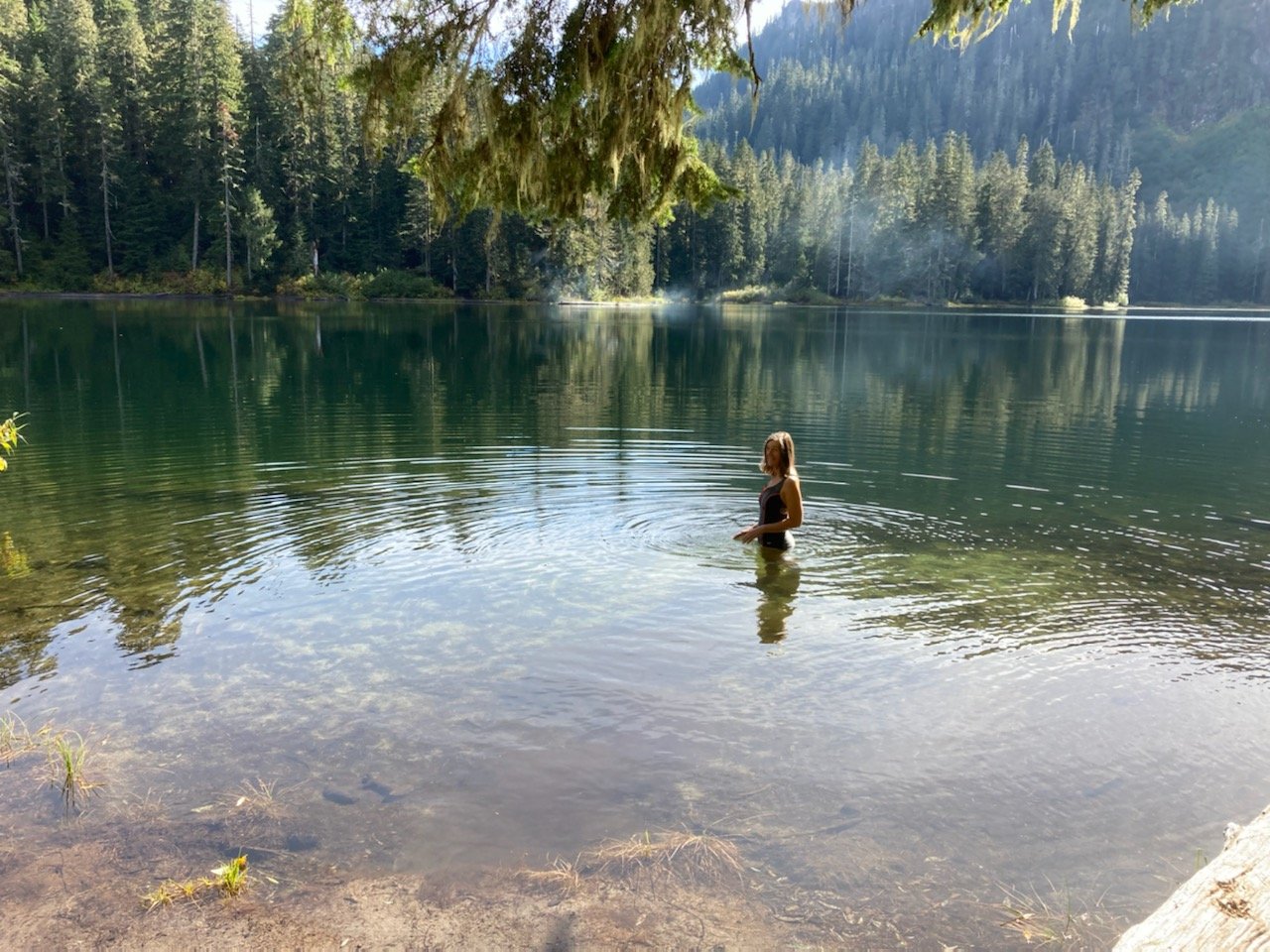
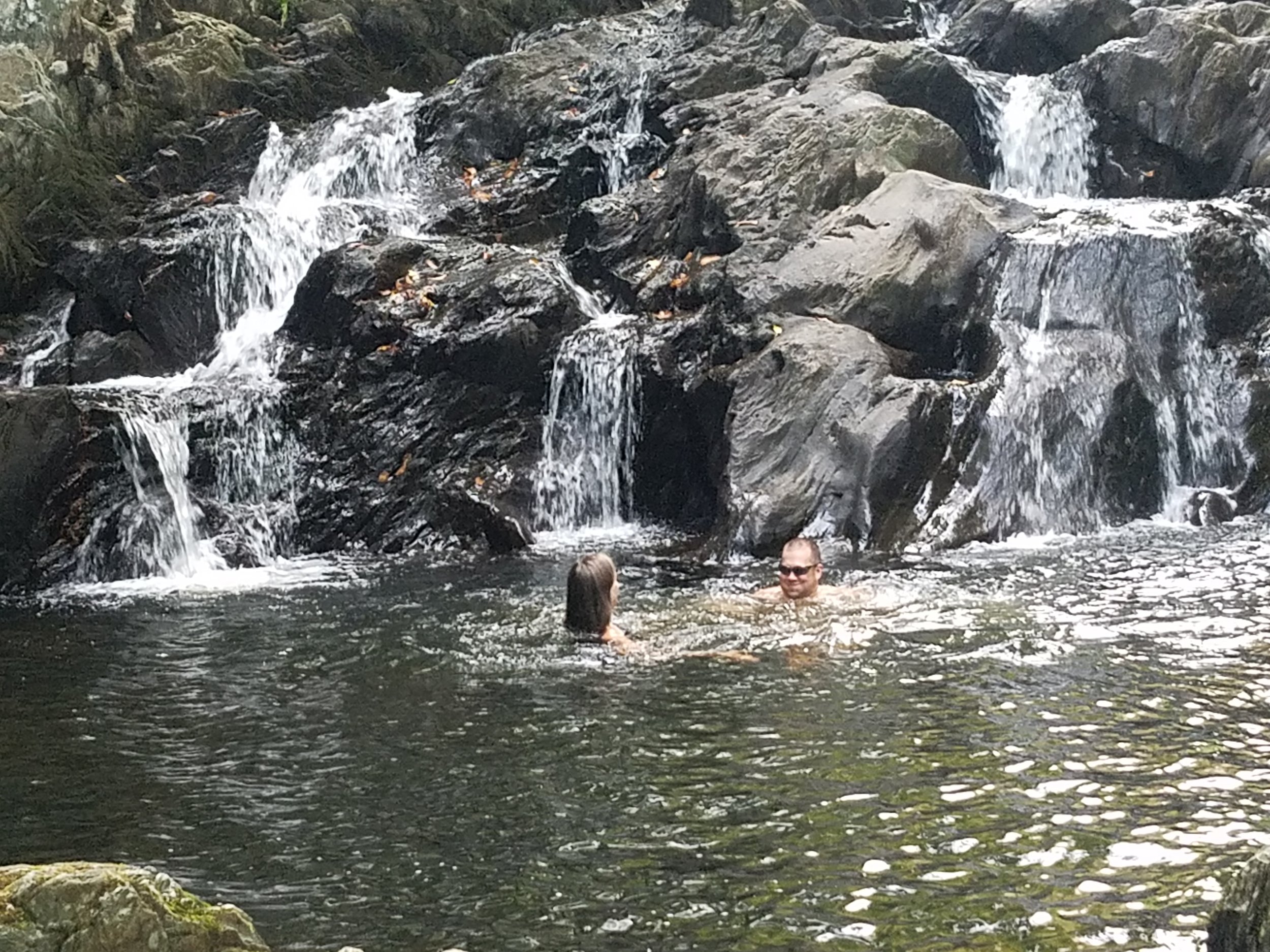
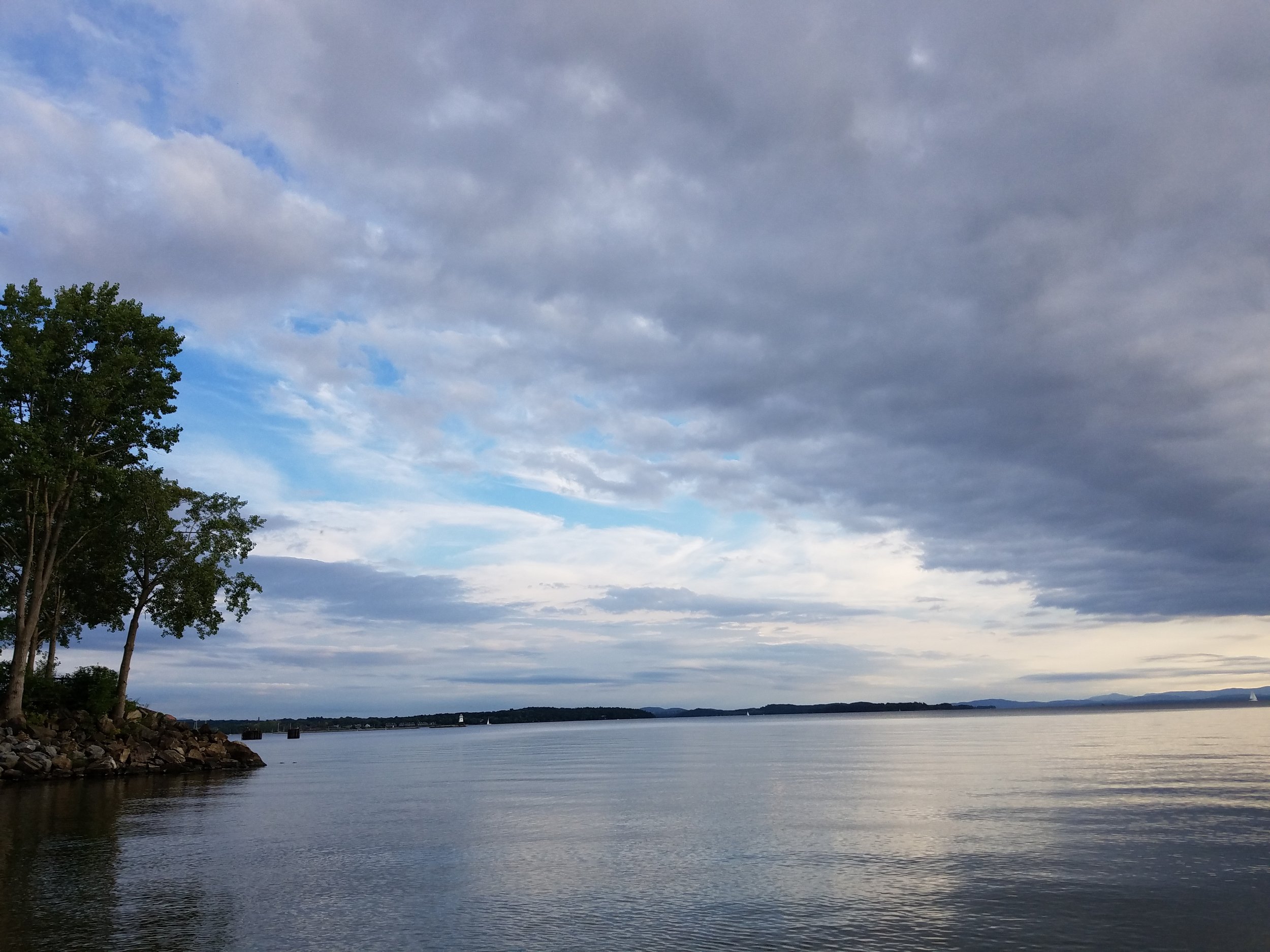
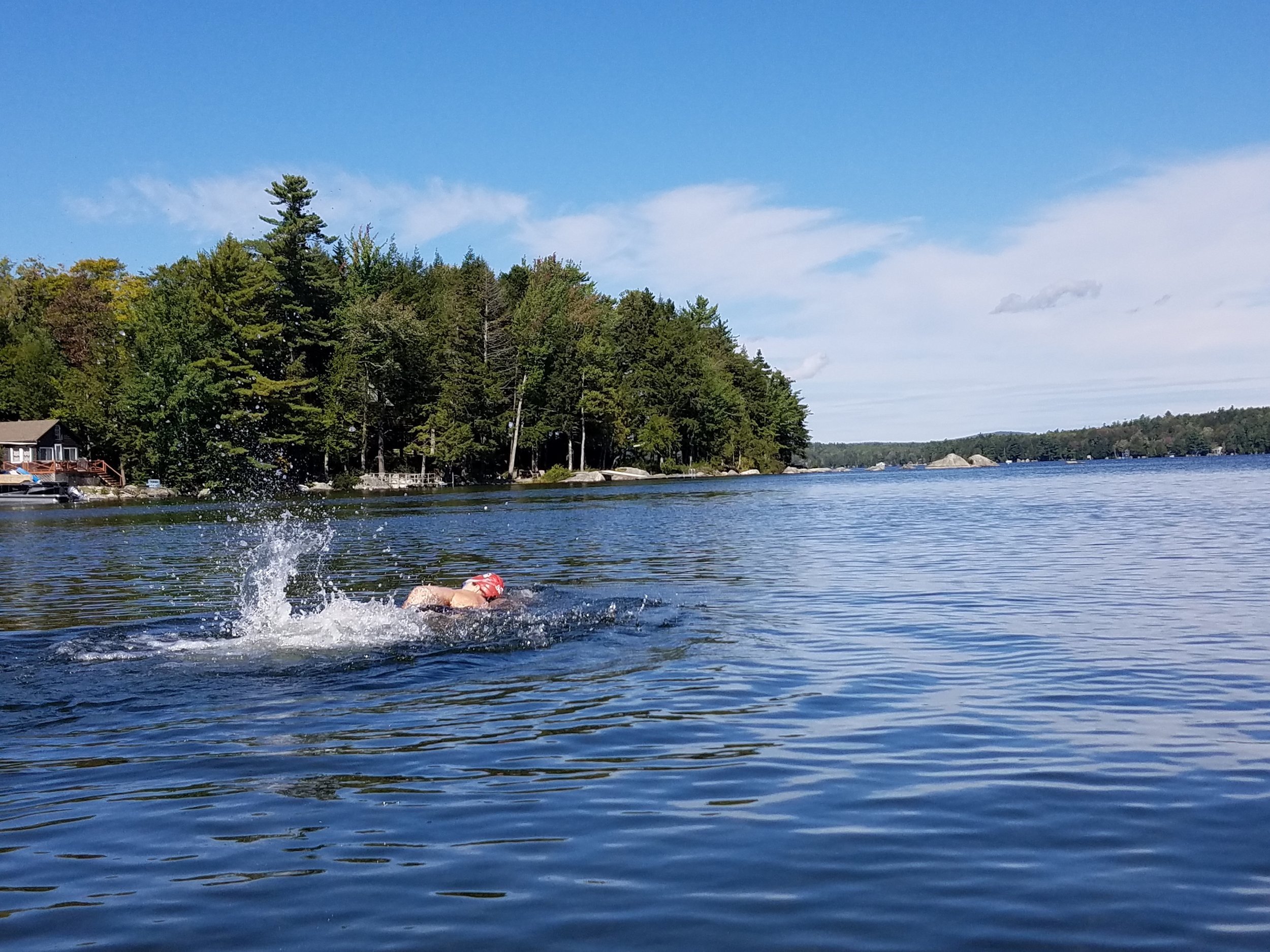
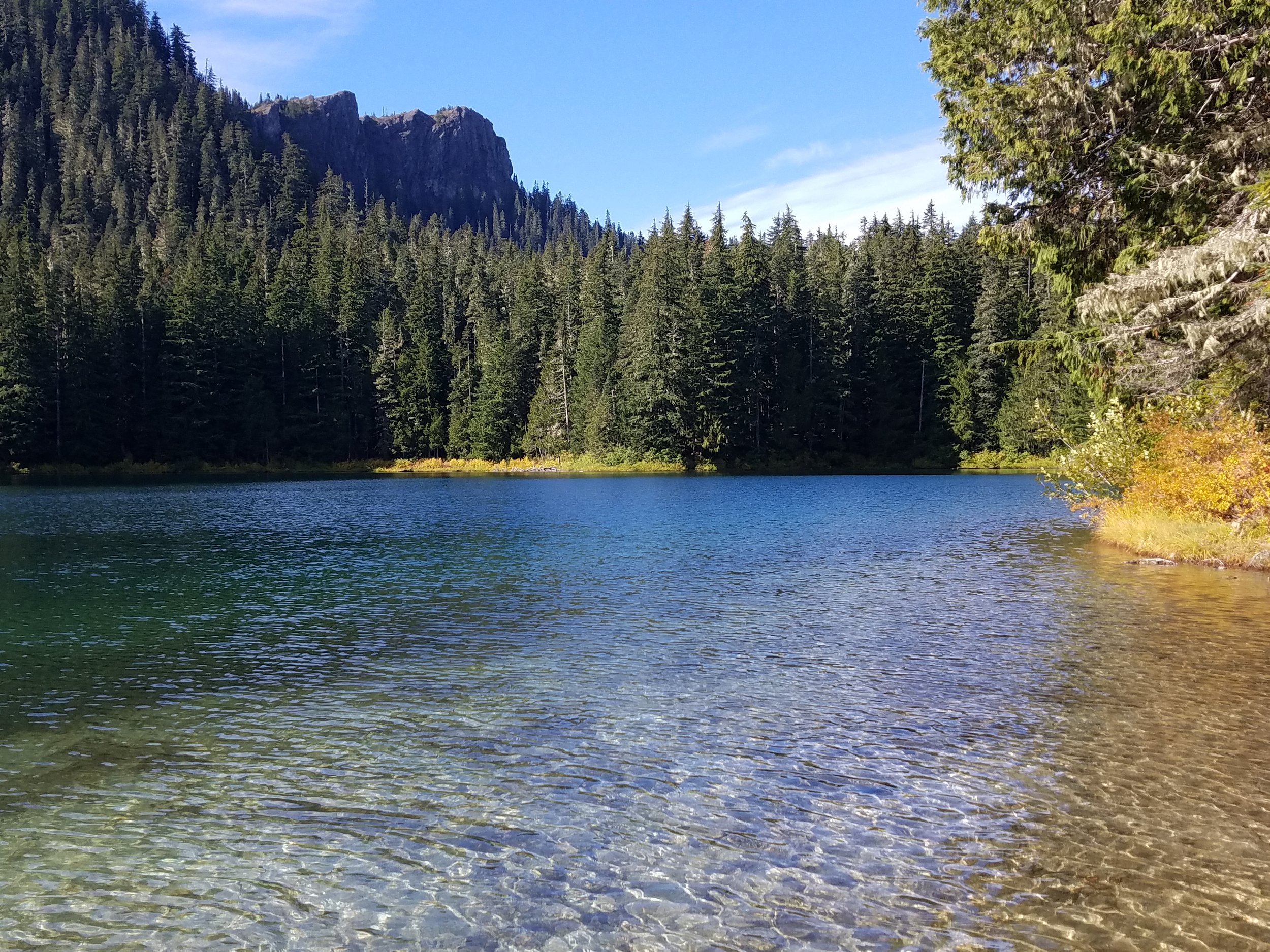
The Summer of ‘21 was a good one for wild swimming. After two years of swimming in lakes whenever I could, I’ve finally broken down the barrier of “it’ll be too cold.” No lake or river was too cold for me this summer—perhaps because I’ve disassociated pain with cold, or because I have learned just how long to stay in before I get too cold, or because I am okay with a 30 second “swim” involving a wool hat and jogging in place afterward.

Beyond getting acclimated/habituated to the cold water, I have started to crave it. I still kinda dread it, but that’s a very small part of the whole experience.

I’ve swum in many new lakes and rivers in Maine, Vermont, and Washington this summer. All very cold and very wonderful in different ways. It was during a swim this summer in my local lake that I felt overwhelming gratitude for being in the water. It occurred to me as I was swimming under water that I was experiencing just one thing: The water. Just water. It was all I could feel, see, and hear. One thing.

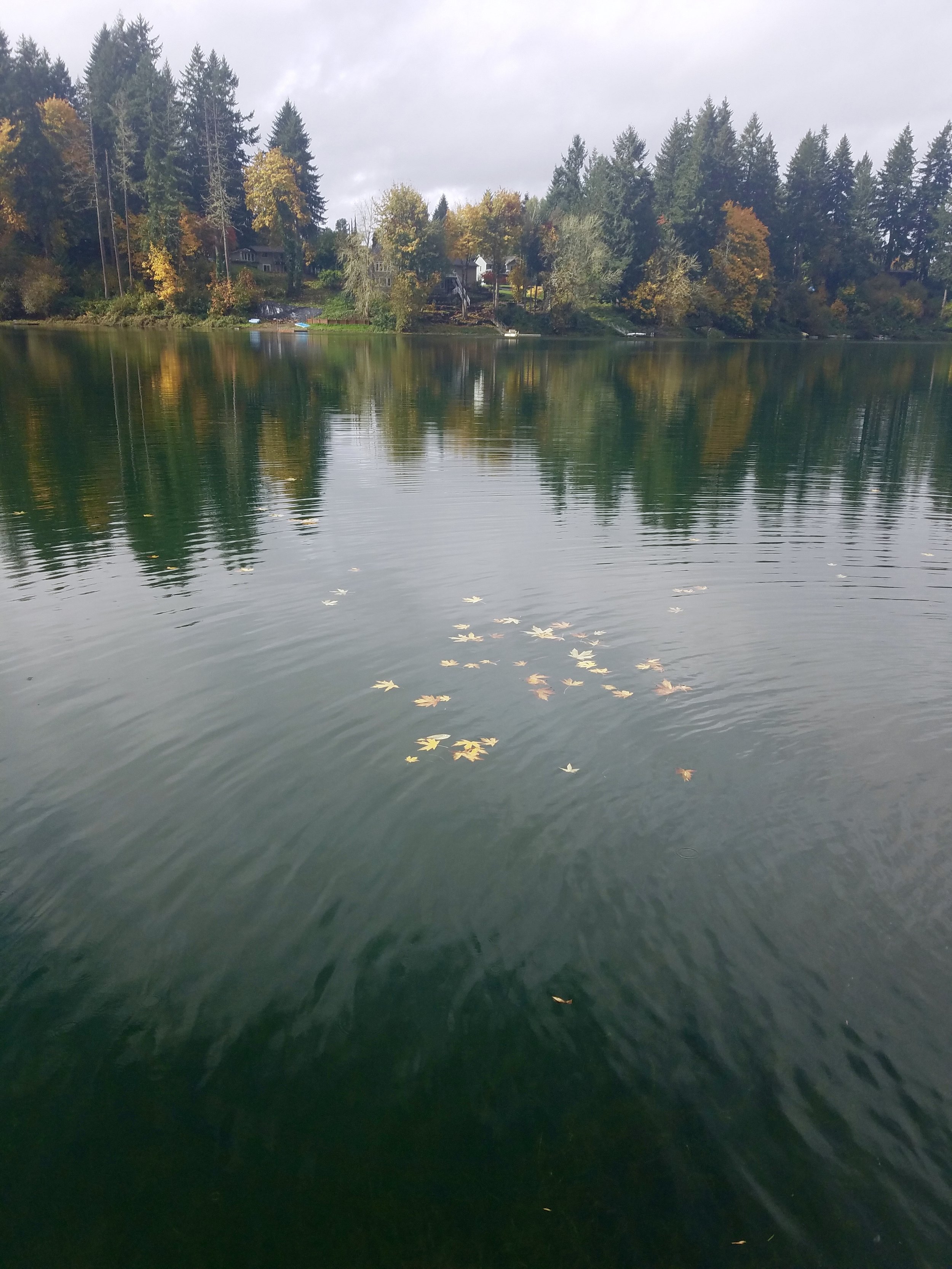
The lake is too deep to see to the bottom so I was just looking into water and more water. With my head underwater, there was little sound but the splashing sounds I made. I was surrounded by one thing. I was moving through one thing. I was struck that this experience felt unusual. When was the last time I was completely enveloped in one thing? Even coming up for air exposed me to hundreds of things all at once—things I was lucky enough to experience, such as other people on the lake, the trees, the homes, the docks, the ducks, the boats, the boat ramp, the sky, and—of course the clouds. But I didn’t want to think about them just then. i was tired of thinking and processing.

Cold-water swimmers talk and write about the boost in mental clarity they often experience after a swim—one of the many benefits of this increasingly popular pastime. I think they are describing the after-effect of the swim, when your circulation is restored and “fresh” blood is pumping into your brain. I have certainly felt this—from feeling really awake to positively euphoric. I had not until my underwater swim wondered about the benefit of experience just one thing. Full immersion in the lake—even for a few minutes— felt like the perfect antidote to the “busy” mind, to multi-tasking, to a day of sensory overload, a day of too many screens and too many images. Meditation will also quell a busy mind but I am not practiced enough to have meditation feel like a very welcome sensory-deprivation tank.

For those readers who are wild swimmers or lap swimmers, may I recommend a few stretches of swimming underwater? Just a few breast-stroke/frog kicks through the water with no goal in mind except to experience the simple and extraordinary pleasure of one thing.

In Lake Swimming, Open-water Swimming, Washington Lakes, Wild Swimming, Wild Swimming Washington Tags Wild Swimming, Open-water Swimming, Lakes of Washington

Summer's Lease

August 26, 2021 Maria Mudd Ruth
20210823_094651.jpg

“And summer’s lease hath all too short a date.” This line from Shakespeare’s Sonnet 18 sprang to mind when my swimming buddy and I approached the lake for a full-moon swim. Already we are past the peak of summer and are gliding toward the autumnal equinox. it’s been a hot, dry summer here in the Pacific Northwest and I am quite ready for this particular lease to end. I miss the clouds, the rain, the cooler air.

Recently, the air took on a welcome chill and we pulled out our fleecy after-swim dry robes for an 8:30 p.m. swim across the lake. The plan was to swim under the full moon. The moon did rise…on someone else’s lake. Due to the little problem of a very tall wall of trees on the eastern shore of the lake, we didn't get even a glimpse of the moon. No matter—the stars came out and we swam under Mars, the Big Dipper, and a sprinkling of faint stars. A lovely consolation prize.

However the sun, stars, moon, and our own calendars mark time, August 21 marks my first swim of Autumn. On a hot summer day, a water temperature of 75 degrees F would normally feel cool or refreshing. With the air temperature at 65 degrees F, the lake felt like a warm, liquid blanket wrapping around my shoulders. While swimming the crawl, I was aware of the pleasant sensation of alternating warmth and chill as my arms submerged and emerged.

As the sky darkened, it was a challenge for my swim buddy and me to stay close by. She veers right and I veer left so we took breaks more frequently to call out and stay in voice contact. And though the water was clear and dark there was enough light in the sky still to illuminate my body underwater. Such a strange sight to see my arms—almost disembodied—slowly pulling through the dark water beneath me.

This warm, languorous swim will be one I hope to carry with me into lake this fall and winter.

In Lake Swimming, Open-water Swimming, Washington Lakes, Wild Swimming, Wild Swimming Washington Tags Wild Swimming, Open-water Swimming, Night swimming, Full-moon lake swim

Atlas of the Lost World

August 13, 2021 Maria Mudd Ruth

This is the 1981 edition of the National Geographic Atlas of the World. It is one of several fine atlases I have by the NGS. I keep mine on a bookshelf in my kitchen because it isn’t a Ruth Family Dinner unless we bring a reference book to the table. When my sons lived at home, that book was usually the dictionary; now that it’s just me and my map-making husband, it’s often a map or an atlas.

We are sticklers for a good map key—the explanation of the symbols used on a map. Keys usually appear in a little box in one of the corners of the map. The key to this particular atlas was printed on a single separate card (5 x 16.5 inches)— that works with each map and doesn’t take up space on the maps themselves. The card fell out of the atlas a few weeks ago. I studied it. I have looked at it every day since. And it is heartbreaking given how much the world has changed in 40 years.

Here are the three of the sections of the key and my notes, with all due respect to the NGS editors and cartographers who knew the world back then.

Prolonged drought and global warming has lead to  ice-cap melting, coral reefs bleaching, intermittent  lakes vanishing. The new limits of drift ice has stranded polar bears; the limit of  unnavigable polar ice is shrinking and opening up new passageways. The pale blue color we use to symbolize water is turning green with algal blooms. Global ocean currents are moving in strange ways.

Prolonged drought and global warming has lead to ice-cap melting, coral reefs bleaching, intermittent lakes vanishing. The new limits of drift ice has stranded polar bears; the limit of unnavigable polar ice is shrinking and opening up new passageways. The pale blue color we use to symbolize water is turning green with algal blooms. Global ocean currents are moving in strange ways.

In the forty years since this atlas was published, so many boundaries have shifted or disappeared. We have lost so much of our Tundra, Ice Shelves, and Glaciers. And though Tree Line is associated with elevation or latitude, its is hard not to see these little red trees as symbols of trees lost to wildfires. Below Sea Level is used to be just a matter of elevation of land.  Why did it take us so long to think about the social equity and racial justice component of sea-level rise? Our focus should have been on the elevation of human beings,

In the forty years since this atlas was published, so many boundaries have shifted or disappeared. We have lost so much of our Tundra, Ice Shelves, and Glaciers. And though Tree Line is associated with elevation or latitude, its is hard not to see these little red trees as symbols of trees lost to wildfires. Below Sea Level is used to be just a matter of elevation of land. Why did it take us so long to think about the social equity and racial justice component of sea-level rise? Our focus should have been on the elevation of human beings,

To list Oil Fields, Oil Pipelines, and Oil Pumping Stations as Culture seems wrong. Other than Parks, there seems to be no culture in the world at all. “Site” has promise but it hardly hints at Culture, especially when listed at the very bottom of the key with Ruins and Battles. Wouldn’t it be great if the battles to save our planet (perhaps symbolized by a green tree or a happy face), should cover the pages future atlases.

To list Oil Fields, Oil Pipelines, and Oil Pumping Stations as Culture seems wrong. Other than Parks, there seems to be no culture in the world at all. “Site” has promise but it hardly hints at Culture, especially when listed at the very bottom of the key with Ruins and Battles. Wouldn’t it be great if the battles to save our planet (perhaps symbolized by a green tree or a happy face), should cover the pages future atlases.

In Natural History, Maps Tags National Geographic Atlas of the World, World Atlas, The art of the map key
← Newer Posts Older Posts →

Subscribe

Sign up with your email address to receive my blog in your inbox.

Thank you!
Blog RSS

Flying from Mountaineers Books this Spring—the story of the Pigeon Guillemot—the world’s most charismatic alcid. This non-fiction natural history will be on bookshelves and available from online retailers on April 7, 2026. Click a link below to pre-order a copy now from these purveyors:

Mountaineers Books (non-profit, indie publisher based in Seattle)

Browsers Books (Olympia’s indie bookstore)

Bookshop.org (support your local bookstore)

Barnes & Noble (in the book biz since 1971)

Amazon

Other Natural History Titles by Maria Mudd Ruth…

A Sideways Look at Clouds


“Compelling…engaging.” The Library Journal

“Rare insights into the trials and joys of scientific discovery.” Publishers Weekly

Read more reviews and details here: Rare Bird: Pursuing the Mystery of the Marbled Murrelet

Enjoy this song by Peter Horne, "Little Bird, Little Boat, Big Ocean.” Written about the Marbled Murrelet, but the lyrics work well for the Pigeon Guillemot, too.


  • Clouds
  • Natural History
  • Open-water Swimming
  • Lake Swimming
  • Washington Lakes
  • Wild Swimming Washington
  • Pacific Northwest Clouds
  • Books on Clouds
  • Meteorology
  • Wild Swimming
You must select a collection to display.

Subscribe

Sign up with your email address to receive my blog in your inbox.

Thank you!
Blog RSS

©2026 MARIA MUDD RUTH  |  ALL RIGHTS RESERVED