• Home
  • The Bird with the Flaming Red Feet
  • Rare Bird: Marbled Murrelet
  • A Sideways Look at Clouds
  • Author
  • Events
  • Blog
  • Contact
Menu

Maria Mudd Ruth

Street Address
City, State, Zip
Phone Number
author and naturalist
Homepage-Banner.jpg

Maria Mudd Ruth

  • Home
  • Books
    • The Bird with the Flaming Red Feet
    • Rare Bird: Marbled Murrelet
    • A Sideways Look at Clouds
  • Author
  • Events
  • Blog
  • Contact

Beware the Cloud

March 20, 2017 Maria Mudd Ruth
IMAG3927.jpg

This headline appeared in last week's paper and I had a gleeful "I told you so" reaction. Since when were clouds of any kind stable? Here, for your amusement, is an excerpt from my forthcoming book, A Sideways Look at Clouds, which will be published by Mountaineers Books this Fall. 


"In my first year of cloud watching around Olympia and western Washington, I took thousands of digital photographs of clouds, which I downloaded onto my computer. I did not take the time to change each photo’s default name, such as “IMG_5388,” or the names of the default folders, such as “124__03.”

To organize this mess and to test my cloud identification skills, I eventually created ten new folders--Stratus, Cumulus, Nimbostratus, and the rest. Once I opened the first folder of photos to drag and drop, I realized the horrible truth: paying close attention to the clouds does not guarantee you can identify them.

My first cloud stumped me--Altocumulus or a Cirrocumulus? The second--Cirrus maybe? And the third--no clue. Before long, I had cloud guides on each knee and cloud charts spread out the floor next to me. There was no way to confirm the accuracy of any of my classifications. There were no green check marks accompanied by happy bell sounds or red Xs with jolting buzzes when I dropped my photos into one of the ten folders. It was all guesswork.

Taking a less ambitious approach, I created three new folders--Layered, Heaped, Wispy--but this gross-level sorting also proved too challenging. Many of my photos seemed to include more than one type of cloud. I created a fourth folder--Mixed. And then a fifth--BWJ (Big White Jobs). A sixth--UFO (for Unidentified Floating Objects)--is where most of my first folder of clouds landed, which made my whole sorting exercise pointless.

To bring some sense of order to the chaos, I created twelve folders, one for each month of the year. Perhaps, I thought, a chronological ordering scheme would reveal hidden patterns or seasonality in my local clouds. I dragged and dropped for a few hours. When my husband got home from work, I told him about my cloud-sorting project.

He paused thoughtfully.

“What’s the difference between a February and March cloud?”

“I don’t know yet. That’s why I’m sorting them this way. To see if there is a pattern.”

“Hmmm,” he said.

He was right.

Monthly was arbitrary. Sorting them by season would make more sense, but I’d need more than a few years’ worth of photos to see any pattern.

The next morning, I dragged all my monthly folders into another folder--CLOUDS.

Not long after this, my computer crashed. The diagnosis from the repairman was “too many photographs.” My mother lode of photos had left the computer operating system with no room to update itself, stay on top of viruses, and run smoothly.

My husband suggested I start deleting photos.

I told him I could not.

Where would I begin? I could never delete my Altocumulus with the five names. Or the Mother’s Day photo of me and my two sons against a sky full of gorgeous mare’s tail Cirrus clouds. Or the Cumulonimbus that looked like a giant flying over the Black Hills west of Olympia. Or any of the pink ones. Or the one of me pretending to eat fog on Mount Rainier. Certainly not any of the BWJs, Mixed, or March clouds. What if I had captured a rare cloud no meteorologist had ever seen?

When I used the word “agony” to describe this culling process, my husband chuckled and suggested I store all my photos in “the cloud.”

I gave him a look.

“Clouds evaporate,” I said.

A few days later, he brought home a backup hard drive the size of a paperback. Now all my clouds are housed together in this small gray box under my desk, as secure and orderly as any clouds will ever be.

Text and photos copyrighted 2017 Maria Mudd Ruth


In Clouds Tags clouds, the cloud, cloud storage
Comment

Thank You, Murreleteers!

March 10, 2017 Maria Mudd Ruth
Yes, it's a Marbled Murrelet as depicted by a second-grade student.

Yes, it's a Marbled Murrelet as depicted by a second-grade student.

Thanks to everyone who took the time to send in comments to the State Environmental Review Policy (SEPA) Center in Olympia, Washington. The concern for the Marbled Murrelets and the forests where they nest has been overwhelming and uplifting. Now, with several thousand public comments submitted, we will be waiting for the U.S. Fish & Wildlife Service and the Department of Natural Resources to respond (months from now) and move forward on the Long-Term Conservation Strategy.

I was relieved that this public-comment period did not include oral testimony--that three-minute window of time into which you must compress your argument and supporting facts succinctly and clearly and without getting tongue-tied around "marbled murrelet" (which I do at least once during every talk I give on this bird). However, written comments have their own set of challenges. In fact, writing in general is much harder than it looks. Here is what one self-described "Author in training (maybe)" has to say about that:

Comment

Help for the Murrelet

February 20, 2017 Maria Mudd Ruth
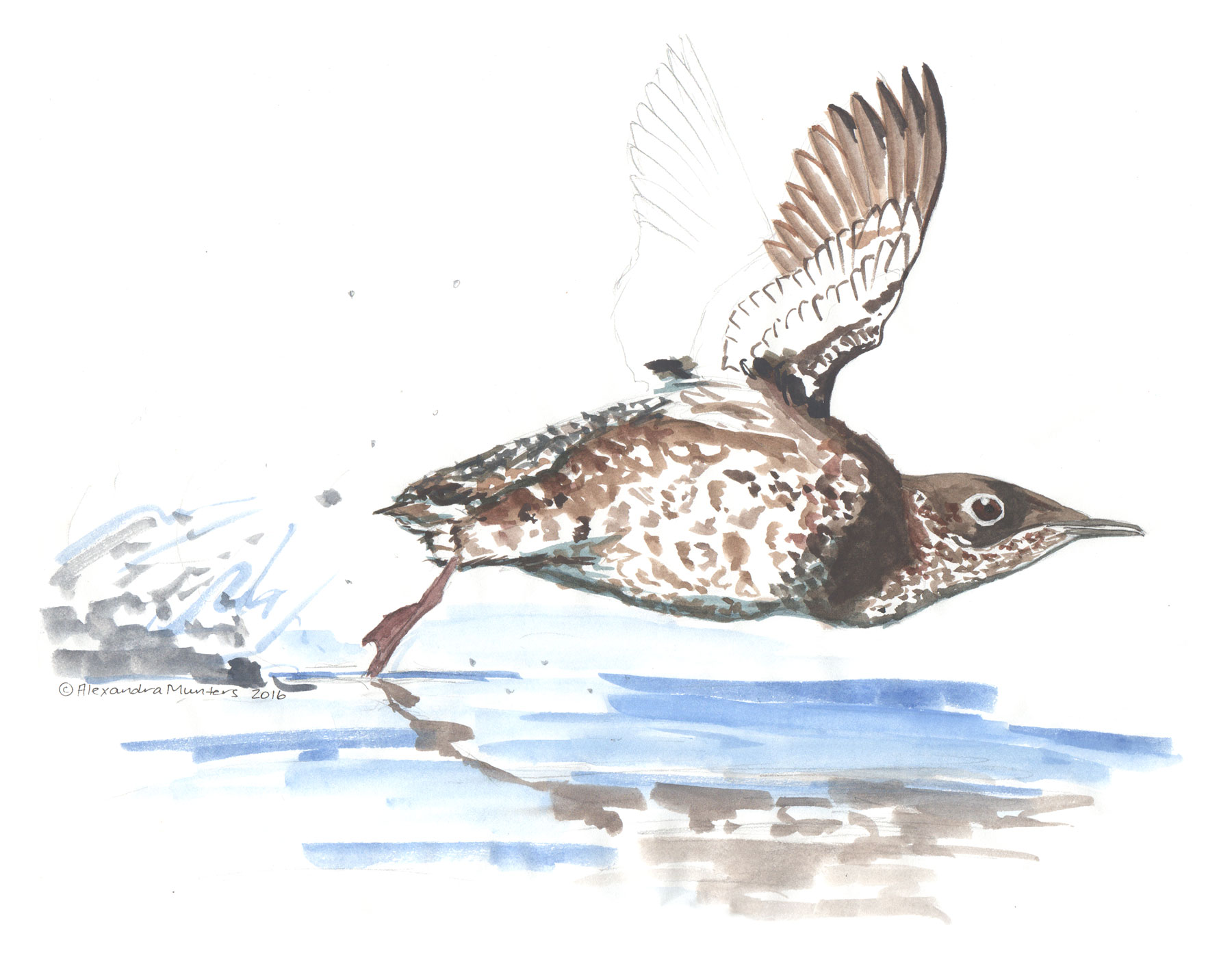
Marbled Murrelet illustration ©Alexandra Munters 2016 and used with permission.

Marbled Murrelet illustration ©Alexandra Munters 2016 and used with permission.

After several years of work, the Department of Natural Resources and the U.S. Fish and Wildlife Service released in December the draft Environmental Impact Statement (dEIS)  for six alternative Long-Term Conservation Strategies for the endangered Marbled Murrelet. The dEIS is now available for public review and input. Once the preferred strategy is selected, it will replace the interim strategy that has been in place since 1997. 

But wait.

After so much time and effort, it turns out that not one of the alternatives actually does anything to save the murrelets nesting in our forested state lands. In fact, under scientific analysis, each Alternative--even the most conservative Alternative F--is associated with a downward population trajectory over the next fifty years.

Fortunately, a coalition of conservation organizations has developed a Conservation Alternative and now the coalition needs your support to encourage the DNR and USFWS to consider this alternative. 

You don't need to be a policy expert to support the Conservation Alternative. If you support the work of your local Audubon chapter, Washington Audubon, the Seattle Audubon Society, the Washington Environmental Council, Conservation Northwest, Defenders of Wildlife, the Olympic Forest Coalition, the Washington Forest Law Center, or the Sierra Club--the organizations that together developed a Conservation Alternative you can feel good about supporting this.

In a nutshell...

Conservation Alternative aims to achieve the following biological goals for the marbled murrelet population in Washington State (adapted from the 2008 Science Team Report and 1997 Recovery Plan:

1.  a stable or increasing population for at least a 10-year period 

2.  an increasing geographic distribution

3.  a population that is resilient to disturbances (stochastic events such as wind throw, wildfire, and insect outbreak)

The Conservation Alternative is based on Alternative F, but recommends the following additional protections:

 1. All current and future habitat within the next 50 years and/or

 2. All Emphasis Areas and Special Habitat Areas from Alt. E (collectively “Conservation Areas” when combined with Marbled Murrelet Management Areas)

3. No-touch 150 m buffers around all occupied sites and old forest in the Olympic Experimental State Forest planning unit as mapped by the 2008 Science Team.

Now what?

Please take a moment to send a letter or e-mail by Thursday March 9 at 5 p.m. (Only written comment is being accepted in this process).  Submit your comments online at sepacenter@dnr.wa.gov or SEPA Center, PO Box 47015, Olympia, WA 98504-7015. 

Please include the file number "12-042001" on letters and postcards and in the subject line of comments send by e-mail. 

If you are short on time...simply write this: 

Please request that Board of Natural Resources analyze a Conservation Alternative in a Supplemental EIS before they selected a preferred alternative.  

If you have another few minutes and would like to add more, here are some suggestions: 

Predicted population decline: All six of the current strategies being considered by the DNR show a declining population trend for the next 50 years. None of the alternatives contribute to Marbled Murrelet survival and recovery. This is demonstrated by the DNR's own population modeling. Please recommend the BNR analyze the Conservation Alternative in a Supplemental EIS.

Recent uplisting to “endangered.” In December 2016, the Marbled Murrelet’s status was uplisted from a “threatened” to the more serious “endangered” by the Washington Fish & Wildlife Commission. The dEIS Alternatives do not properly reflect this imperiled state, as evidenced by the ongoing population decline in the dEIS population viability analysis and by the 44% smaller population size (from 2001-2015) documented in the 2016 status review. Please recommend the BNR analyze the Conservation Alternative in a Supplemental EIS.

Best-available science: Alternative F, which is based on the 2008 Science Team Report, comes closest to reaching Marbled Murrelet recovery goals, but unfortunately this alternative does not include important, more recent scientific findings. For example, a 2015 study identified the regional importance of the Strait of Juan de Fuca as a "hotspot," not previously recognized, of murrelet at-sea density adjacent to high/higher quality nesting habitat. Please recommend the BNR analyze the Conservation Alternative in a Supplemental EIS.

“Bridge” habitat: DNR-managed lands contain approximately 15% (213,000 acres) of all existing Marbled Murrelet habitat in the state, and this habitat is needed to serve as a temporal "bridge" to support the bird's population over the next 30-50 years while it is most vulnerable to extirpation. Please recommend the BNR analyze the Conservation Alternative in a Supplemental EIS.

Harvest volumes: Alternatives A-E set harvest volumes between 35,000 and 49,000 acres DNR's best option for protecting Marbled Murrelets, Alternative F, allows the harvest of 25,000 acres of mature forest habitat that is needed for the population to stabilize and recover. The DNR and USFWS should consider a stronger, more effective alternative with considerably lower harvest volumes to prevent the local extinction of the Marbled Murrelet. Please recommend the BNR analyze the Conservation Alternative in a Supplemental EIS.

Precautionary approach: Without explicit population recovery criteria at the state or federal levels, the adopted LTCS Alternative could preclude murrelet recovery if it does not preserve enough existing and future habitat.  Under these conditions, a precautionary approach—as outlined in the Conservation Alternative—is appropriate. Please recommend the BNR analyze the Conservation Alternative in a Supplemental EIS.

Mitigation for loss of high-quality habitat: The restoration of low quality habitat over time does not adequately mitigate for the loss of higher-quality habitat that currently exists.  Washington’s murrelet population cannot afford further habitat losses in its imperiled status, or it may become functionally extirpated before future, low quality habitat is restored gradually over time. If murrelets become functionally extirpated from Washington, the lack of genetic flow and genetic variability will become a more significant threat to the persistence of the species at the range-wide scale. Please recommend the BNR analyze the Conservation Alternative in a Supplemental EIS.

Edge-effects: Not all of the dEIS Alternatives adequately ameliorate the edge effects associated with habitat fragmentation.  For example, Alternatives A and B completely lack contiguous, blocked-up Conservation Areas.  Alternative F stipulates that Marbled Murrelet Management Areas only have a 50% habitat target in the Olympic Experimental State Forest; this insufficient for achieving one of the goals of the Conservation Areas—to minimize edge effects. Please recommend the BNR analyze the Conservation Alternative in a Supplemental EIS.

Buffers. Buffers on occupied sites of 100 meters or less (Alt. A-F) are too narrow to protect murrelet nests from predators, a suboptimal microclimate, and/or wind throw. Buffers of 150 meters should be part of the preferred alternative. Please recommend the BNR analyze the Conservation Alternative, which provides for these buffers, in a Supplemental EIS.

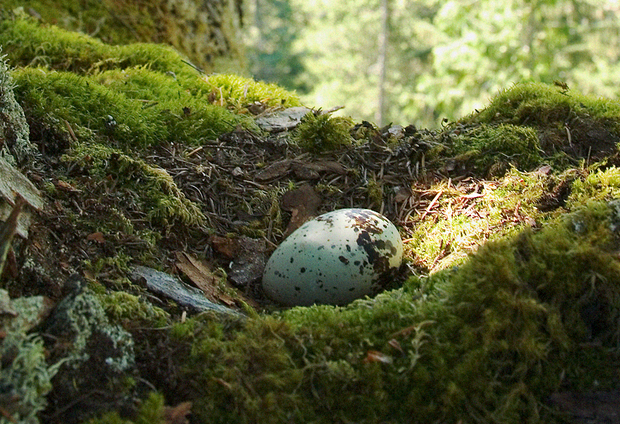
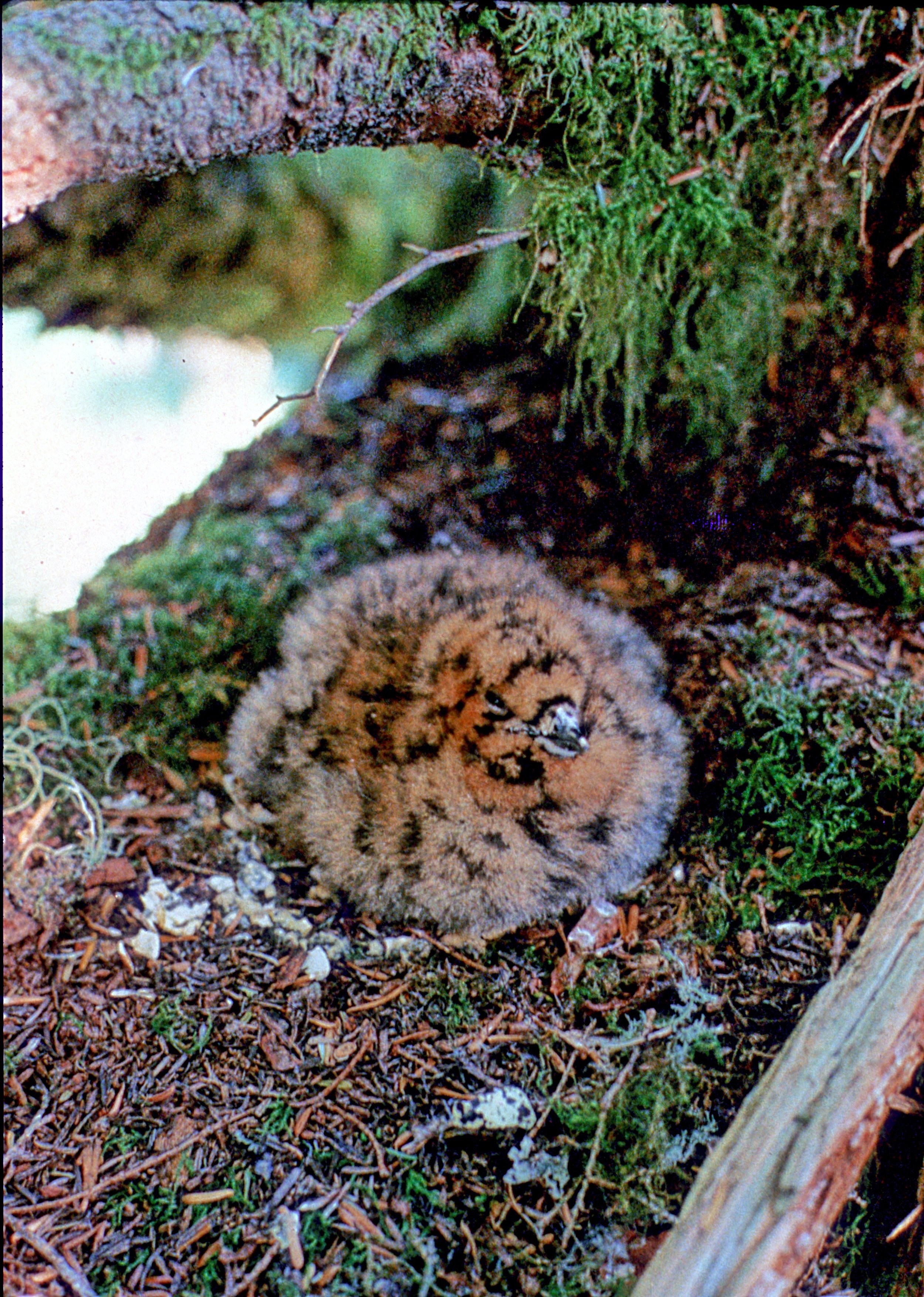
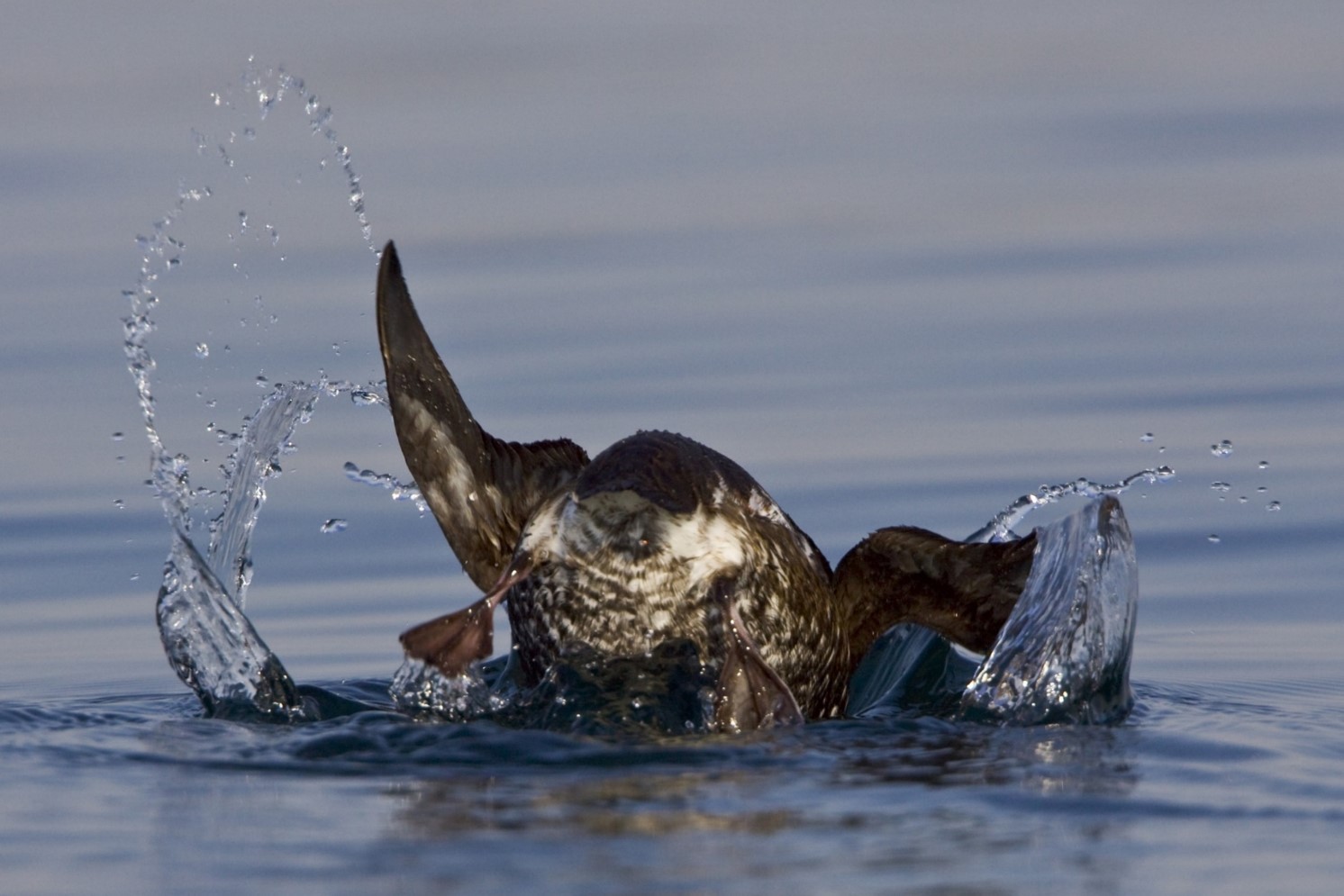
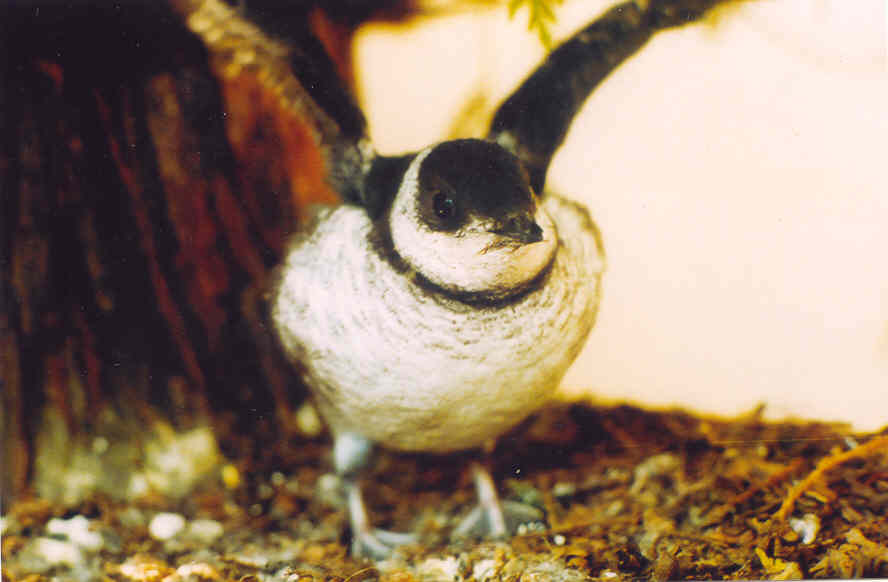
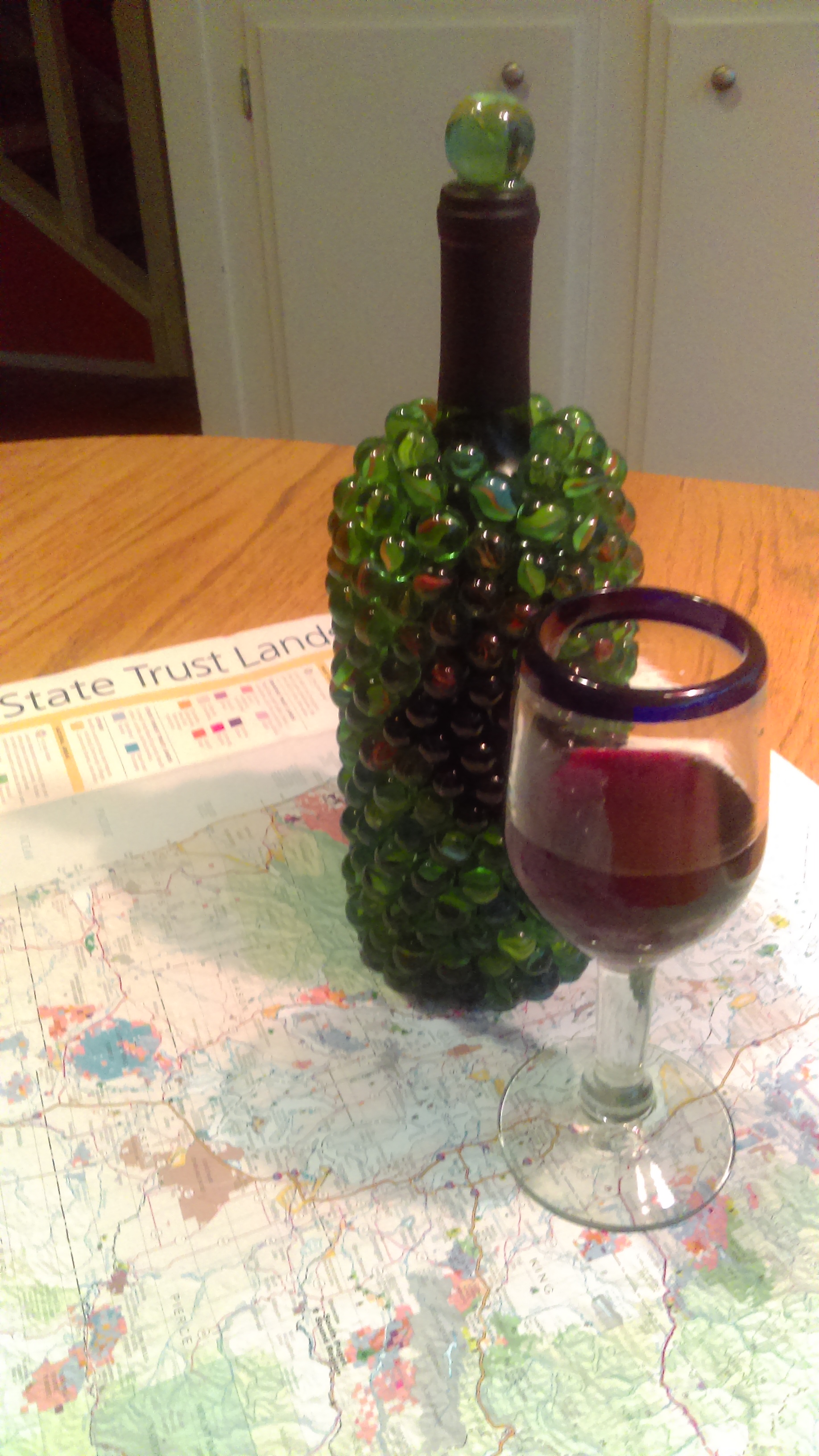
Make the talking points your own. Add information about your experience or or expertise on the marbled murrelet. Thank you for your help. If you are not filled with warm and fuzzy feelings about this bird, please click the chick for more photographs of this unique, endearing, and imperiled seabird. And a photo a literal bottle of marbled merlot. 

Chick with Fish.jpg MAMU_AMunters_signedsketch.jpg Marbled_Murrelet_chick,_Brachyramphus_marmoratus_Pengo.jpg redblu44-2.jpg Marbled-Murrelet-single-egg-Nick_Hatch_US_ForestService.png camochick.jpg aukebay_11.jpg BartleyDive.jpg chickcollar.jpg Hamer13.jpg IMAG3793.jpg
In Conservation, Endangered Species Tags marbled murrelet, endangered species, Endangered Species Act, Long-term conservation strategy
Comment

Clay in Clouds

October 29, 2016 Maria Mudd Ruth
This plate, made by yours truly, is made of a type of clay called kaolinite. Little did I know that kaolinite plays a critical role in the formation of our high, icy clouds.

This plate, made by yours truly, is made of a type of clay called kaolinite. Little did I know that kaolinite plays a critical role in the formation of our high, icy clouds.

Liquid water molecules need more than sub-freezing temperatures to freeze. They need something to freeze on—something like cloud condensation nuclei but with a surface that mimics the hexagonal structure of ice itself.  Suitable nuclei, called ice nuclei, do exist but are rare—perhaps one in a million particles among airborne particles in the atmosphere. These nuclei are more abundant in air -5F (-15C) or lower. Generally speaking these temperatures are found above 10,000 feet (3 km). At such heights, liquid water droplets in sub-freezing air—droplets known as “supercooled”—have two choices: They can wait it out until just the right ice nuclei comes along or they wait a little longer and freeze on their own. 

The sources of ice nuclei and their distribution in the atmosphere are still not well known. Scientific research suggests that the maritime clouds forming over the Pacific Ocean and heading inland may contain icing nuclei formed from phytoplankton, bacteria, and other organisms present in the ocean and transferred into the atmosphere through sea spray. Phytoplankton emits a sulfur compound, dimethyl sulfide, to form aerosols that serve as cloud condensation nuclei and, at sub-freezing temperatures, ice nuclei. None of the water-cycle map I have seen show anything but water in the upswooping arrows leading from the ocean’s surface into the clouds. Nor do they show what is taken up into the clouds from over land. 

One the most common and most effective ice nuclei in the atmosphere is a mineral called kaolinite. I had never heard of kaolinite but my husband, who has a master’s degree in geology and remembers everything he learned from 6th grade onward, knew all about it.

“It’s known for its whiteness, purity, and fineness,” he said. “It’s a silicate mined it all over the world, mostly for industrial uses. It’s what’s in porcelain clay, in the glossy coating on paper, rubber, paint, deodorants, make-up—all sorts of things. I’m pretty sure it’s the kao in the original Kaopectate.”

“So people eat ice nuclei to stop diarrhea?” I asked. “I don’t want to think about that.”

But I did want to think about porcelain. I had been handling porcelain clay for years in my weekly ceramics class without knowing I was stealing ice nuclei from the clouds. The many types of porcelain we used in call, all contained kaolinite and were referred to by clay wholesalers simply as “kaolin.” We used other names in class: “Grolleg” (kaolin from Cornwall, England), “New Zealand,” (kaolin from “the land down under”), and “JG” (the initials of our instructor who created this proprietary blend of Grolleg and other clays). Kaolin clay is white, fine, creamy, and smooth and is valued for their fluidity and translucence. There is no scientific evidence that the clouds formed on kaolinite manifest these same qualities but the two other main types of clay, stoneware and earthenware, are decidedly uncloud-like: coarse-grained, hard, tight, and in colors such as brown, yellow, and red. 

Kaolinite is an abundant mineral found in large masses in clay beds around the world. It was named in 1637 after the place in China—Kaoling—which is considered the type locality. Kaoling means “high ridge.” Kaolinite is a member of a group of minerals in the Kaolinite-Serpentine group of rock-forming minerals. The Hudson Institute of Mineralogy’s mineral database describes kaolinite’s color as “white to cream,” its luster “waxy, pearly, dull, earthy,” its tenacity “sectile,” its cleavage “perfect.” More importantly for the clouds was kaolinites’s platy quality: “psueodohexagonal.” These perfect-enough, microscopic bits of kaolinite are found in relatively high densities in the atmosphere where the temperature is around at -5F (-15C). Here, the supercooled droplets are ready to freeze on ice nuclei and build their tiny hexagonal empires—ice crystals. 

In Clouds
Comment
← Newer Posts Older Posts →

Subscribe

Sign up with your email address to receive my blog in your inbox.

Thank you!
Blog RSS

Flying from Mountaineers Books this Spring—the story of the Pigeon Guillemot—the world’s most charismatic alcid. This non-fiction natural history will be on bookshelves and available from online retailers on April 7, 2026. Click a link below to pre-order a copy now from these purveyors:

Mountaineers Books (non-profit, indie publisher based in Seattle)

Browsers Books (Olympia’s indie bookstore)

Bookshop.org (support your local bookstore)

Barnes & Noble (in the book biz since 1971)

Amazon

Other Natural History Titles by Maria Mudd Ruth…

A Sideways Look at Clouds


“Compelling…engaging.” The Library Journal

“Rare insights into the trials and joys of scientific discovery.” Publishers Weekly

Read more reviews and details here: Rare Bird: Pursuing the Mystery of the Marbled Murrelet

Enjoy this song by Peter Horne, "Little Bird, Little Boat, Big Ocean.” Written about the Marbled Murrelet, but the lyrics work well for the Pigeon Guillemot, too.


  • Clouds
  • Natural History
  • Open-water Swimming
  • Lake Swimming
  • Washington Lakes
  • Wild Swimming Washington
  • Pacific Northwest Clouds
  • Books on Clouds
  • Meteorology
  • Wild Swimming
You must select a collection to display.

Subscribe

Sign up with your email address to receive my blog in your inbox.

Thank you!
Blog RSS

©2025 MARIA MUDD RUTH  |  ALL RIGHTS RESERVED