• Home
  • The Bird with the Flaming Red Feet
  • Rare Bird: Marbled Murrelet
  • A Sideways Look at Clouds
  • Author
  • Events
  • Blog
  • Contact
Menu

Maria Mudd Ruth

Street Address
City, State, Zip
Phone Number
author and naturalist
Homepage-Banner.jpg

Maria Mudd Ruth

  • Home
  • Books
    • The Bird with the Flaming Red Feet
    • Rare Bird: Marbled Murrelet
    • A Sideways Look at Clouds
  • Author
  • Events
  • Blog
  • Contact

2015: The Year of the Murrelet?

January 5, 2015 Maria Mudd Ruth

   Thanks to continued interest from Washington Audubon and Audubon chapters state-wide, the marbled murrelet has been gaining advocates who are passionate and committed to the conservation of this fascinating little seabird. The Marbled Murrelet is becoming a household word in the Pacific Northwest—no matter how you pronounce its last name.

   The Marbled Murrelet is a robin-sized member of the alcid family which includes puffins, murres, guillemots, auklets, and other web-footed seabirds. The marbled murrelet spends ninety-five percent of its time at sea and comes inland only to nest and is the one and only species of alcid that nests in trees—specifically on the high, wide branches of towering conifers of the Pacific Northwest’s coastal forests. These forests occur on private land, tribal land, and federal land such as national parks and forests, but it’s the state-owned lands in western Washington where major decisions about this state- and federally- threatened species are being made right now. These decisions center on how to protect murrelet nesting habitat while also logging it. These seemingly mutually exclusive goals pit conservation groups against the timber industry groups and puts the Department of Natural Resources (DNR) and the U.S Fish and Wildlife Service somewhere in the middle.

    The DNR manages 1.3 million acres of Marbled Murrelet habitat and the U.S. Fish and Wildlife Service enforces the laws of the Endangered Species Act. These two organizations have worked things out civilly, if not awkwardly, through a Habitat Conservation Plan and an interim Long-term Conservation Strategy—“interim” because when it was created in 1997, very little was known about the habitat needs of the marbled murrelet. The plan was to update the strategy when more scientific research was available.  

    We knew much by 2004 when the DNR commissioned a report by the leading murrelet scientists and even more by 2008 when the Science Team Report was published. The report’s recommendations were, alas, more conservative than the DNR had hoped and were clearly not aligned with their obligation to generate logging revenue for a variety of beneficiaries, including state schools, hospitals, and timber-dependent counties. And so the delay in creating a Long-Term Conservation Strategy continued.

  Finally, in 2012, the DNR began the process of developing a Long-Term Conservation Strategy for the Marbled Murrelet—one that will remain in effect until 2067. The public is part of this process and the Audubon community has been engaged from the beginning—Washington Audubon and local chapters have made murrelet conservation a priority. Members of the Audubon community speak out regularly and strongly on behalf of the Marbled Murrelet. This advocacy is vital in ensuring that the DNR’s Long-Term Conservation Strategy is actually a conservation strategy—one that makes a significant contribution to the recovery of the Marbled Murrelet.

   In November 2014, the DNR presented to the Board of Natural Resources its Analytical Framework for objectively evaluating the various proposed conservation strategies. The framework is a mathematical model explained (though perhaps not understood) over a mere fifty-five PowerPoint slides. Despite the highly technical presentation, the conservation community provided thoughtful input on the material. Members of Black Hills, Tahoma, and Seattle Audubon chapters, the Washington Forest Law Center, Sierra Club, Olympic Forest Coalition, and the Murrelet Survival Project all offered public comment aimed at creating a better balance between the survival needs of the marbled murrelet and the financial needs of the trust beneficiaries. Of great concern is the DNR’s plan to develop its Sustainable Harvest Calculation for 2015-2024 in parallel with the long-overdue Long-Term Conservation Strategy, a plan that draws into question the meaning of both “sustainable” and “conservation.”

    Tomorrow, January 6, the DNR will present Part 2 of its Analytical Framework at the monthly public meeting of the Board of Natural Resources. With Board approval, the framework will be applied to all the conservation strategy options and a Draft Environmental Impact Statement (DEIS) will be issued. This is when members of Audubon chapters across the state will have a chance to help DNR determine if the probable adverse environmental impacts as well as the mitigation measures for those impacts have been satisfactorily identified.

    This is a long, complex, and fraught process that leaves participants overwhelmed and exhausted. Did we think managing an ecosystem would be easy? The future of the marbled murrelet and of our coastal forests rely on your support. Your presence at meetings, written comments, and/or two-to-three minute oral comments during upcoming public meetings are vitally important to this species and to the continued biodiversity of Earth’s ecosystems.

   January 6th: 9 a.m. Board of Natural Resources Building, 1111 Washington St. SE Room 172 Olympia. If you plan to speak, arrive a few minutes early to sign in. Warm bodies are good, too.

To view materials presented at upcoming and past meetings, click here and scan down.
     

Comment

Why We Need the LBA Woods: Reason # 482

December 12, 2014 Maria Mudd Ruth

In just under six minutes, you can watch this short, amusing video about the Health Benefits of Going Outside.

And then you can go outside.

Or, you can go to www.lbawoodspark.org  and find out what the 5,200 Olympia-area residents (including me!) have been working on for our city.

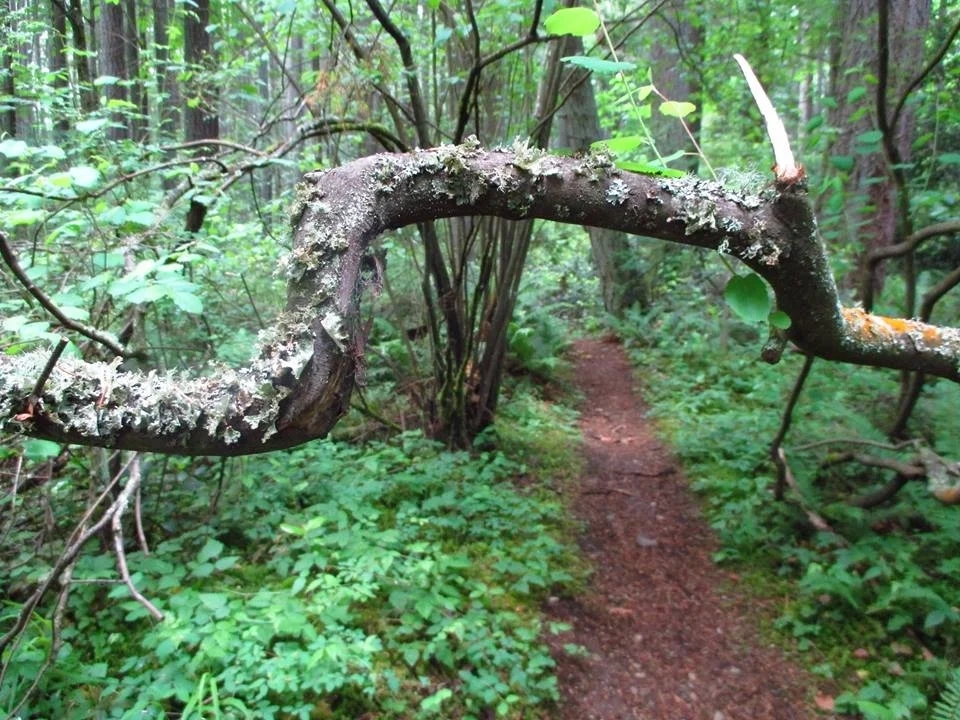
bent branch.jpg
Comment

LBA Woods Needs You Bad

November 11, 2014 Maria Mudd Ruth

Important Olympia City Council Meeting:  November 18  City Hall, 7:00 pm
Sign in to speak by 6:45; wear LBA t-shirt or blue, LBA signs will be available to hold)

Council Members may soon be making decisions on which parcels to target for park acquisition as a result of the Community Parks Site Suitability Study to be released on November 18.  

We are asking all LBA Woods supporters to come to the 7:00 pm November 18, City Council meeting to show the community’s support and, if willing, speak to Council during open mic. The limit is 3 minutes, but you can make your point in much less time. While eloquence is great, it takes more time than you’d think to craft a 3-minute comment. Why not consider making your point succinctly in 30 seconds? Here are some ideas for short, punchy talking points (and some background).

If you are a walker or hiker: Describe a particular experience you had walking through these woods. Remind the City that if it does not acquire LBA Woods, it will have no additional accessible high quality open space for trails and habitat to meet the demand of the 25,000 new residents that the City is projected to gain in the next 25 years.

If you are a nature lover: Describe your experience visiting LBA Woods and why it was different from your experiences in other City Parks. Recent medical studies show that larger forest tracts provide special health benefits to users, including immune system boost, lower blood pressure, reduced stress, accelerated recovery from surgery or illness, increased energy level and work enthusiasm, improved sleep. Forest health benefits.

If you prefer easy-grade walking paths (e.g. not Watershed, not Priest Point): LBA Woods offers  4+ miles of wide trails and footpaths that are gently graded are suitable for people needed or preferring such trails. Tell the City Council that easy-grade nature trails are important to you and will help make Olympia a livable city in the future.

If you are a runner: Please let the City Council know how important it is to have 4+ miles of trail for your personal or team training and how valuable it is to have those trails accessible by sidewalks from your school, neighborhood, or home. Describe why trails you may have run in other Olympia Parks are less suitable.

If you are a birdwatcher: LBA Woods currently provides important habitat to at least 58 bird species; that habitat supports the birds seen it backyards and at feeders for miles around. Mention some of your favorite birds: Here’s the full LBA birdlist,

In September, National Audubon Society’s scientists published a report on Birds and Climate Change. The report lists 314 birds likely to be seriously impacted by changing climate in the United States. Of those 314 birds, 21 occur in LBA Woods. LBA Woods is a refuge for these species and will become increasingly important to them in the future. Here are those twenty-one birds:


Rufous Hummingbird
Red-breasted Sapsucker
Hairy Woodpecker
Willow Flycatcher
Pacific Slope Flycatcher
Hutton's Vireo
Tree Swallow
Violet Green Swallow
Common Raven
Red-breasted Nuthatch
Brown Creeper
Varied Thrush
Wilson's Warbler
Black-throated Gray Warbler
Black-headed Grosbeak
Purple Finch
House Finch
Pine Siskin
Evening Grosbeak

Band-tailed Pigeon


If you wonder where your tax money is going: In 2004, Olympia voters passed a 2% utility tax that made Open Space, Natural Areas, and Wildlife Habitat a priority Need.  This Voted Utility Tax (VUT) appears on your monthly PSE bill as part of “Effect of Olympia City Tax.” This tax was levied to help the City acquire over 500 acres for parks by 2024.  So far the City has only acquired 63 acres and spent over $7 million of the $20 million collected on non-acquisition related purposes. Voted Utility Tax Info

 The City has sufficient funds from the 2% voted utility tax to purchase the 72 acre Bentridge parcel now, which is currently on the market for a favorable price of $6.5 million.   Alternatively, depending on price, they could buy the Trillium parcel (the second parcel comprising LBA Woods). The City needs to honor its promise to use the money to acquire Open Space before it is lost.   If you voted for the 2004 VUT, tell the Council.  Look at your latest PSE bill—you are not getting what you’re paying for!

If you are concerned about ecosystem health: The 150 acres of woods surrounding LBA Park are the last large forested area within Olympia and its UGA that is not already a park. The City Council needs to protect these woods to help provide the City with clear air, clean water, flood protection, biodiversity, erosion control, nutrient cycling, natural pollination, Thurston Regional Planning Council predicts Olympia will add over 25,000 residents and Thurston County over 120,000 by 2035.  Even assuming growth rates will slow after 2035, Olympia and Thurston’s population will double in about 50 years.  Population data

If you signed the petition:  Remind City Council that you are one of the 5,200 people who have signed the petition asking the Olympia City Council to purchase the woods for a park. Thousands of people from all over the city and Thurston County have signed the petition showing they support LBA Woods as a priority need. This is not pet project of the people living around LBA Woods.  If you have not signed the petition, do so here LBA Petition   

If you are a commuter between Olympia and Lacey: Please encourage the City Council to re-examine the option of expanding Morse-Merryman Road instead of relying on the future Log Cabin Extension Rd. to relieve current and future traffic congestion between Lacey and Olympia. The addition of 1000 homes on the LBA Woods parcels will not alleviate traffic problems, but will make them worse.

If you value environmental education opportunities for our students: Tell the City Council that the LBA Woods offers an unparalleled outdoor classroom for learning about nature and for connecting our children to the natural word. Children who spend time in nature show significant increases in their ability to delay gratification and concentrate. They have higher ratings of perceived self-worth and decreased symptoms of depression, anxiety, ADHD, anger and conduct disorders.

If you play soccer: Speak about the City’s long-standing need for dedicated rectangular playing fields (there are none within the city limits!). A large portion of the Bentridge property is flat, covered in invasive Scotsbroom, directly adjacent to Boulevard Road, and are therefore highly suitable for these much-needed playing fields. Adding soccer fields will not compromise the existing woods and walking trails.

If you love dogs: Describe your experience walking your dog on the trials and the benefits of socializing with other dog walkers in your community. LBA Woods can also accommodate a dog park without compromising the existing woods and wlaking trails. Especially with the loss of the dog park at Sunrise Park on Olympia’s west side, the need is great for an off-leash dog park.


  Council members indicate that heartfelt and thoughtful emails and letters are the most persuasive.  Please write the City Council at citycouncil@ci.olympia.wa.us 

For more information or support documents, go to LBAWoodsPark.org


Tags LBA Woods, Save LBA Woods, city of olympia parks
Comment

Calling All Murreleteers!

November 2, 2014 Maria Mudd Ruth

Public comments needed! On Tuesday, November 4, 2014, the Washington Department of Natural Resources (DNR) and U.S. Fish & Wildlife Service will be giving a presentation on the Long-term Conservation Strategy for the Marbled Murrelet.

The meeting is open to the public and is being held at the Natural Resource Building in Olympia at 9 a.m.

Please consider attending the meeting to urge the Board of Natural Resources to protect the buffers around marbled murrelet nesting habitat--these buffers are the next targets for logging. Sign up to speak, be a warm body, write to the BNR to express your concern. E-mail bnr@dnr.wa.gov

For more information on the meeting location, agenda, and to see the presentation Power Point, please go to the BNR website here. Scroll down past the 2011 calendar to the Board of Natural Resources Meeting Materials. Click on the link "Marbled Murrelet Long-Term Conservation Strategy Presentation" to download a pdf of the PowerPoint to be presented by the DNR.

Tags Marbled Murrelet, Long-term conservation strategy, Washington DNR, Marbled Murrelet conservation
Comment
← Newer Posts Older Posts →

Subscribe

Sign up with your email address to receive my blog in your inbox.

Thank you!
Blog RSS

Flying from Mountaineers Books this Spring—the story of the Pigeon Guillemot—the world’s most charismatic alcid. This non-fiction natural history will be on bookshelves and available from online retailers on April 7, 2026. Click a link below to pre-order a copy now from these purveyors:

Mountaineers Books (non-profit, indie publisher based in Seattle)

Browsers Books (Olympia’s indie bookstore)

Bookshop.org (support your local bookstore)

Barnes & Noble (in the book biz since 1971)

Amazon

Other Natural History Titles by Maria Mudd Ruth…

A Sideways Look at Clouds


“Compelling…engaging.” The Library Journal

“Rare insights into the trials and joys of scientific discovery.” Publishers Weekly

Read more reviews and details here: Rare Bird: Pursuing the Mystery of the Marbled Murrelet

Enjoy this song by Peter Horne, "Little Bird, Little Boat, Big Ocean.” Written about the Marbled Murrelet, but the lyrics work well for the Pigeon Guillemot, too.

Peter Horne Little Boat, Little Bird, Big Ocean

  • Clouds
  • Natural History
  • Open-water Swimming
  • Lake Swimming
  • Washington Lakes
  • Wild Swimming Washington
  • Pacific Northwest Clouds
  • Books on Clouds
  • Meteorology
  • Wild Swimming
You must select a collection to display.

Subscribe

Sign up with your email address to receive my blog in your inbox.

Thank you!
Blog RSS

©2026 MARIA MUDD RUTH  |  ALL RIGHTS RESERVED