• Home
  • The Bird with the Flaming Red Feet
  • Rare Bird: Marbled Murrelet
  • A Sideways Look at Clouds
  • Author
  • Events
  • Blog
  • Contact
Menu

Maria Mudd Ruth

Street Address
City, State, Zip
Phone Number
author and naturalist
Homepage-Banner.jpg

Maria Mudd Ruth

  • Home
  • Books
    • The Bird with the Flaming Red Feet
    • Rare Bird: Marbled Murrelet
    • A Sideways Look at Clouds
  • Author
  • Events
  • Blog
  • Contact

Happy Earth Day 2013

April 21, 2013 Maria

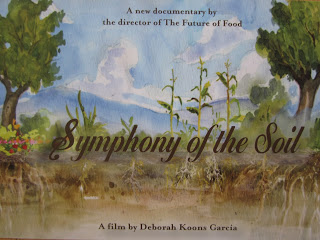
  I got a head start on celebrating Monday's holiday last night at a showing of this feature-length documentary on soil. Soil, not dirt. Soil is that wondrous nourishment created on Earth by the combination of minerals from hard rock and humus. Humus, not hummus. Humus is a mix of decomposing organic material such as fallen leaves, animal manure, dead plants and animals, and kitchen scraps (but not Twinkies, which are inert).

  Yes, it's true. The Accidental Naturalist watched 103 minutes of film on soil, applauded at the end, and stayed afterward for the Q&A with the film's creator, Deborah Koons Garcia.

   The challenge of making such a film was, according to Garcia, using a medium that is all about light and action (film) on a subject that is dark and inert (soil). The camera man laughed, Garcia said, when--after he set up his equipment for the first shot--Garcia called "action!"

     In fact, Garcia did a marvelous and creative job bringing the soil to life thanks to skilled film work, beautiful animated water color images, plenty of interviews with knowledgeable and happy soil scientists and farmers, full-grown men digging themselves into holes, plenty of hands holding dirt like it was gold, time-lapse footage of tiny root hairs, and a cast of thousands of earthworms (pun intended), dung beetles, and fungii and bacteria that squirmed their way across the microscope slide and onto the big screen.

    As you can probably tell from the elegant title of the film--Symphony of the Soil (and not Dirge of the Dirt)--this documentary was meant to be beautiful and uplifting and give audiences a sense of how complex soil really is. By better appreciating the life-giving soil, we are more apt to accept Garcia's message that we need to start taking better care of it. Earth's soils are becoming more and more depleted after misuse in agriculture--primarily from the so-called Green Revolution, which promoted the use of irrigation, use of pesticides, and the synthetic nitrogen fertilizer to increase crop productivity around the world. While productivity increased in the short term, the healthy of the soil suffered as pesticides, fertilizers, and other chemicals were wantonly applied. Living soil became mere dirt with less and less of its natural capacity to transfer life into crops.

   Enter the time-honored methods of crop rotation, tilling in of nitrogen-fixing cover crops, industrial-scale composting of a city's worth of kitchen scraps and yard waste. It was a pleasure to see so many sunlit fields of lush green crops grown the olde-fashioned way. One farmer (I think it was the vineyardist) was beaming with pride as he held up his scooped hands full of dark-brown soil. Look at how rich this is, he said, it's like chocolate cake.

   Indeed, it did look good enough to eat. That's a high standard to set for the world's farmland--but the Symphony of the Soil presents convincing evidence that this is an attainable goal. And one we need to strive for to ensure the future of food and of life on planet Earth.

TheSymphony of the Soil was part of the Environmental Film Festival presented by the Olympia Film Society. DVDs of this film (and other films by Garcia) can be purchased here

.

Tags Symphony of the Soil, Environmental Film Festival, Olympia Film Society, Deborah Koons Garcia, film on drit, living soil
Comment

Insects We Trust

April 11, 2013 Maria

  When I think of Geneva, Switzerland in 1740, I do not think of aphid reproduction. Lucky for us, one 19-year-old Charles Bonnet, decided to abandon his law studies and spend his time trying to solve the mystery of aphid reproduction. Despite 70 years of investigations and experiments, no one had ever seen a male aphid or aphids in the act of mating. Aphids are small creatures and, in the 18th century, could also outwit any number of naturalists. Charles Bonnet was the last of them.

   The story of Bonnet's Major Discovery is recounted in Rebecca Stott'sDarwin's Ghosts--a must read for accidental and intentional naturalists interested in the well-told, impeccably researched story of the collective discovery of evolution. "Darwin's" theory of evolution, according to Stott, should be attributed to many other thinkers--from Aristotle, Jahiz, Leonardo da Vinci, Denis Diderot, Alfred Wallace, and other lesser known philosopher-naturalist-scientists such as Charles Bonnet. Here is how he earned a place in Stott's history:

  On May 20, 1740, he "placed a single newborn aphid on a branch inside a glass flask sunk in a container full of earth. His task was to guard and testify to her virginity." Bonnet watched the flask "through every hour of the day" and, by June 1, the imprisoned female had molted a few times and had given birth. Over the next 23 days, she produced 94 more aphids. Through repeated experiments and careful documentation, Bonnet was the first human to record proof of a form of sexual reproduction, now called parthenogenesis, that requires no fertilization by the male.

   At this same time, Bonnet's uncle, Abraham Trembley, was studying the reproduction of moths and plant-like animals known polyps (and now called hydra) on the outskirts of The Hague. Trembley discovered that no matter how many times or ways he cut the polyp, the original part lived and the cut part sprouted to life. This spontaneous regeneration was greeted with skepticism and fear in scientific societies at the time. The polyps' ability to self-regenerate and the aphids ability to reproduce asexually cast doubt on the widely held belief that reproduction of living things was "naturally" sexual and that God controlled the miracle and design of life. These discoveries, seemingly to the contrary, raised uncomfortable and challenging questions about the "system of souls in animals." When a polyp was cut into infinite parts, for example, where was its soul?

  Charles Bonnet wrote an impassioned letter to one of his professors, Gabriel Cramer, expressing his concern that the aphids, polyps, moths, and therefore all insects would be "degraded" to soulless machines as   the natural world was shown to be increasingly incomprehensible and indecipherable. Cramer wrote back:

   "Let me breathe a little" he replied. "You are overwhelming us with marvels."

Tags Darwin's Ghosts, Rebecca Stott, Books on evolution, Charles Bonnet, Charles Darwin, aphid reproduction
Comment

Murrelet Survives Attack

April 4, 2013 Maria
A winged victory  

A winged victory  

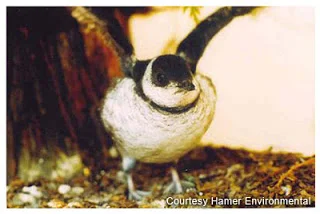
  On April 1, the federal court in Washington, D.C. rejected the timber industry's attempt to eliminate important protections of the marbled murrelet's forest nesting habitat in the Pacific Northwest.

   Long-time friend of this endearing and endangered seabird, the law firm Earthjustice fought the case on behalf of the marbled murrelet and the Audubon Society of Portland, the Seattle Audubon Society, the Center for Biological Diversity NW, the Environmental Protection Information Center, Oregon Wild, and the Sierra Club. 

  Thanks to these hard-working groups for their ongoing hard work to lessen the murrelet's struggle to survive.

  The most recent scientific report shows a decline of nearly 30 percent of the population of murrelets in Washington, Oregon, and California between 2001 and 2010. In Alaska, where the murrelets receive no special protection, populations have declined about 70 percent in the last 25 years; similar declines are suspected in British Columbia. These depressingly large numbers represent losses due primarily to the historic and ongoing logging of mature and old-growth forests where these beleaguered seabirds nest.

   "Without old-growth forest protection," said Noah Greenwald of the Center for Biological Diversity, "murrelets will disappear from our coast."

In "center for biological diversity", "critical habitat", "marbled murrelet", "timber-industry lawsuit" Tags marbled murrelet, old-growth forests, center for biological diversity, endangered seabird
Comment

Great Blue Herons

March 21, 2013 Maria
Heron rookery at Woodard Bay (photo by MM Ruth)

Heron rookery at Woodard Bay (photo by MM Ruth)

  To celebrate the first day of spring  yesterday, a friend and I went out to Woodard Bay for a walk. The sheets of hail had stopped not an our earlier, but being foul-weather friends, we wore our rain gear nonetheless. Despite the promise of the vernal equinox, it was still March in the Pacific Northwest.

  Woodard Bay's full name is Woodard Bay Natural Resource Conservation Area. It's an 800-acre piece of land managed by the Department of Natural Resources for wildlife habitat and human recreation (hiking, non-motorized boating). It's one of my favorite watery-woodsy places on Puget Sound and its just fifteen minutes north of downtown Olympia.

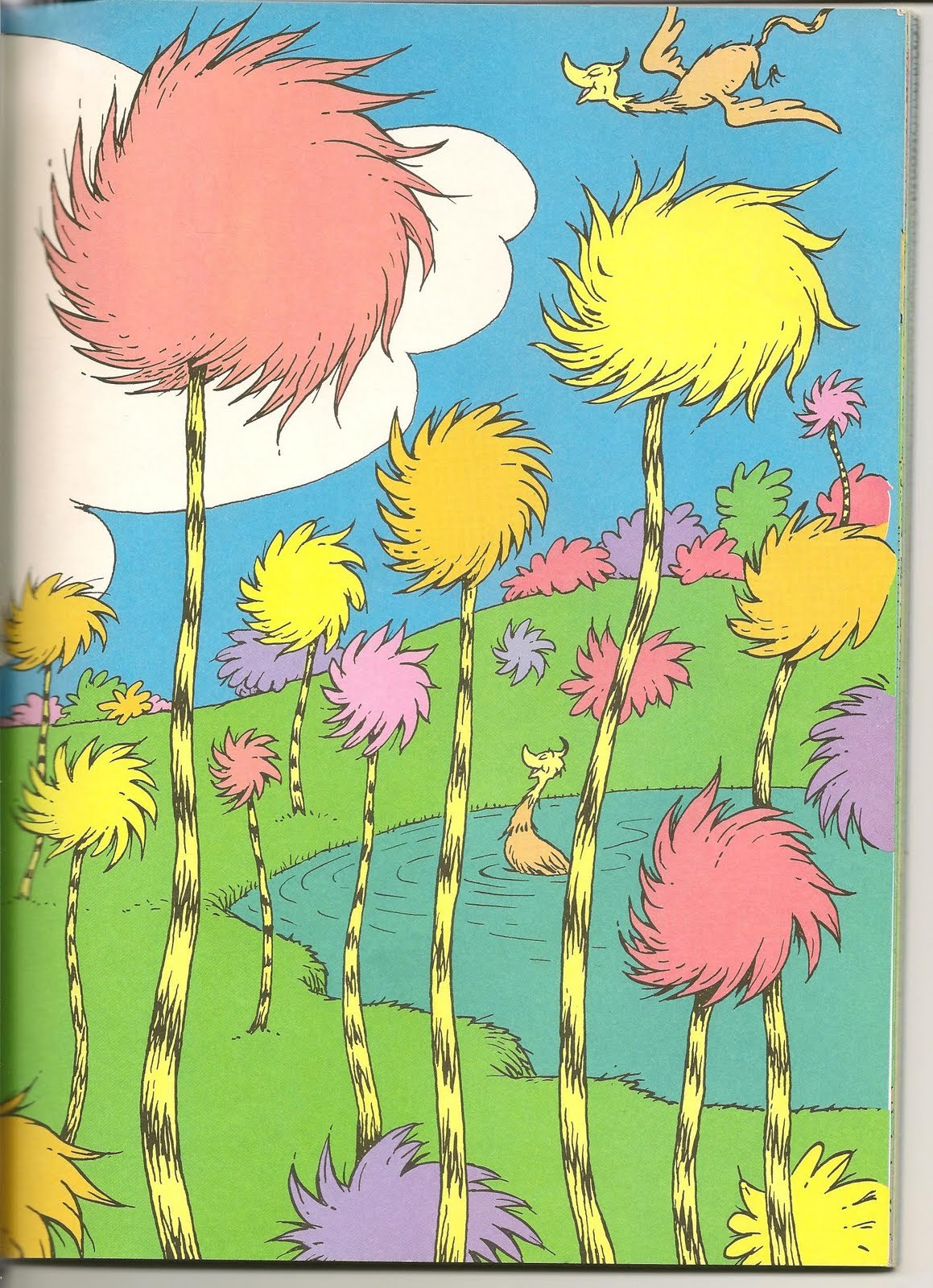
   Woodard Bay is famous for its enormous colony of bats, which I did not expect to see in broad daylight, and it's population of nesting herons, which I assumed nested on the wide timbers of the old creosote-soaked railroad pier. They do not. The enormous Great Blue Heron (Ardea herodias) nest in the tops of some very tall, very skinny, very improbable-looking trees. In the photograph above, the nests kind of look like galls on goldenrod. These trees are about 100 feet tall and are, I believe, red alders. My friend commented that they looked like something from a Dr. Seuss story.

   In fact, the herons build these nests in colonies known as heronries or rookeries. The male heron brings sticks and other nesting material to the female heron who weaves it  together for form a nest from 20 inches to 4 feet wide. The nest will be lined with softer material such as moss and grass. Nest building takes from 3 to 21 days and the female will lay 2-6 eggs (number seems related to latitude), which will be incubated for about a month. The nestling period last 46-81 days.

   It was strange and marvelous watching such enormous birds land in these insubstantial trees. How, we wondered, could these trees support such birds? I read later that though the length of a mature heron is about 46 inches and its wingspan about 72 inches, it weighs only about 5 pounds. I guess this should come as no big surprise given that birds are mostly feather and hollow bone.

   If you live in the Olympia area, get to Woodard Bay quick! The trail to the heronry is closing on March 25 to protect these Great Blues during this critical nesting time.

Click here to learn more about Woodard Bay NRCA

Click here to learn more about Great Blue Herons from the Cornell Lab of Ornithology.

In "great blue herons", "heron rookery", "heronry", "herons", "woodard bay nrca", "woodard bay" Tags heron rookery, great blue heron, dnr, woodard bay nrca, woodard bay
Comment
← Newer Posts Older Posts →

Subscribe

Sign up with your email address to receive my blog in your inbox.

Thank you!
Blog RSS

Flying from Mountaineers Books this Spring—the story of the Pigeon Guillemot—the world’s most charismatic alcid. This non-fiction natural history will be on bookshelves and available from online retailers on April 7, 2026. Click a link below to pre-order a copy now from these purveyors:

Mountaineers Books (non-profit, indie publisher based in Seattle)

Browsers Books (Olympia’s indie bookstore)

Bookshop.org (support your local bookstore)

Barnes & Noble (in the book biz since 1971)

Amazon

Other Natural History Titles by Maria Mudd Ruth…

A Sideways Look at Clouds


“Compelling…engaging.” The Library Journal

“Rare insights into the trials and joys of scientific discovery.” Publishers Weekly

Read more reviews and details here: Rare Bird: Pursuing the Mystery of the Marbled Murrelet

Enjoy this song by Peter Horne, "Little Bird, Little Boat, Big Ocean.” Written about the Marbled Murrelet, but the lyrics work well for the Pigeon Guillemot, too.


  • Clouds
  • Natural History
  • Open-water Swimming
  • Lake Swimming
  • Washington Lakes
  • Wild Swimming Washington
  • Pacific Northwest Clouds
  • Books on Clouds
  • Meteorology
  • Wild Swimming
You must select a collection to display.

Subscribe

Sign up with your email address to receive my blog in your inbox.

Thank you!
Blog RSS

©2026 MARIA MUDD RUTH  |  ALL RIGHTS RESERVED