• Home
  • The Bird with the Flaming Red Feet
  • Rare Bird: Marbled Murrelet
  • A Sideways Look at Clouds
  • Author
  • Events
  • Blog
  • Contact
Menu

Maria Mudd Ruth

Street Address
City, State, Zip
Phone Number
author and naturalist
Homepage-Banner.jpg

Maria Mudd Ruth

  • Home
  • Books
    • The Bird with the Flaming Red Feet
    • Rare Bird: Marbled Murrelet
    • A Sideways Look at Clouds
  • Author
  • Events
  • Blog
  • Contact

Clay in Clouds

October 29, 2016 Maria Mudd Ruth
This plate, made by yours truly, is made of a type of clay called kaolinite. Little did I know that kaolinite plays a critical role in the formation of our high, icy clouds.

This plate, made by yours truly, is made of a type of clay called kaolinite. Little did I know that kaolinite plays a critical role in the formation of our high, icy clouds.

Liquid water molecules need more than sub-freezing temperatures to freeze. They need something to freeze on—something like cloud condensation nuclei but with a surface that mimics the hexagonal structure of ice itself.  Suitable nuclei, called ice nuclei, do exist but are rare—perhaps one in a million particles among airborne particles in the atmosphere. These nuclei are more abundant in air -5F (-15C) or lower. Generally speaking these temperatures are found above 10,000 feet (3 km). At such heights, liquid water droplets in sub-freezing air—droplets known as “supercooled”—have two choices: They can wait it out until just the right ice nuclei comes along or they wait a little longer and freeze on their own. 

The sources of ice nuclei and their distribution in the atmosphere are still not well known. Scientific research suggests that the maritime clouds forming over the Pacific Ocean and heading inland may contain icing nuclei formed from phytoplankton, bacteria, and other organisms present in the ocean and transferred into the atmosphere through sea spray. Phytoplankton emits a sulfur compound, dimethyl sulfide, to form aerosols that serve as cloud condensation nuclei and, at sub-freezing temperatures, ice nuclei. None of the water-cycle map I have seen show anything but water in the upswooping arrows leading from the ocean’s surface into the clouds. Nor do they show what is taken up into the clouds from over land. 

One the most common and most effective ice nuclei in the atmosphere is a mineral called kaolinite. I had never heard of kaolinite but my husband, who has a master’s degree in geology and remembers everything he learned from 6th grade onward, knew all about it.

“It’s known for its whiteness, purity, and fineness,” he said. “It’s a silicate mined it all over the world, mostly for industrial uses. It’s what’s in porcelain clay, in the glossy coating on paper, rubber, paint, deodorants, make-up—all sorts of things. I’m pretty sure it’s the kao in the original Kaopectate.”

“So people eat ice nuclei to stop diarrhea?” I asked. “I don’t want to think about that.”

But I did want to think about porcelain. I had been handling porcelain clay for years in my weekly ceramics class without knowing I was stealing ice nuclei from the clouds. The many types of porcelain we used in call, all contained kaolinite and were referred to by clay wholesalers simply as “kaolin.” We used other names in class: “Grolleg” (kaolin from Cornwall, England), “New Zealand,” (kaolin from “the land down under”), and “JG” (the initials of our instructor who created this proprietary blend of Grolleg and other clays). Kaolin clay is white, fine, creamy, and smooth and is valued for their fluidity and translucence. There is no scientific evidence that the clouds formed on kaolinite manifest these same qualities but the two other main types of clay, stoneware and earthenware, are decidedly uncloud-like: coarse-grained, hard, tight, and in colors such as brown, yellow, and red. 

Kaolinite is an abundant mineral found in large masses in clay beds around the world. It was named in 1637 after the place in China—Kaoling—which is considered the type locality. Kaoling means “high ridge.” Kaolinite is a member of a group of minerals in the Kaolinite-Serpentine group of rock-forming minerals. The Hudson Institute of Mineralogy’s mineral database describes kaolinite’s color as “white to cream,” its luster “waxy, pearly, dull, earthy,” its tenacity “sectile,” its cleavage “perfect.” More importantly for the clouds was kaolinites’s platy quality: “psueodohexagonal.” These perfect-enough, microscopic bits of kaolinite are found in relatively high densities in the atmosphere where the temperature is around at -5F (-15C). Here, the supercooled droplets are ready to freeze on ice nuclei and build their tiny hexagonal empires—ice crystals. 
In Clouds
Comment

Why You Can Name These Clouds

March 13, 2016 Maria Mudd Ruth
IMAG1303_1.jpg
IMAG1298.jpg
IMAG1300.jpg
IMAG1301.jpg
IMAG1315_1.jpg
IMAG1316_1.jpg
IMAG1317.jpg
IMAG1319.jpg

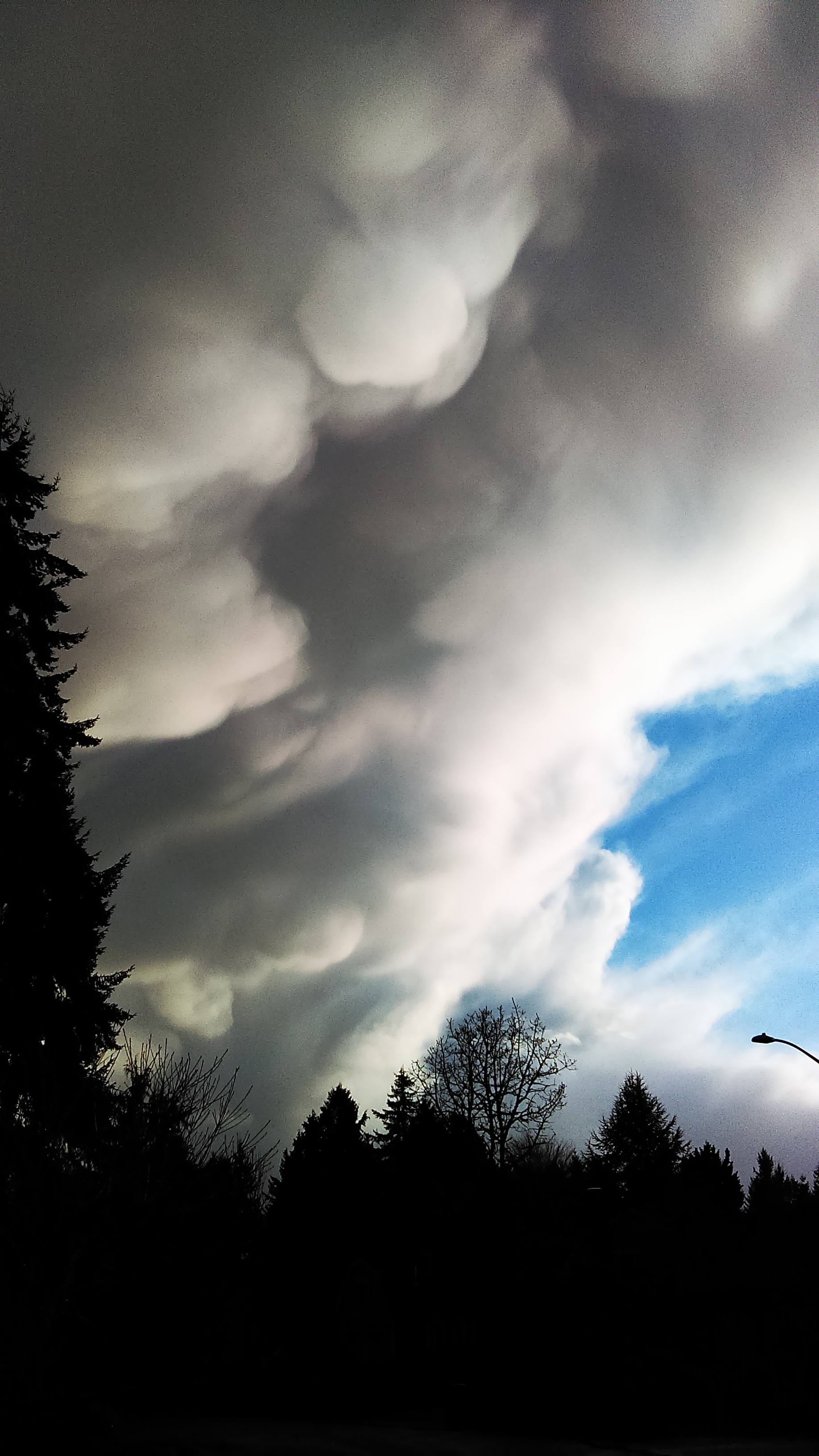
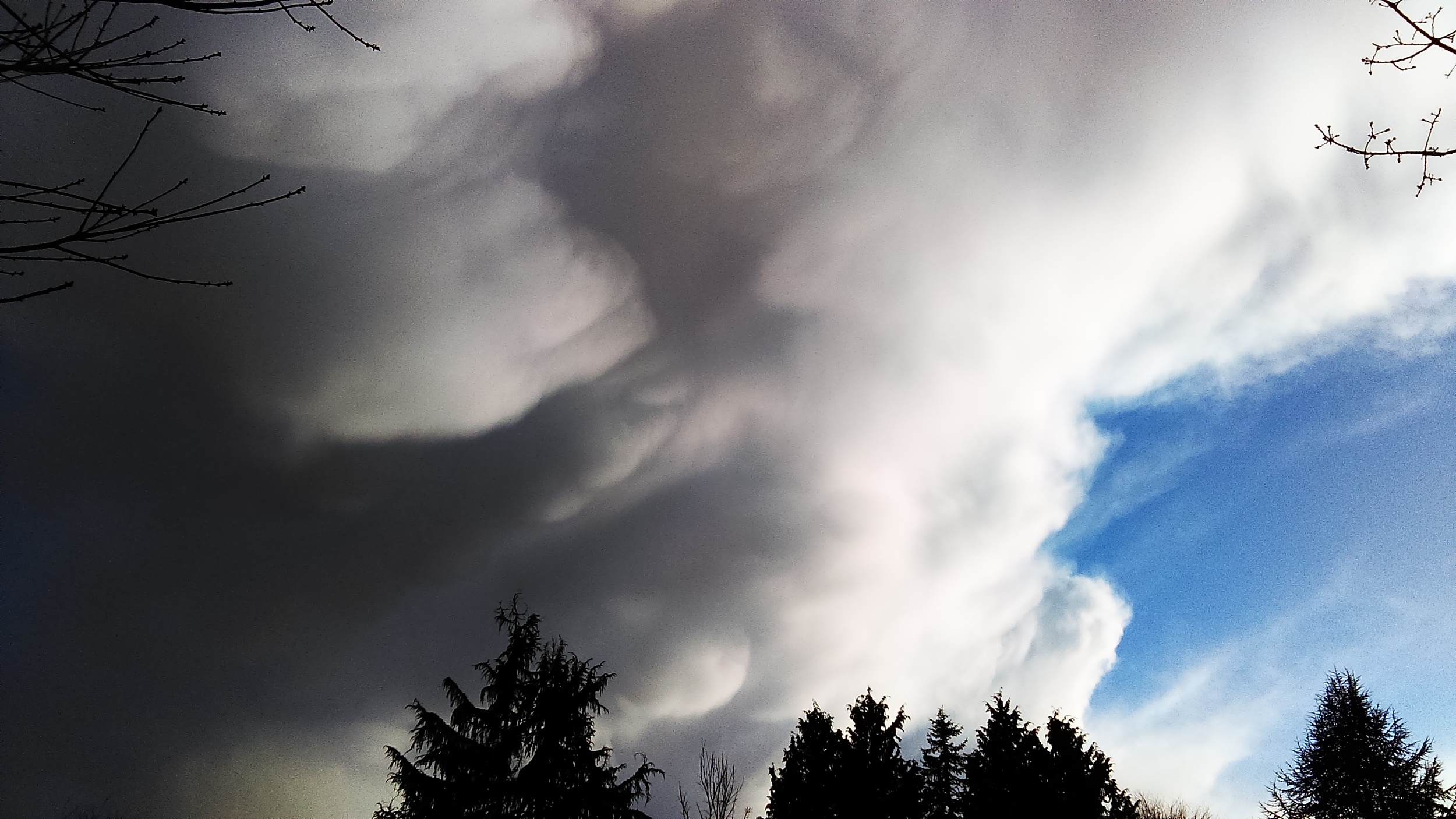
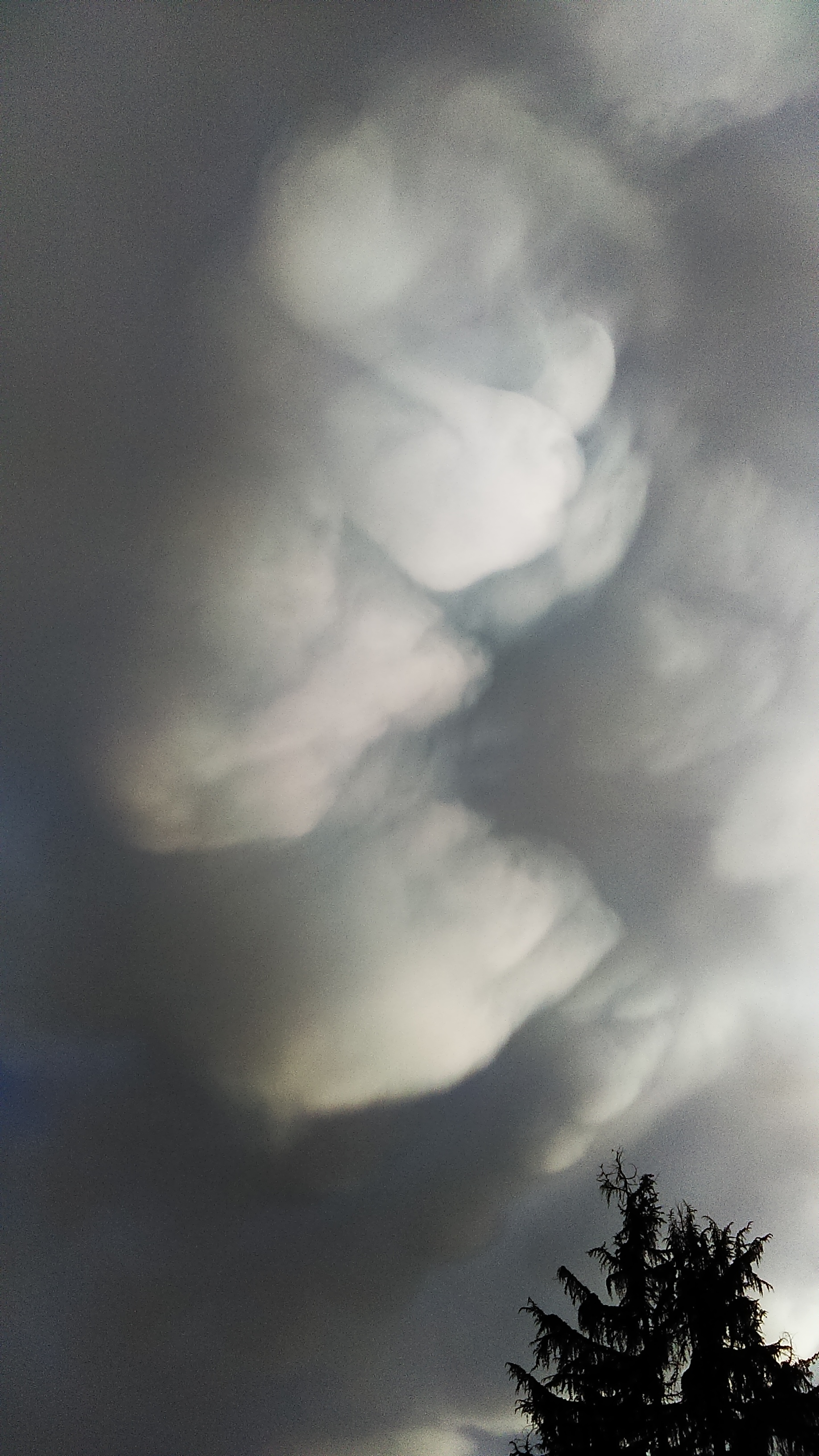
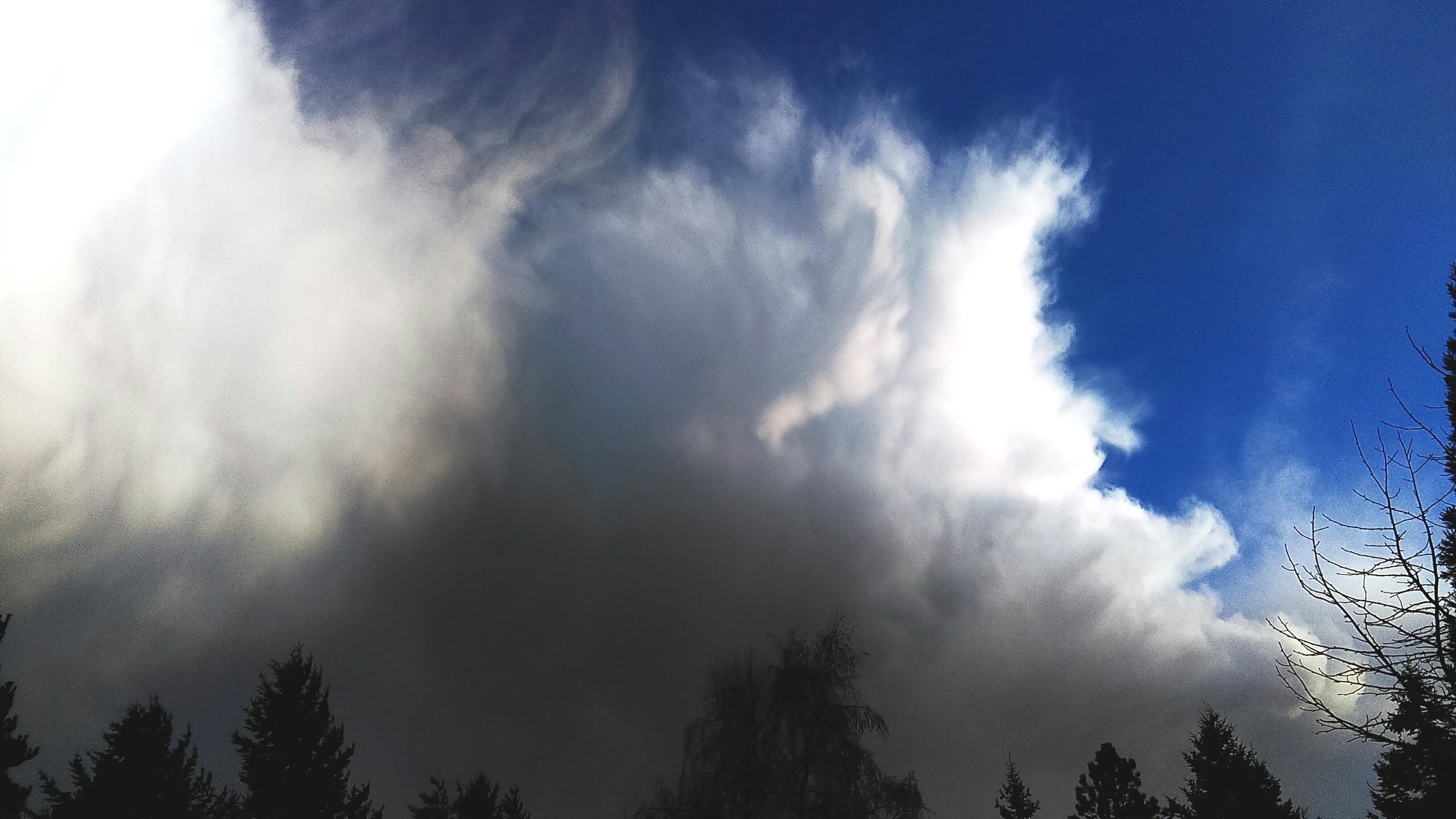
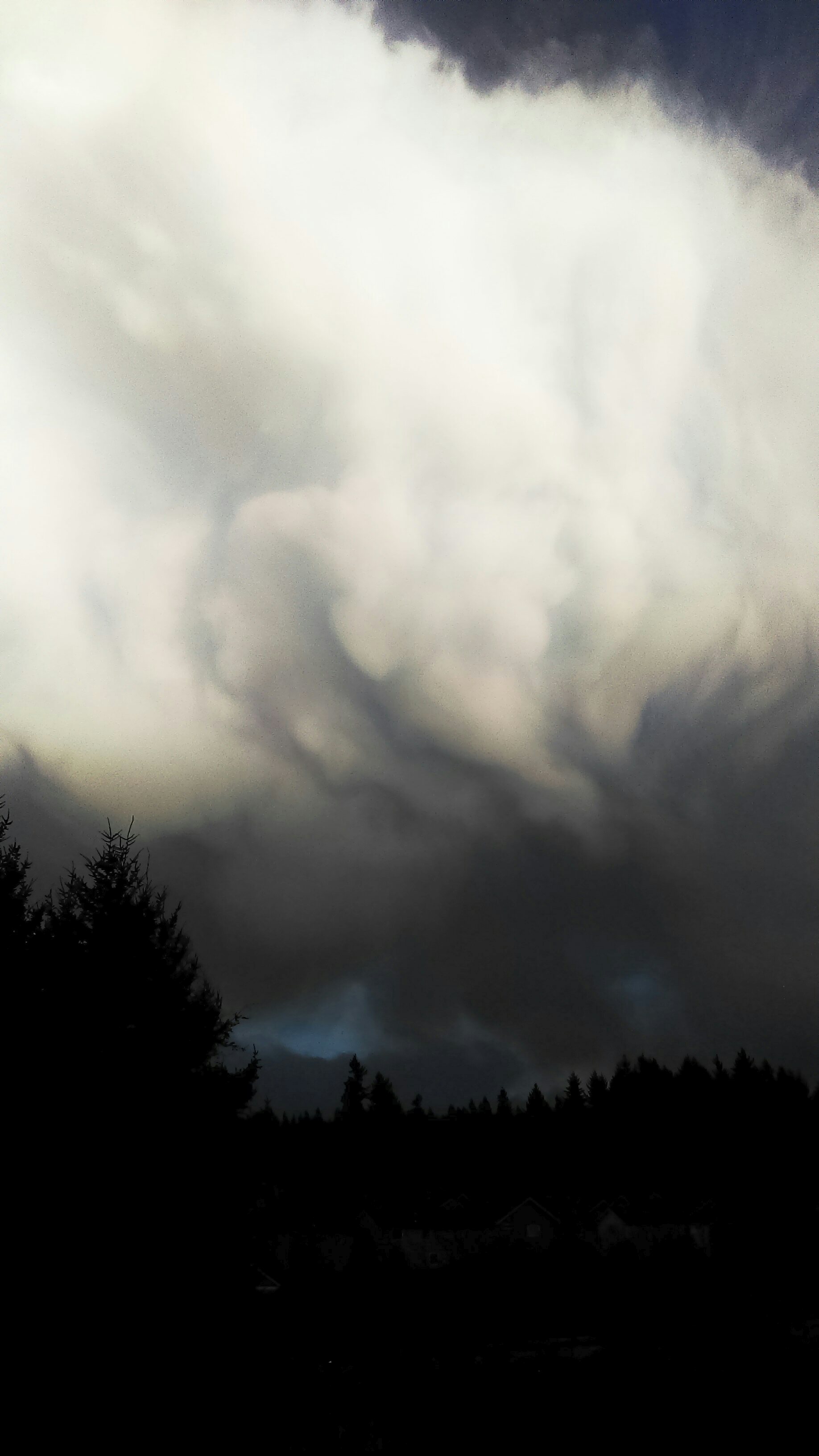
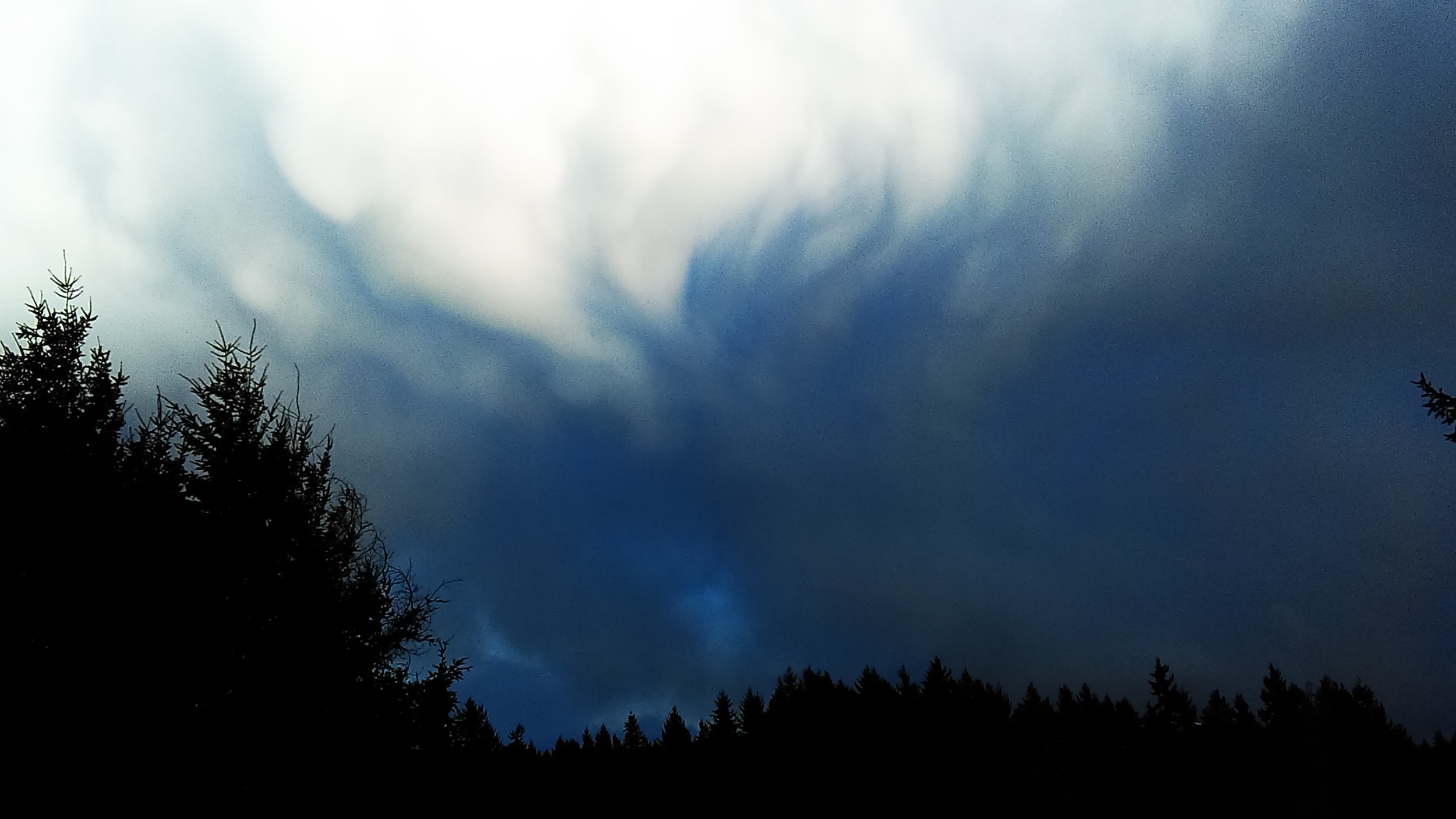
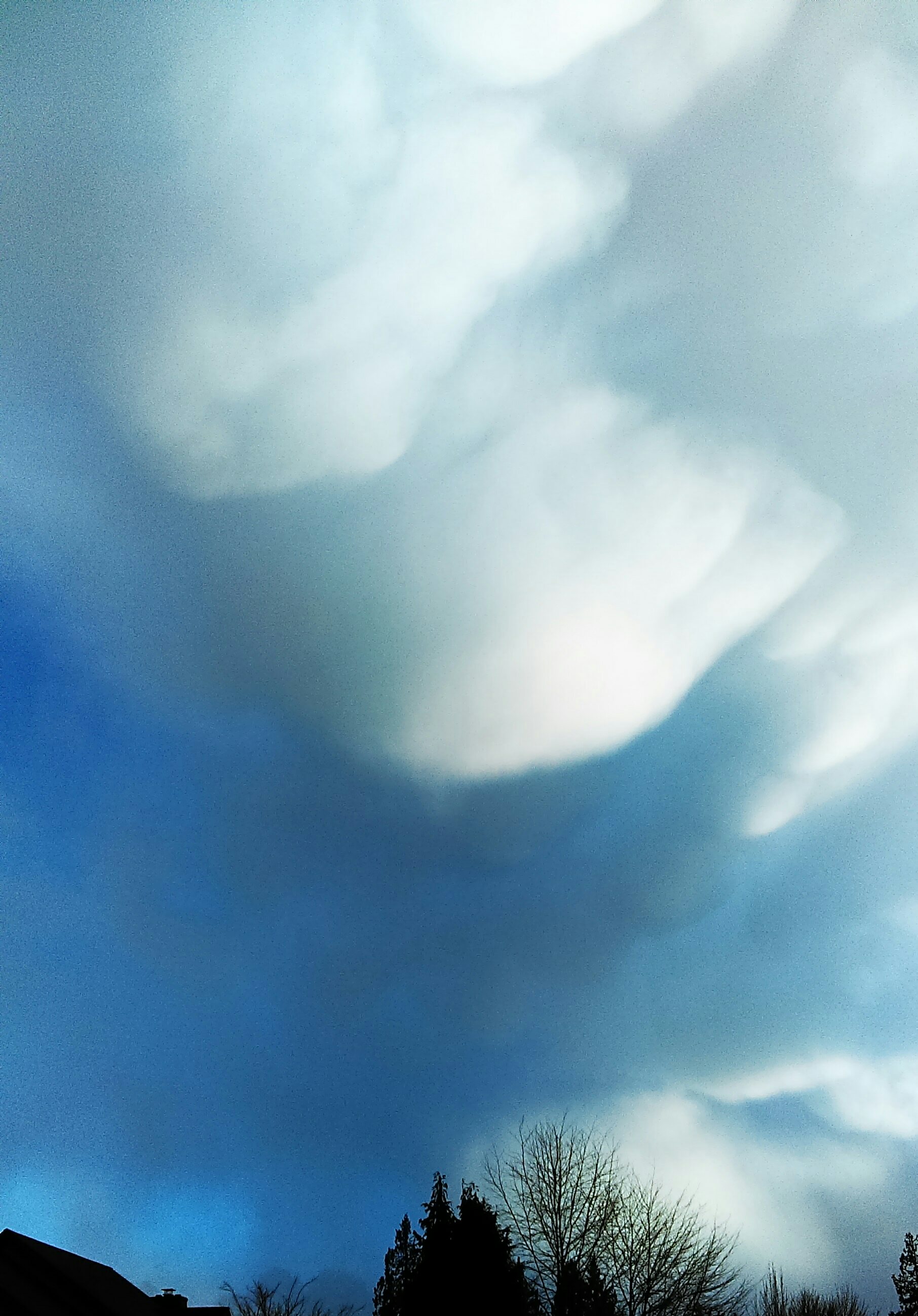
They are cumulonimbus mammatus--and they appeared Sunday evening around 6:30 over Olympia. What a spectacular show at the end of a tumultuous day of rain and wind and sun. Cumulunimbus is their offifcial Latin name cumulus (heaped) + nimbus (rain) + mammatus to describe the  bulging pouches hanging down from the underside of the cloud. 

They are distinct and you are not going to confuse them with another cloud. 

Mammatus as in mammary gland. They are referred to as "cloud boobs," which makes them easier to remember, but doesn't sound very scientific. Mammatus is not a cloud type (or species or variety) but is a "supplemental feature" of  cirrocumulus, altostratus, altocumulus and stratocumulus but is most often seen in cumulonimubs. Mammatus form when pockets of cold air sink within the cloud. They linger if the content of the water droplets or ice crystals in the mamma (that's the noun) is high.

These clouds are not precursors of tornadoes. They usually appear at the end of a storm and gradually, gracefully evaporate...as you can see in this gallery of photos I took on my after-dinner walk.

Now that Daylight Savings Time has arrived, dont' forget to take an evening cloud-spotting stroll in your neighborhood. 


In Clouds Tags clouds, mammatus clouds
Comment

Jellyfish Clouds, Clouds of Jellyfish

June 29, 2015 Maria Mudd Ruth
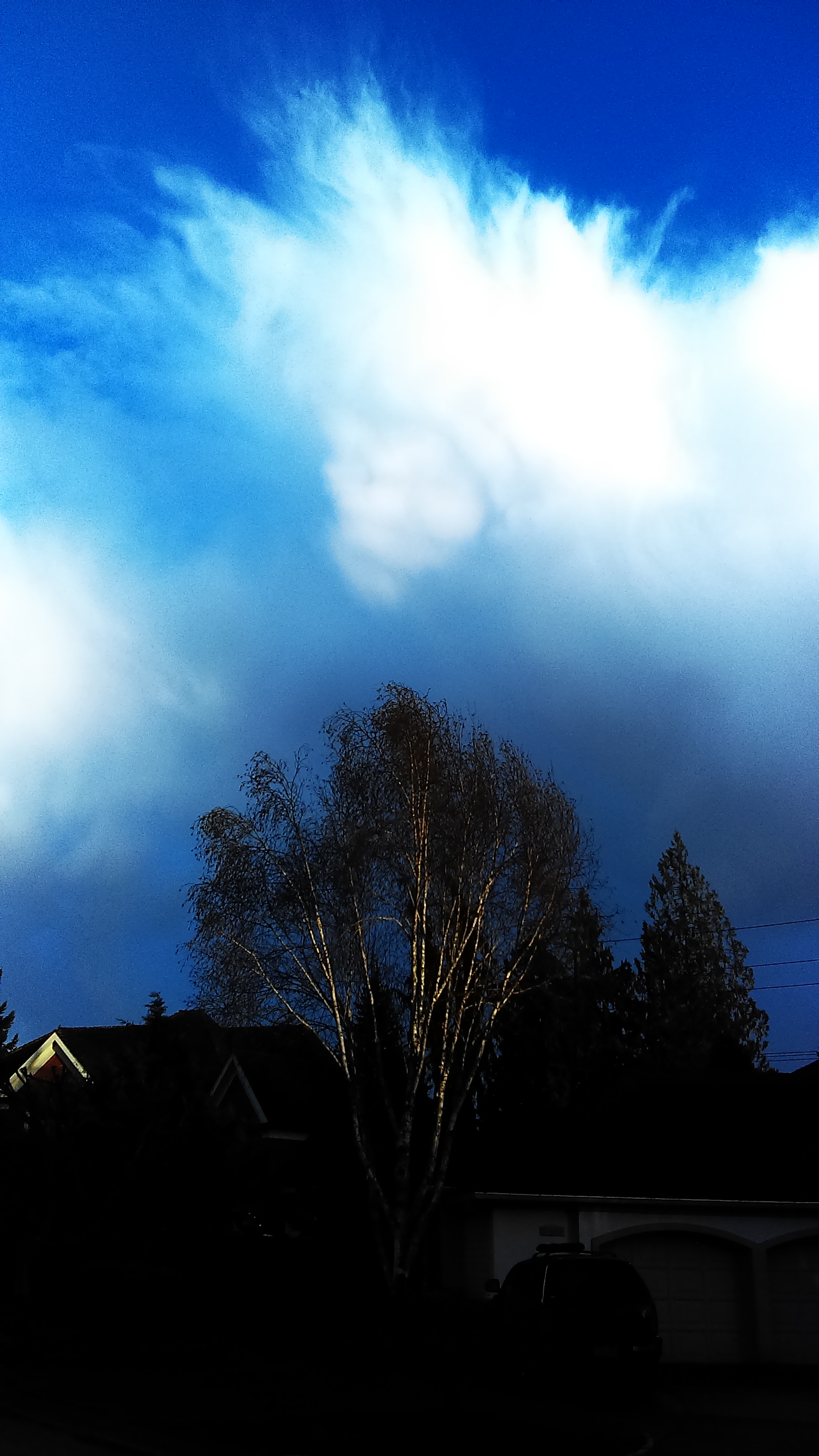
Firday's cirrus uncinus clouds over Olympia resembled a parade of jellyfish. These are high, icy clouds with a puffy head and trailing ice crystals falling out in "tentacles" behind. The tentacles are called virga--a type of precipitation that evapo…

Firday's cirrus uncinus clouds over Olympia resembled a parade of jellyfish. These are high, icy clouds with a puffy head and trailing ice crystals falling out in "tentacles" behind. The tentacles are called virga--a type of precipitation that evaporates  before reaching the ground.

 A lion's mane jellyfish in Budd Inlet. A "puffy" head (called a bell) and long tentacles behind.

 A lion's mane jellyfish in Budd Inlet. A "puffy" head (called a bell) and long tentacles behind.

"Clouds" of moon jellies in Budd Inlet. Read more about these here in my 2010 blog post.

"Clouds" of moon jellies in Budd Inlet. Read more about these here in my 2010 blog post.

In Clouds Tags jellyfish, clouds, cirrus uncinus, cirrus clouds, virga, lion's mane jelly
Comment

Sunset Over Olympia

June 18, 2015 Maria Mudd Ruth

What a great town! This is the view of Olympia, Washington, last night (June 17, Wednesday) around 9 p.m. Yes, those are the Olympic Mountains in the background, Capitol Lake in the foreground, and the clouds most everywhere else.

These are mid-level altocumulus clouds--one of the more challenging types of clouds to identify because they are so varied, occur in a wide range of altitudes (6,600 to 24,000 feet or 2-7 km above the earth), and because they look very different in the setting sun than they do in the daytime.


In Clouds
Comment
← Newer Posts Older Posts →

Subscribe

Sign up with your email address to receive my blog in your inbox.

Thank you!
Blog RSS

Flying from Mountaineers Books this Spring—the story of the Pigeon Guillemot—the world’s most charismatic alcid. This non-fiction natural history will be on bookshelves and available from online retailers on April 7, 2026. Click a link below to pre-order a copy now from these purveyors:

Mountaineers Books (non-profit, indie publisher based in Seattle)

Browsers Books (Olympia’s indie bookstore)

Bookshop.org (support your local bookstore)

Barnes & Noble (in the book biz since 1971)

Amazon

Other Natural History Titles by Maria Mudd Ruth…

A Sideways Look at Clouds


“Compelling…engaging.” The Library Journal

“Rare insights into the trials and joys of scientific discovery.” Publishers Weekly

Read more reviews and details here: Rare Bird: Pursuing the Mystery of the Marbled Murrelet

Enjoy this song by Peter Horne, "Little Bird, Little Boat, Big Ocean.” Written about the Marbled Murrelet, but the lyrics work well for the Pigeon Guillemot, too.


  • Wild Swimming
  • marbled murrelet
  • clouds
  • A Sideways Look at Clouds
  • Mountaineers Books
  • Rare Bird
  • old-growth forests
  • Open-water Swimming
  • Maria Mudd Ruth
  • Lakes of Washington
You must select a collection to display.

Subscribe

Sign up with your email address to receive my blog in your inbox.

Thank you!
Blog RSS

©2025 MARIA MUDD RUTH  |  ALL RIGHTS RESERVED