

A marbled murrelet (Brachyramphus marmoratus) is a member of the alcid, or auk, family of swimming and surface-diving seabirds of the North Atlantic and Pacific, which includes 22 species including guillemots, puffins, auklets, murres, and 5 other murrelets. As a family, these web-footed birds spend 95% of their lives at sea swimming, foraging, mating, and loafing. They are agile underwater swimmers and use their wings to “fly” underwater like penguins. Alcids’ legs are set far back on their bodies, making them relatively clumsy on land where they seldom venture except to nest. Alcid nests are typically found on ledges and in burrows on rocky outcrops and coastal bluffs near the water’s edge. The marbled murrelet is not your typical alcid. It is unique in its selection of its nesting sites.
During the summer breeding season, the marbled murrelet flies well inland to nest in trees. And not just any trees, but the large-limbed ancient conifers of the mature and old-growth coastal forests. In these trees, the murrelet finds high, wide, mossy platforms where it can make its web-footed landing, lay and incubate its one egg, and feed its chick until it fledges. During its time in the forests, the murrelet is camouflaged, silent, and secretive; its nest, egg, and chick are well hidden.
Though the first marbled murrelet known to science was collected in southeast Alaska in 1778 by the crew of Captain James Cook during his third Voyage of Discovery, the location of the murrelet’s nesting site remained a mystery until 1974. During that year, a tree trimmer accidentally discovered a downy murrelet chick on its nest 148-feet up an old-growth Douglas-fir. That discovery connected the marbled murrelet to the rapidly disappearing forests and to its fate to the conservation of these forests. In 1990, the marbled murrelet was listed as a federally threatened species in Canada. In 1992, the U.S. Fish and WildIife Service listed the marbled murrelet as a federally threatened species in Washington, Oregon, and California.
Marbled murrelets spend the winter offshore and begin moving inland in March and April to nest, depending on latitude. The female lays a single egg high in a tree, typically on a wide, mossy platform-like branch in the middle to top third of the live crown of of a mature and old-growth conifers such as Douglas-fir, Western hemlock, mountain hemlock, Western red-cedar, Sitka spruce, coast redwoods, and Alaska yellow cedar. The definition of "old growth" varies between species and with latitude, but scientists consider a tree that is >80 cm in diameter at breast height to be old-growth. Murrelets will nest in smaller trees, especially ones with platforms created by mistletoe deformation.
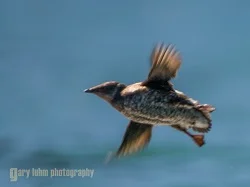
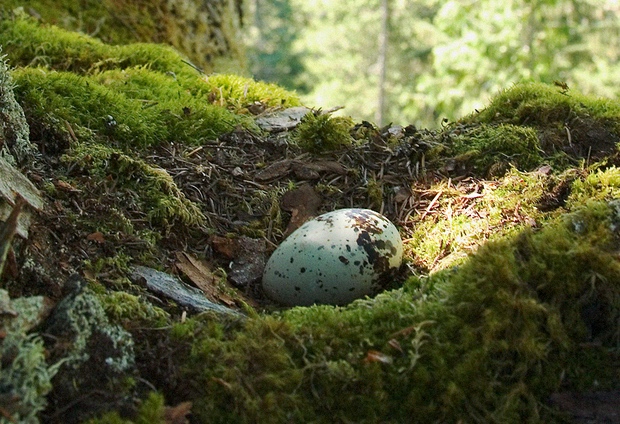
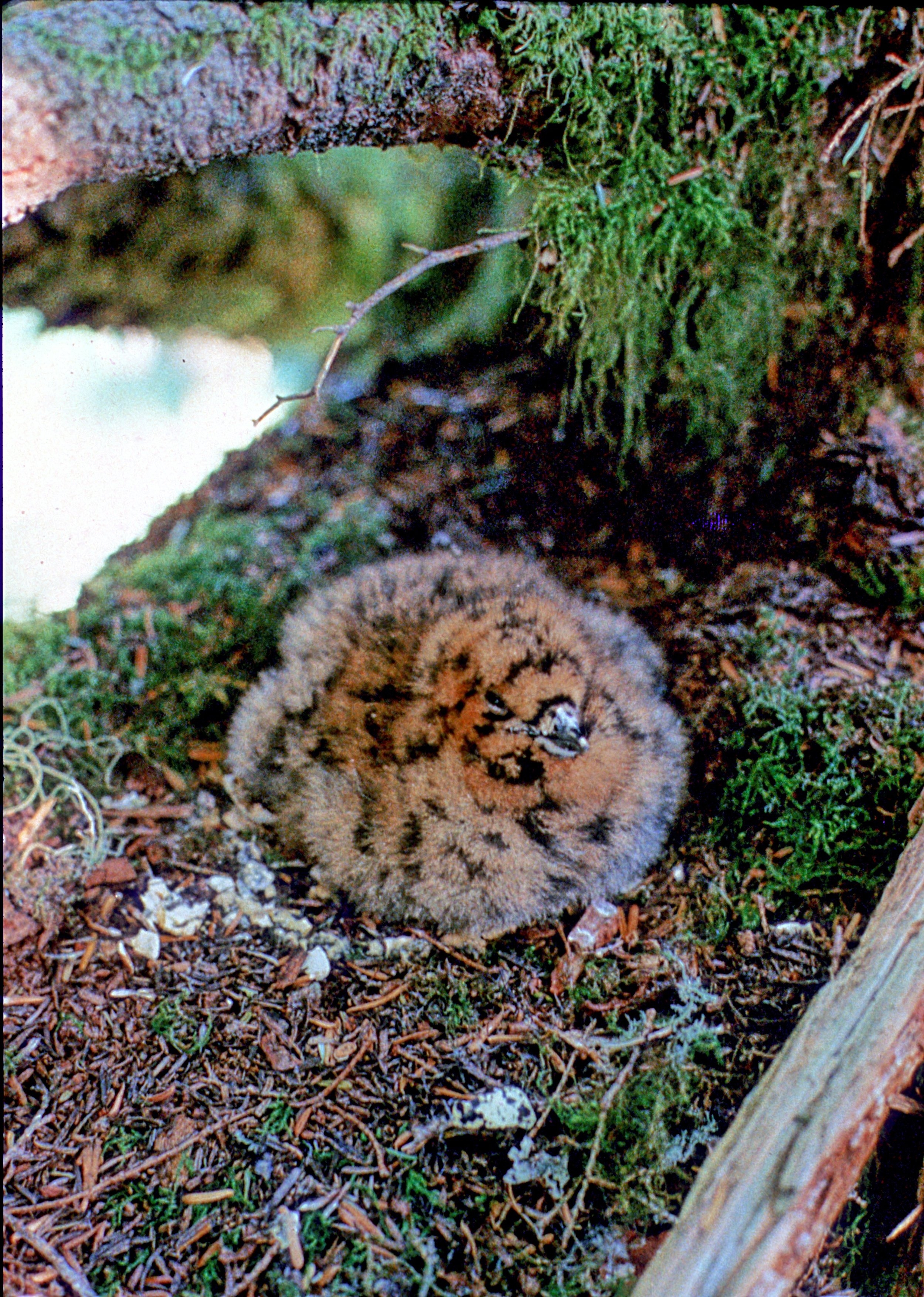
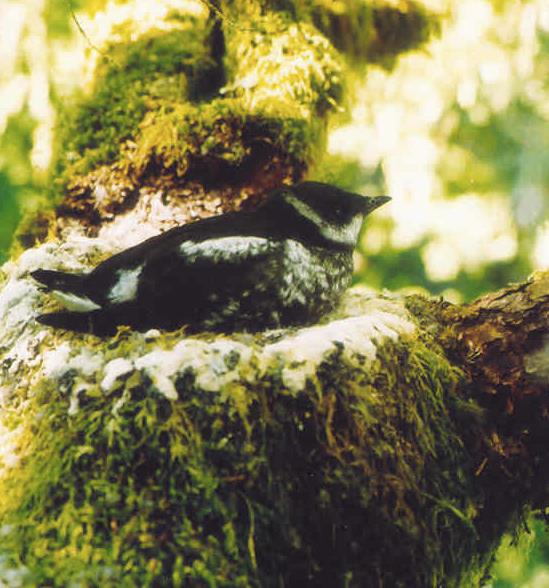
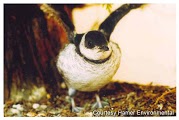
Incubation of the murrelet egg takes places over a month and is shared equally between the parents. Male and female adults exchange shifts on the egg every 24 hours at dawn. While one one parent sits on the egg (the size of a chicken’s), the other forages at sea. This gallery of photos below shows the life cycle of the murrelet.( Photos used with permission. Photo credits: Adult murrelet on water: Gary Luhm Photography. Adult Murrelet in flight: Gary Luhm Photography). Murrelet Egg on nest: Nick Hatch, USDA Forest Service, Northwest Research Station. Murrelet Chick on nest, Juvenile Murrelet on nest, Juvenile ready to fledge: Tom Hamer, Hamer Environmental. Adult Murrelet in winter plumage on water: Rich Macintosh. Murrelet in breeding plumage flying off water: Dan Cushing and S. Kim Nelson)


Where to See Marbled Murrelets: On the Water
Marbled murrelets can be seen year round in coastal areas throughout their range. Offshore, murrelets usually occur singly, in pairs, or small groups and within a mile of land. Pelagic boat trips and kayakers often report sightings of marbled murrelets. These birds move closer to shore during the summer breeding season and can be seen from land (even without spotting scopes or binoculars in some places).
Finding out where exactly to experience murrelets in the wild is most easily done online. The Cornell Lab of Ornithology and the National Audubon Society offers eBird, which features real-time, interactive maps of bird sightings based on reports by recreational and professional birders. Click this link http://ebird.org/ebird/map/ to find where the murrelets are.

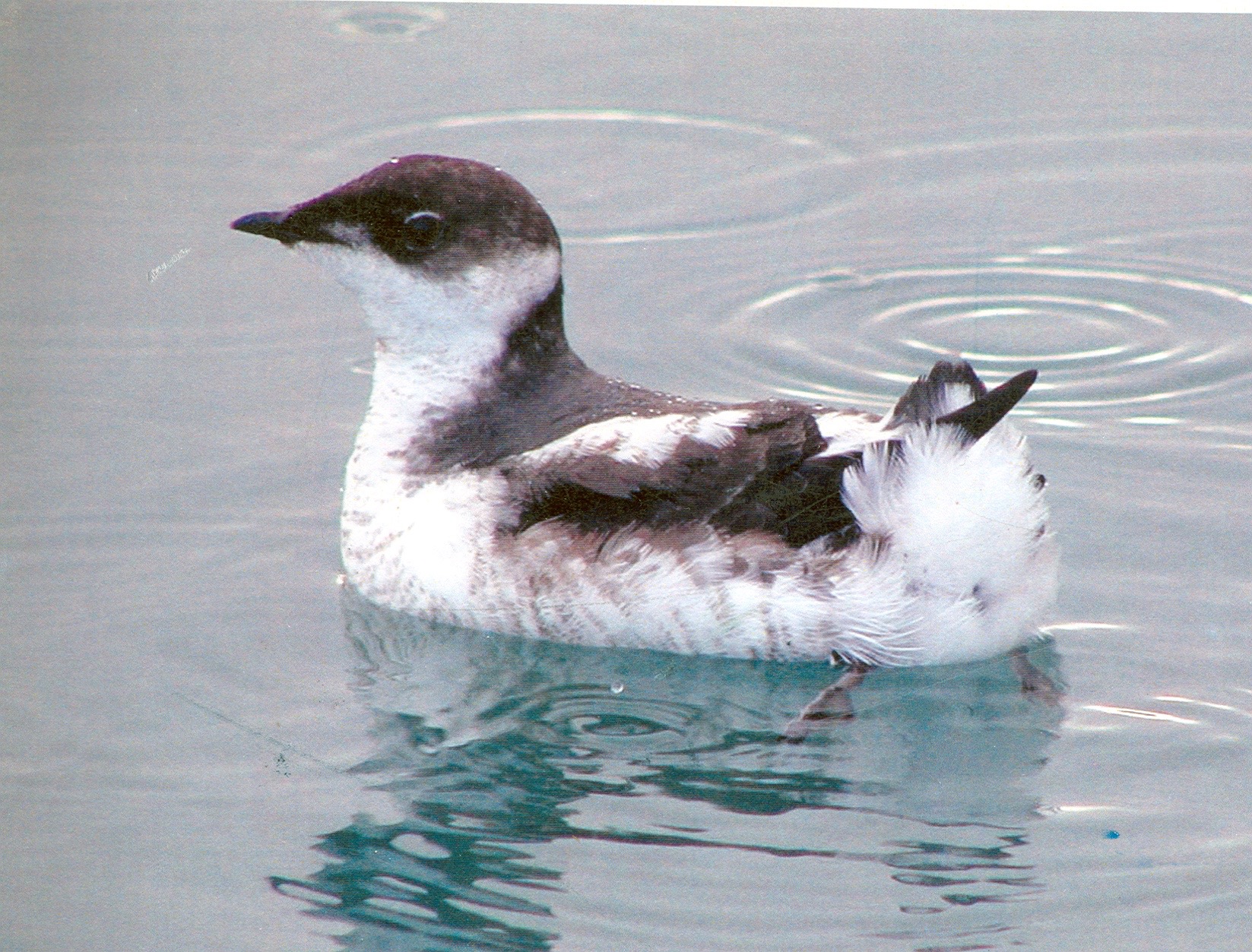
During winter (October-March), a murrelet’s plumage is black-and-white and boldly patterned. NOTE: Juveniles will display this plumage variation after fledging, which begins in early summer and extend into early fall, depending on latitude.
-- dark cap extending below the eye
-- white throat, nape, and underparts
-- dark patch on side of breast
-- dark back, wings, and tail
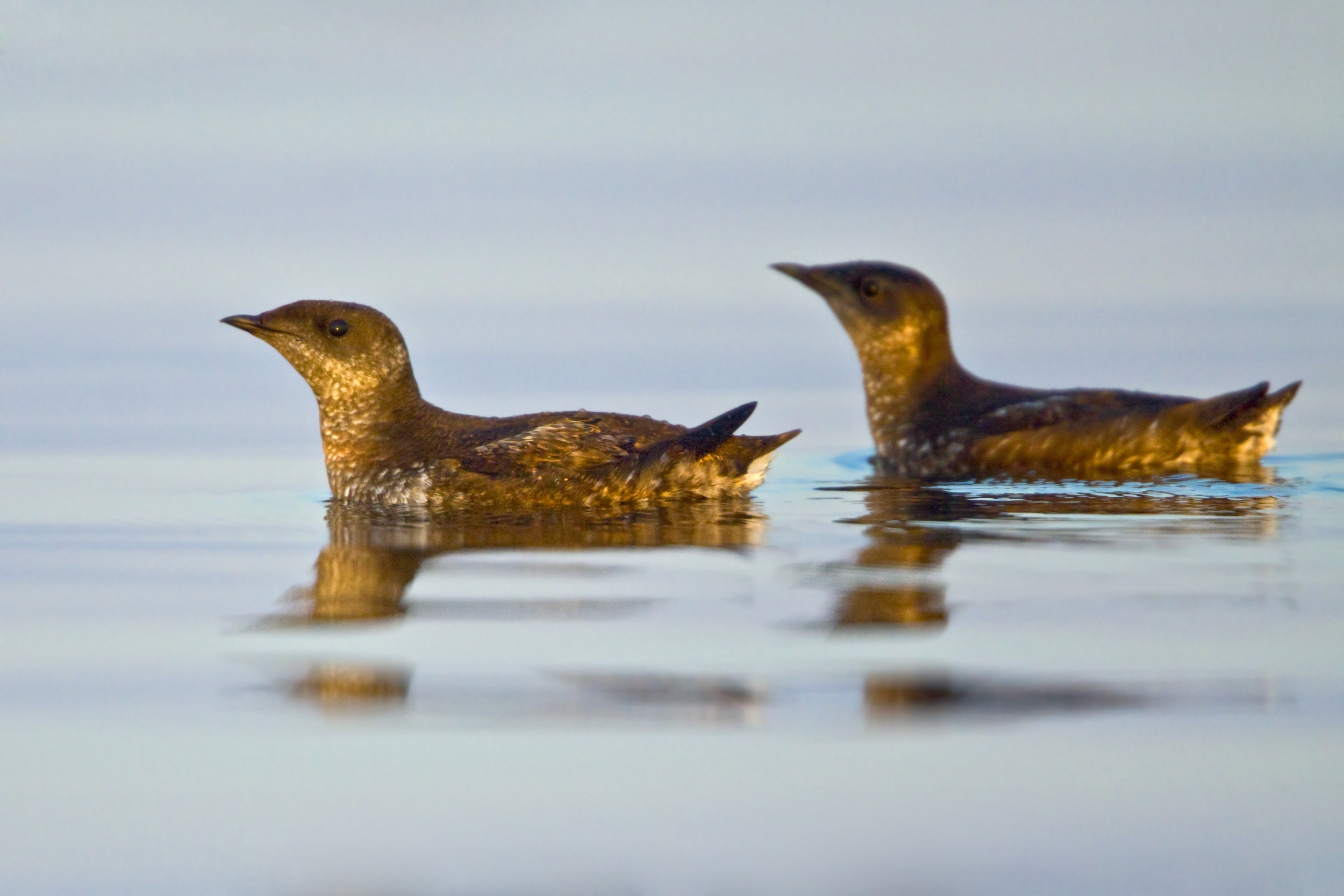
During the breeding season (April-September), marbled murrelets molt into plumage that is mottled shades of brown. The murrelet is one of two alcids that molts into brown breeding plumage, the other being the Kittlitz’s murrelet.
—dark rufous brown above
-- heavily barred underparts
-- pale buffy area on side of rump
As you will know from reading Rare Bird, seeing or hearing marbled murrelets in the forest is not easy. The mature and old-growth forests where these birds nest can be in remote, rugged terrain and may not be publically accessible. In general, you will find that state, provincial, and national parks and preserves in the U.S. and British Columbia preserve some of the best stands that may be accessible by road or trail.
Your best chance to see the birds inland is during the late spring and summer, around dawn—45 minutes before official sunrise and 75 minutes after—when the murrelets are making incubation exchanges or feeding visits. When murrelets are feeding their chicks, they may fly inland at dusk as well as dawn.
Stand in the forest opening and watch the sky in all directions as you turn yourself “in little crop circles” as one professional murrelet surveyor calls them. Listen for the calls and turn toward the calls to spot a fast-flying bird (usually in silhouette) beating its wings rapidly above the tree canopy. You may hear only a single bird or you may get lucky and hear and see several birds circling and calling overhead.
Do not expect to see a murrelet on its nest branch. Do not expect to see nest. Do not expect to see the bird doing anything but flying and circling over or just beneath the canopy. These birds are designed to avoid detection. They fly directly from the ocean to their nest branch—non-stop. They do not perch on branches to rest along the way. They do not care about your life list.
My advice as an accidental naturalist: Go to eBird--a fabulous resource for birders launched in 2002 by the Cornell Lab of Ornithology and the National Audubon Society. Use their Range Map page to find recent at-sea sightings of murrelets at sea along the coast. Find the area of mature/old-growth forest near or adjacent to those sightings. Find your way there. Pitch a tent and set your alarm. You might get lucky. Or you might enjoy the dawn chorus of robins instead.
Either way, dress warmly, bring a flashlight or headlamp, binoculars, a thermos of hot tea or coffee. If you have an audio-recording device, bring that along to capture the distinctive calls of the murrelet—keer calls, groans, whistles—and wing beats. If you hear or record the rarely heard “jet airplane” sound these birds make when making a steep dive, please contact biologist Steve Singer at swsingerms@aol.com
Click Here to See Fabulous Videos of Marbled Murrelets
How to Help the Murrelets
HOW TO HELP THE MURRELET
While it is safe to say that any action you take to reduce your footprint on the planet will ultimately help the marbled murrelet, some specific actions you can take now will help more directly.
Help control murrelet predators. Keep your food to yourself when visiting old-growth coastal forests in or adjacent to national parks, state parks, or other public lands. Refrain from feeding wildlife—especially the corvids (jays, crows ravens). Pick up any bits or crumbs of food you may have accidentally dropped. When camping, use metal food-storage lockers or animal-resistant food containers (bear canisters). Keep your site “crumb clean.”
Help restore the murrelet’s food supply. Purchase fish caught or farmed using environmentally friendly practices. Regional seafood buying guides for the continental United States are available at www.seafoodwatch.org.
Help keep murrelet waters clean. Reduce use of pesticides, fertilizers, and other chemicals on your lawn and garden. Through city and farmland runoff, these and other chemical pollutants flow into estuaries and coastal waters, thereby degrading the habitat of the small forage fish the murrelets feed on and the water where they spend 95 percent of their lives.
Encounter a marbled murrelet. You can see these birds in many places along the Pacific coast especially in the spring-summer breeding season. When the murrelets are at sea, you can spot them from a boat on the water (with binoculars) or from land at the coast’s edge (using a spotting scope). To fully appreciate them, however, you must go into the forest and watch for them flying over the treetops or circling above a meadow in the predawn light. The timing of their inland flights varies according to latitude, and the local sunrise determines the best time for observing them.